Background and career
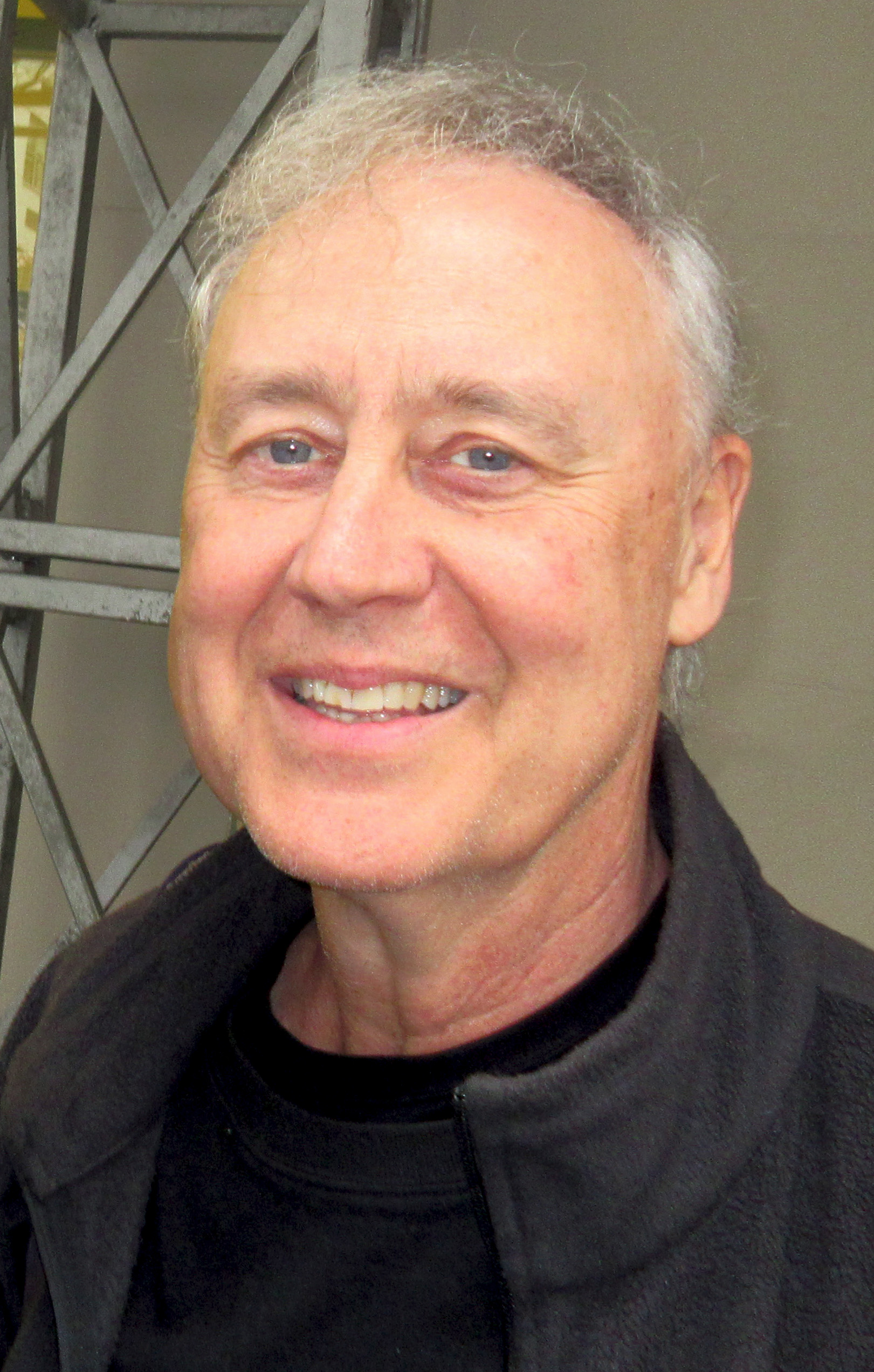
Bruce Randall Hornsby (born November 23, 1954) is an American singer-songwriter and pianist. His music draws from a wide range of traditions – folk, jazz, modern classical, bluegrass, rock, and jam band styles. Hornsby has won three Grammy Awards: a 1987 Grammy Award for Best New Artist with Bruce Hornsby and the Range, a 1990 Grammy Award for Best Bluegrass Recording, and a 1994 Grammy Award for Best Pop Instrumental Performance. Hornsby has worked with his touring band Bruce Hornsby and the Noisemakers, his bluegrass project with Ricky Skaggs, and as a session and guest musician. He was a touring member of the Grateful Dead from September 1990 through March 1992, playing over 100 shows with the band.
Bruce Randall Hornsby was born in Williamsburg, Virginia, to Robert Stanley Hornsby (1920–1998), an attorney, real-estate developer and former musician, and Lois Hornsby (née Saunier), a piano player and church community liaison who had a local middle school named after her. He has two brothers, Robert Saunier "Bobby" Hornsby, a realtor with Hornsby Realty and locally known musician, and John Hornsby, a lawyer, with whom he has collaborated in songwriting. They are cousins of actor David Hornsby. While raised in the church of Christian Science, Hornsby went to doctors and dentists as needed. He had a politically liberal upbringing. Hornsby graduated from James Blair High School in Williamsburg in 1973, where he played on the basketball team and was chosen by his senior class as most likely to succeed. Hornsby studied music at the University of Richmond for a year, at the Berklee College of Music for two semesters, and then at the University of Miami, where he graduated in 1977.
In 1974, Hornsby's older brother Bobby, who attended the University of Virginia, formed the band "Bobby Hi-Test and the Octane Kids" to play fraternity parties, featuring Bruce on Fender Rhodes and vocals. The band, which is listed in Skeleton Key: A Dictionary for Deadheads, performed covers of the Allman Brothers Band, the Band, and predominantly Grateful Dead songs. Bobby Hornsby's son, Robert Saunier Hornsby, was a recurring guest-guitarist with Hornsby's band and periodically toured with his uncle and played on his records until his death on January 15, 2009, in a car accident near Crozet, Virginia at age 28. Following his graduation from the University of Miami in 1977, Hornsby returned to his hometown of Williamsburg, and played in local clubs and hotel bars. In 1980, he and his younger brother and songwriting partner John Hornsby moved to Los Angeles, where they spent three years writing for 20th Century Fox. Before moving back to his native Hampton Roads, he also spent time in Los Angeles as a session musician. There, Hornsby became friends with members of Ambrosia and later he and Ambrosia bassist Joe Puerta performed as members of the touring band for Sheena Easton. In 1984, Hornsby appeared in the music video for Easton's singles "Strut" and “Sugar Walls". Hornsby made a solo demo recording of “Mandolin Rain,” “The Way It Is,” and “The Red Plains” which led to him being signed by RCA in 1985.
In 1984, Hornsby formed Bruce Hornsby and the Range, who were signed to RCA Records in 1985. Besides Hornsby, Range members were David Mansfield (guitar, mandolin, violin), George Marinelli (guitars and backing vocals), former Ambrosia member Joe Puerta (bass guitar and backing vocals), and John Molo (drums).
Hornsby's recording career started with the biggest hit he has had to date, "The Way It Is". It reached number one on the Billboard Hot 100 in December 1986. The song described aspects of homelessness, the American civil rights movement and institutional racism. It has since been sampled by at least six rap artists, including Tupac Shakur, E-40, and Mase. With the success of the single, the album The Way It Is received the RIAA certification of multi-platinum. It included "Mandolin Rain" (co-written, as many of Hornsby's early songs were, with his brother John), another top-five hit. "Every Little Kiss" peaked at number 14 on the Billboard Hot 100 in July 1987. Other tracks on the album helped establish what some labeled the "Virginia sound", a mixture of rock, jazz, and bluegrass. Bruce Hornsby and the Range won the Grammy Award for Best New Artist in 1987, defeating Glass Tiger, Nu Shooz, Simply Red, and Timbuk3. Hornsby and the Range's sound was distinctive for its use of syncopation in Hornsby's piano solos, a bright piano sound and an extensive use of synthesizers as background for Hornsby's solos, and on all the hits, a Linn drum machine and Oberheim OB-X for bass. They are typical double-time beats, which allowed Hornsby and the rest of the band to do more with their solos.
Hornsby and the Range's second album, Scenes from the Southside (on which Peter Harris replaced Mansfield), was released in 1988. It included "Look Out Any Window" and "The Valley Road" which many critics noted for their "more spacious" musical arrangements, allowing for "more expressive" piano solos from Hornsby. It also included "Jacob's Ladder", which the Hornsby brothers wrote for musician friend Huey Lewis; Lewis's version became a number one hit from his album Fore!. Scenes offered further slices of "Americana" and "small-town nostalgia". During the late 1980s and early 1990s, Hornsby worked extensively as a producer and sideman, producing a comeback album Anything Can Happen for Leon Russell. In 1987, Hornsby collaborated with Irish group Clannad, playing and lending vocals to their single "Something to Believe In". Hornsby also appears on the official music video release for the track. In 1989, Hornsby co-wrote and played piano on Don Henley's hit "The End of the Innocence". In 1991, he played piano on Bonnie Raitt's hit "I Can't Make You Love Me". He also appeared on albums by Bob Dylan, Robbie Robertson, Crosby Stills and Nash, Stevie Nicks and Squeeze. Hornsby slowly began to introduce jazz and bluegrass elements into his music, first in live performance settings and later on studio work. In 1989, he first performed at the Telluride Bluegrass Festival. He also reworked his hit "The Valley Road" with the Nitty Gritty Dirt Band for their album Will the Circle Be Unbroken: Volume Two. In February 1990, the song won Best Bluegrass Recording at the 32nd Annual Grammy Awards. In May 1990, Hornsby released A Night on the Town, on which he teamed up with jazz musicians Wayne Shorter (tenor saxophone) and Charlie Haden (double bass) as well as bluegrass pioneer Bela Fleck (banjo). A change in style became apparent as the album was much more rock and guitar driven, making use of Jerry Garcia's guitar work on several tracks, including prominently on the single "Across the River". In concert, Hornsby and the Range began to stretch out their songs, incorporating more and more "freewheeling musical exchanges". Critics praised the album for its production, its political relevance, and Hornsby's gestures toward expanding out of a strictly pop sound by incorporating jazz and bluegrass. Ultimately, though, the core "rock band" sound of the Range limited Hornsby's aspirations, and after a final three-week tour in 1991, Hornsby disbanded the Range to enter a new phase of his career. Drummer John Molo continued to perform regularly with Hornsby for another few years, although other members pursued separate musical endeavors. Following Hornsby's and Molo's involvement with the Other Ones, Molo left Hornsby to become the primary drummer with bass guitarist Phil Lesh and Friends.


