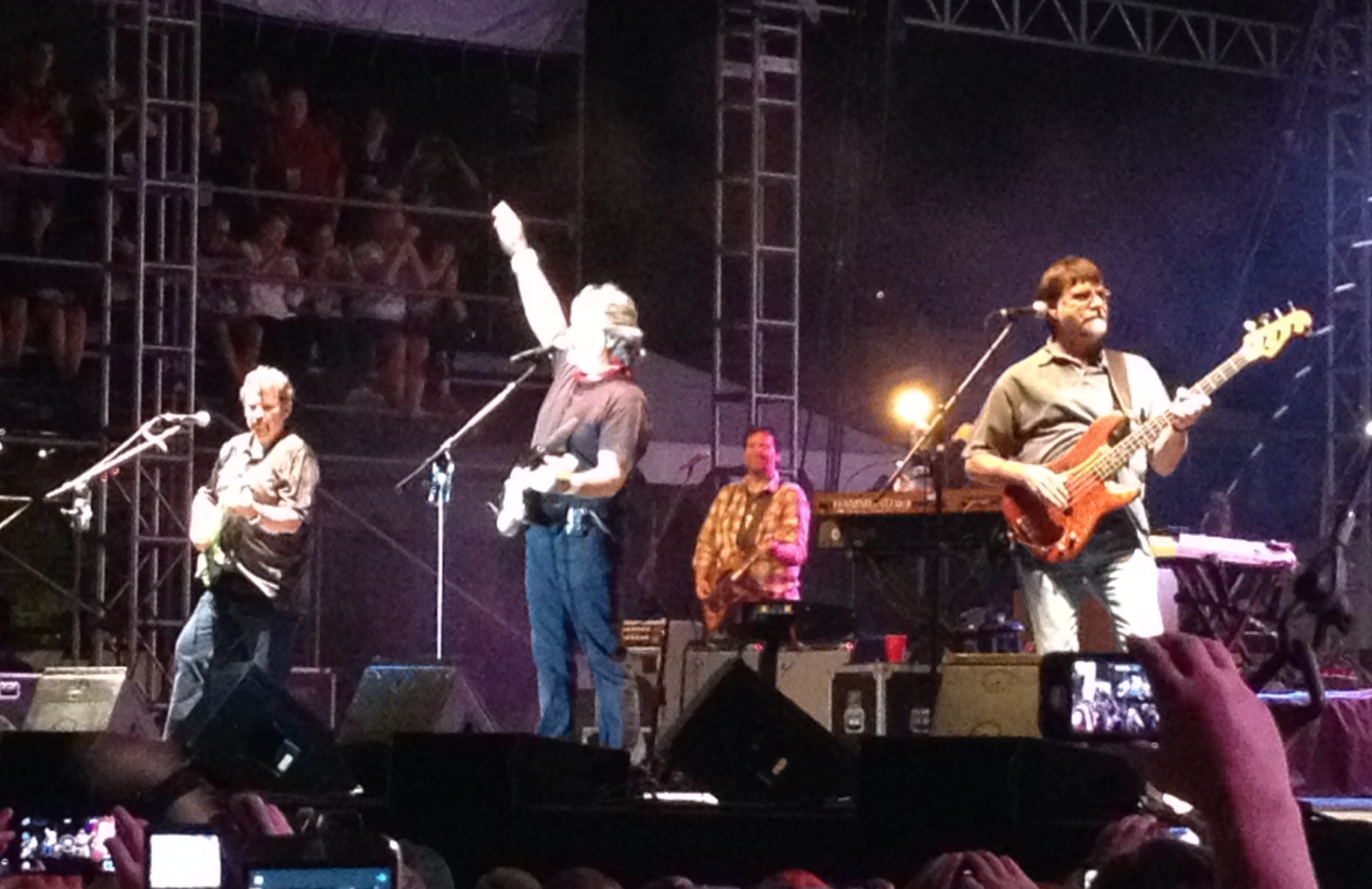
Background and career
Constance June Stuart (née Meador; born August 14, 1941), known professionally as Connie Smith, is an American country music singer and songwriter. Her contralto vocals have been described by music writers as significant and influential to the women of country music. Discovered in 1963, Smith signed with RCA Victor Records the following year and remained with the label until 1973. Her debut single "Once a Day" was nominated at the Grammy Awards for Best Female Country Vocal Performance and reached number one on the Billboard Hot Country Songs chart in November 1964 and remained at the top position for eight weeks. In 1991, Trisha Yearwood's debut single went to number one for two weeks, but Smith still held the record for the most number of weeks at number one by any female country artist in history. Taylor Swift's "We Are Never Ever Getting Back Together" broke Smith's 48-year record in 2012. Smith's success continued through 1960s and mid-1970s, with 19 more top-10 hits (including "Then and Only Then", "Ain't Had No Lovin'", "Cincinnati, Ohio", "I Never Once Stopped Loving You", and "Ain't Love a Good Thing") on the country songs chart. In the early 1970s, Smith began to record gospel music more frequently as she became more serious in her Christianity. As she focused more heavily on religion, Smith became known for her outspoken religious demeanor at concerts and music venues. At the same time, she spent more time raising her five children than focusing on music. She eventually went into semiretirement in 1979 and returned to recording briefly in the mid-1980s with Epic Records. In the 1990s, though, she returned to music permanently with her collaboration with Marty Stuart. Their musical friendship became romantic, leading to their marriage in 1997, and to Connie Smith, her first studio album in 20 years. Critically acclaimed, Smith began performing again and has recorded two more studio albums. Smith has been nominated for 11 Grammy Awards, including eight nominations for Best Female Country Vocal Performance. She has also been nominated for one Academy of Country Music award and three Country Music Association awards. Rolling Stone included her on its list of the 100 greatest country music artists and CMT ranked her among the top 10 in its list of the 40 greatest women of country music. She has been a member of the Grand Ole Opry cast since 1965. In 2012, Smith was inducted into the Country Music Hall of Fame.
Constance June Meador was born to Wilma and Hobart Meador in Elkhart, Indiana. Her parents were originally from West Virginia, and the family returned there when Smith was five months old. They later moved to Dungannon, Ohio. Her biological father was an abusive alcoholic. "There were some tough times that I went through as a young child," she told an interviewer. Wilma Meador eventually divorced Hobart Meador and remarried to Tom Clark, who brought eight children into the marriage to join Meador's five; the couple had two children, totaling 15 children. Smith was influenced by music in her childhood. Her stepfather played mandolin, one brother played fiddle, and another brother played guitar. On Saturday nights, the family tuned into the Grand Ole Opry radio broadcast. She took up the guitar following a lawnmower accident that nearly cut off her leg. While she was recovering in the hospital, she was given a guitar and learned how to play different chords. Smith did not perform publicly until high school, when a friend invited her to sing Connie Francis's pop hit "My Happiness". With only one-tenth of a point behind the valedictorian, Smith graduated from Salem-Liberty High School in 1959 as the class salutatorian. Following graduation, she worked as telephone operator in Lowell, Ohio. She also worked in a grocery store, as a drugstore clerk, and as a dental assistant. At the age of 19, she married her first husband, Jerry Smith, who encouraged her singing, and she began performing with more frequency. Her first professional performance was at the 1962 Washington County Fair. She then briefly joined the cast of Saturday Night Jamboree, a local country-music television program, but was fired after her first performance, later theorizing it was because she was pregnant. She then successfully auditioned for and landed a spot on a similar program for WSAZ-TV. Despite performance opportunities, Smith intended to remain a homemaker and mother. In August 1963, Smith entered a talent contest at the Frontier Ranch country music park near Columbus, Ohio. Performing Jean Shepard's "I Thought of You", she won the talent contest and five silver dollars. Judging the contest was country singer-songwriter Bill Anderson, who was instantly impressed by her voice. "At first I thought they were playing a record and she was lip sync'ing it," he later explained. In January 1964, Smith ran into Anderson again at a country-music package concert in Canton, Ohio. He invited her to perform with him on Ernest Tubb's Midnite Jamboree program in Nashville, Tennessee. When Smith performed on the program in March 1964, she found out that she would not be performing with Anderson, but with Tubb. Impressed by her performance, Loretta Lynn introduced herself after the show and gave her career advice. After performing on the program, Smith returned to Nashville that May to make demonstration records by Anderson that he planned on pitching to other country artists. Anderson's manager, Hubert Long, brought the demo to the RCA Victor label, where producer Chet Atkins heard it. Also impressed by her vocals, Atkins offered Smith a recording contract, and she signed on June 24, 1964.
After signing Smith to RCA, Atkins found himself too busy with other artists. Instead, he enlisted Bob Ferguson to act as Smith's producer. The pair developed a close professional relationship, and Ferguson remained her producer until she departed from RCA. "I couldn't have asked for a better person to work with. He is one of the finest men I've ever known," Smith later said. Smith's first session took place on July 16, 1964, where she recorded four songs. Three of these tracks were written by Bill Anderson, who agreed to write material for Smith. Two days later, Smith made her debut on the Grand Ole Opry. One of the four songs recorded on July 16 was "Once a Day", which was chosen to be Smith's debut single. "Once a Day" was released in August 1964 and reached number one on the Billboard Hot Country Singles chart on November 28. It remained at the number-one position for eight weeks in late 1964 and early 1965. "Once a Day" became the first debut single by a female country artist to reach number one. For nearly 50 years, the single held the record for the most weeks spent at number one on the Billboard country chart by a female artist. Smith started performing more regularly with "Once a Day"'s success. Bill Anderson briefly served as her manager, but was replaced by Charlie Lamb. Smith made her first network-television appearance in October 1964 on ABC's The Jimmy Dean Show. In March 1965, RCA Victor released her self-titled debut album It also reached the number-one spot, spending a total of seven weeks at the top of the Billboard Top Country Albums chart. Dan Cooper of Allmusic gave the disc a positive reception and described Smith as "a down-home Streisand fronting the Lennon Sisters." Bill Anderson fulfilled his promise to RCA Victor and continued writing Smith's next single releases. Producer Bob Ferguson and steel guitar player Weldon Myrick created a "high" and "punchy" production that Ferguson thought would sound pleasing on car radios. "I thought it was an awfully thin sound, but it wound up being very popular," Myrick recalled. In 1965, RCA issued Smith's follow-up single written by Anderson titled "Then and Only Then", which reached number four on the Billboard country songs chart. It was followed by another Anderson-written top-10 single titled "I Can't Remember". In October 1965, the latter song appeared on Cute 'n' Country, Smith's second studio album. Although she disliked the name of the LP, it became her second disc to top the Billboard country albums chart. She had additional top-five Billboard country singles through early 1966 with Anderson's "Nobody But a Fool (Would Love You)" and Priscilla Mitchell's "If I Talk to Him". In 1965, Smith became a member of the Grand Ole Opry. In 1966, Ferguson felt pressured from RCA headquarters to market Smith's sound toward "middle-of-the-road" country pop material. Smith was against the pop production, but nevertheless agreed to try it. The pair did several sessions featuring a string instrumentation. The style appeared on her next studio releases Born to Sing (1966) and Downtown Country (1967). Both albums featured full orchestras in the background and cover versions of singles by pop artists of the time. Featured on the LPs were the singles "Ain't Had No Lovin'" and "The Hurtin's All Over", which both reached the Billboard country top five. During this time, Smith appeared in several country music vehicle films, where she performed many of her current hit recordings. In 1966, she appeared in the films Second Fiddle to a Steel Guitar and The Las Vegas Hillbillys, the latter of which starred Jayne Mansfield. In 1967, she appeared in The Road to Nashville and Hell on Wheels. Smith's touring schedule also increased. In 1966, she formed her own touring band named the Sundowners and later married the band's guitar player, Jack Watkins. In February 1967, RCA's subsidiary budget label Camden released Smith's next studio LP titled Connie in the Country. The LP included covers of popular country recordings of the era and "Cry, Cry, Cry", a single by Smith that reached the top 20. In May 1967, RCA released an album of songs written solely by Bill Anderson titled Connie Smith Sings Bill Anderson. Smith later commented, "it was an honor, not a favor" to record an album of all Anderson tunes. It included covers of Anderson's hits such as "City Lights" and "That's What It's Like to Be Lonesome". Included on the album was "Cincinnati, Ohio", which Smith released as a single and brought the song to the Billboard country top five. Its success later inspired the city of Cincinnati to declare its own Connie Smith Day in June 1967. Smith remained at her commercial zenith through 1967 with a continued series of top-10 recordings. Her further hits included the "I'll Come Runnin'", "Burning a Hole in My Mind", "Baby's Back Again", and "Run Away Little Tears". Three of these recordings were included on Smith's 1967 album I Love Charley Brown, which reached the country LPs top 20.
By 1968, Smith had reached the height of her career. She was making multiple appearances on film and television, while attempting to balance touring with family life. The pressures of various responsibilities stressed Smith to a point where she nearly left her career. In 1968, she discovered Christianity, which brought solace to her personal and professional life. Ultimately, she chose to continue with her career and recorded for RCA every few months, but she reduced her touring schedule. She devoted the remainder of her time to family life and made efforts to appear on more Christian music programs. She worked alongside ministers Billy Graham and Rex Humbard. She also appeared on several Christian television shows.
With Smith's commitment to RCA, the label continued releasing new albums and singles with regularity. With her new religious convictions, Smith also prioritized including gospel recordings on her secular albums. This remained a theme throughout her career. In 1968 and 1969, RCA Victor released the studio LPs Sunshine and Rain, Back in Baby's Arms, and Connie's Country. These recordings yielded a cover of Marty Robbins's hit Ribbon of Darkness, a song written by Canadian singer/songwriter Gordon Lightfoot. Smith's version reached the top 20 of the Billboard country singles chart. In Canada, "Ribbon of Darkness" became her first song to top their RPM Country chart. Entering the 1970s, Smith made the top 10 of the North American country charts with less frequency, but continued having commercial success. The singles "You and Your Sweet Love" and "I Never Once Stopped Loving You" (both written by Bill Anderson) made the Billboard country top 10 in 1970. Her 15th studio LP of the same name was released in 1970 and made the top 20 of the Billboard country albums chart. During this period, Smith also teamed with country singer-songwriter Nat Stuckey to record two duet studio albums. The idea was crafted by Smith's producer (Bob Ferguson) and Stuckey's producer (Felton Jarvis). Both men thought the artists' voices would "blend well". The duo's first duet sessions produced a cover of Sonny James's "Young Love", which reached the top 20 of the Billboard country songs chart. Their first album of the same name featured covers of country and pop songs of the era. In an effort for Smith to record more gospel music, the duo cut a spiritual-themed LP in 1970 titled Sunday Morning with Nat Stuckey and Connie Smith. Christian radio programs often opened their shows with the duo's gospel music, which influenced RCA to release "If God Is Dead (Who's That Living in My Soul)" as a single in 1970. The song peaked in the lower reaches of the Billboard country chart. Journalists and writers took notice of Smith's RCA work following 1968. Biographer and writer Barry Mazor found that Smith's recordings had "a new delicacy of phrasing that shows itself". Mazor also found her albums to have more distinctive qualities, calling 1970's I Never Once Stopped Loving You to be "one of her most consistent and strongest albums". AllMusic's Stephen Thomas Erlewine praised Smith's recordings from 1968 to 1972, highlighting the strength of her vocals: "She may have been given some of the best songs, but the thing is, she deserved them; few others could give them grace and soul, as this always entertaining box amply proves." Authors Mary A. Bufwack and Robert K. Oermann commented that her later RCA singles "stand the test of time as among the most powerful country female vocal performances of the 1970s." In the early 1970s, Smith started recording more songs penned by Dallas Frazier. The pair had become close friends, which prompted Frazier to write songs for Smith that reflected situations in her personal life. Both Smith and Frazier described her 1970 single "Where Is My Castle" as being autobiographical of her recent marital troubles. "Anybody knows that its cathartic to sing how you feel about things," Smith later said. "Where Is My Castle" reached the top 20 of both the Billboard and RPM country singles charts. In 1971, RCA released Smith's cover of Don Gibson's "Just One Time". Backed by a large rhythm section, the recording reached number two on the Billboard and RPM country charts, becoming her most commercially successful single of the 1970s. Her 18th studio LP of the same name reached number 14 on the Billboard country albums chart and featured liner notes written by Loretta Lynn. With Smith being among RCA's top-selling recording artists, she had enough leverage to coax executives to let her record another gospel album. The result was 1971's Come Along and Walk with Me. The studio album featured gospel tracks written by spiritual writers such as Dottie Rambo. In 1972, Smith had three back-to-back top singles on the Billboard country chart: "Just for What I Am", "If It Ain't Love (Let's Leave It Alone)", and "Love Is the Look You're Looking For". RCA released the singles on three separate LPs: Ain't We Havin' Us a Good Time (1972), If It Ain't Love and Other Great Dallas Frazier Songs (1972), and Love Is the Look You're Looking For (1973). Her most commercially successful album was If It Ain't Love and Other Great Dallas Frazier Songs, which reached number 14 on the Billboard country albums chart. The studio project was recorded as a tribute to Dallas Frazier and featured 10 songs written by him. Frazier also sang several duets with Smith on the project. Before leaving her contract with RCA, the label released more LPs, including the compilation Dream Painter (1973). Its title track charted in the Billboard top 40.
In 1973, RCA promised to give Smith a better royalty and more creative control if she renewed her contract. In an updated contract, these terms were not met. Upon hiring a lawyer, she left RCA and was offered a contract by Columbia Records. In 1973, Smith signed a new recording contract with Columbia. The label gave her more creative control, including the opportunity to record one gospel album per year. At Columbia, she met with Clive Davis, who agreed to produce her work, but the label dismissed Davis before they could work together. Instead, producer Billy Sherrill chose to work with Smith. A disagreement about religion, though, ended the pairing before it began. She started recording alongside producer George Richey, who recently had success writing material for George Jones and Tammy Wynette. At Columbia, Smith was pressured into recording with more pop production than before. "From Day One at the new label, even more than before, it was a constant tussle, because I just am who I am," recalled Smith. She remained active in song selection and the recording process. Smith's first Columbia LP titled A Lady Named Smith (1973) included pop production such as string instrumentation and overdubbed background vocals. The LP reached number 31 on the Billboard country albums chart. Richey agreed to release "Ain't Love a Good Thing" as her first Columbia single. Instead, the Richey-Smith co-written song "You've Got Me (Right Where You Want Me)" proved to be the first label single. The decision disappointed Smith enough that she chose to end their professional relationship. The last Richey-produced project was Smith's first Columbia gospel LP, titled God Is Abundant. The album of religious material climbed to number 20 on the Billboard country albums chart.
Sources
Net-worth figure: Celebrity Net Worth (October 2026), in USD. Biography and career facts: the person's Wikipedia article and linked reporting. Snapshot date for all StarWorth figures: 28 October 2026.