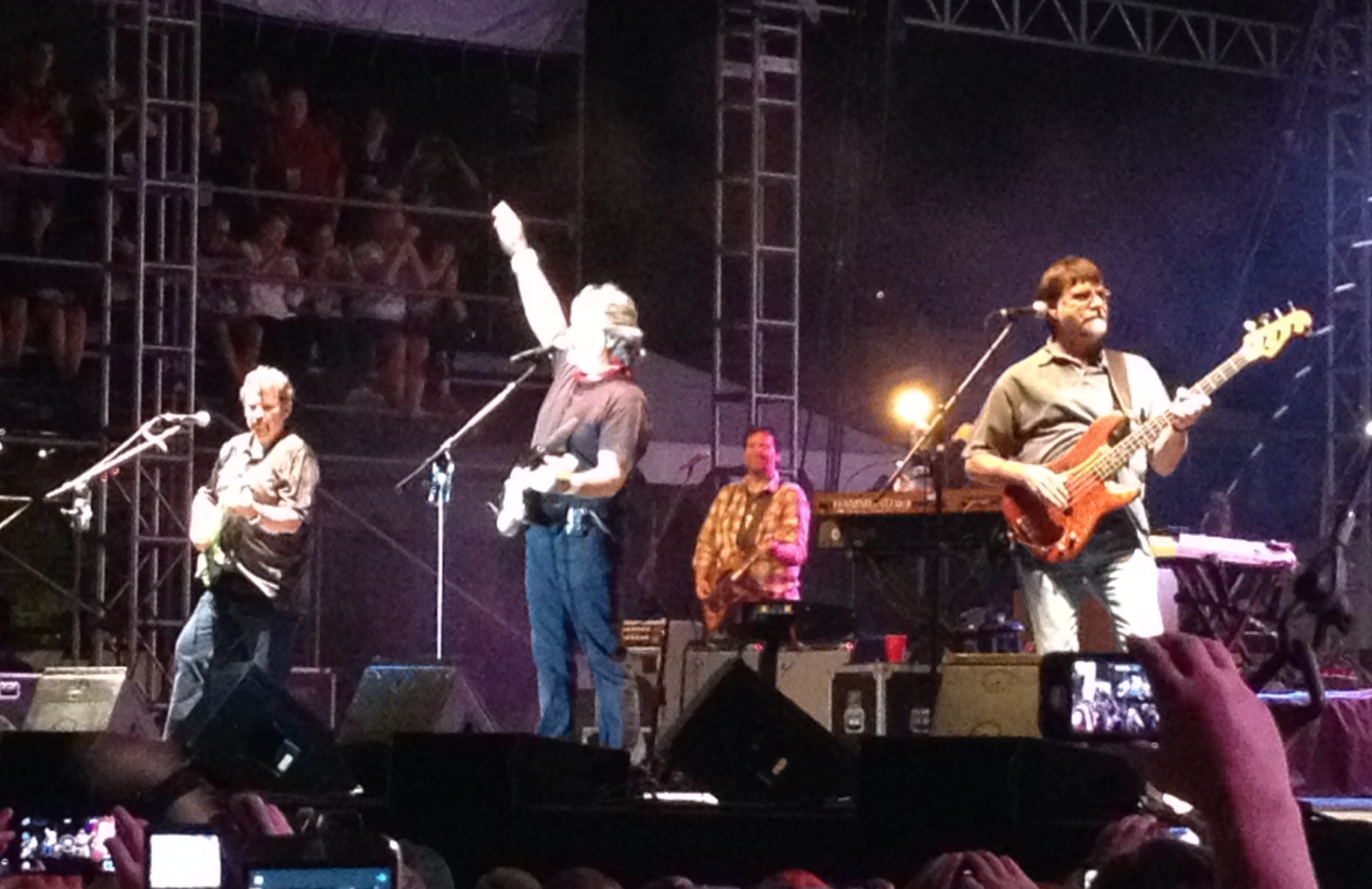
Background and career
Daniela Mercury (born Daniela Mercuri de Almeida on July 28, 1965) is a Brazilian singer, songwriter, dancer, and producer. In her solo career, Mercury has sold over 11 million records worldwide, and had 24 Top 10 singles in the country, with 14 of them reached No. 1. Winner of a Latin Grammy for her album Balé Mulato – Ao Vivo, she also received six Brazilian Music Award, an APCA award, three Multishow Brazilian Music Awards and two awards at VMB: Best Music Video and Photography. In 1991, Mercury released her self-titled album, which was followed by O Canto da Cidade a year later, boosting her career as a national artist and taking the axé music to the evidence. Over the years, Mercury released several albums, generating great singles like "Swing da Cor", "O Canto da Cidade", "À Primeira Vista", "Rapunzel", "Nobre Vagabundo", "Ilê Pérola Negra", "Mutante", "Maimbê Dandá", "Levada Brasileira", "Oyá Por Nós", among others. She recorded a commemorative DVD of Cirque du Soleil's 25th anniversary, and was part of the Montreal Jazz Festival. In addition, Mercury was invited to participate in the Alejandro Sanz's DVD, and sing with Paul McCartney in Oslo, Norway, during the delivery of the Nobel Peace Prize. In 2009 she released her album called Canibália, along with the album, Daniela launched an international tour. The album spawned three singles: "Preta" with Seu Jorge, "Oyá Por Nós" with Margareth Menezes and "Sol do Sul". That same year, writer and intellectual Camille Paglia, who had an intellectual "passion" for Madonna, said Daniela Mercury is the artist who Madonna would like to be. In 2011 the American TV channel CBS, elected Daniela Mercury as the "Carmen Miranda of the new times". The Canibália album was released in the United States yielded a critique of The New York Times saying: "Daniela Mercury goes beyond the concepts that were stressed during her career (...) with a contemporary pop, embracing ethnic and cultural diversity of Brazil (particularly african-Brazilian culture, while Daniela Mercury is white), remembering the past and transforming it."
Daniela Mercuri de Almeida was born on July 28, 1965, in the Portuguese Hospital in Salvador, Bahia. Her mother is Liliana Mercuri, a social worker of Italian ancestry, and her father is António Fernando de Abreu Ferreira de Almeida, a Portuguese emigrant industrial mechanic. Mercury grew up in a middle class household in the Brotas neighborhood of Salvador with her four siblings: Tom, Cristiana, Vânia (who would also become a singer, billed as Vânia Abreu), and Marcos. A troublemaker as a child, Mercury was nicknamed "drip-fire". She attended both the Ana Néri School and the Colégio Baiano. At eight years old, Mercury began taking dance lessons, particularly classical ballet, jazz, and African dances. At age 13, influenced by the work of Elis Regina, she decided to become a singer. Her repertoire consisted of bossa nova as well as the music of Caetano Veloso, Gilberto Gil, and Chico Buarque. To her parents' unease she started singing in local bars in 1980. She made her trio elétrico debut soon afterward, during the 1981 carnival. Mercury's zeal for dance eventually led her to the Federal University of Bahia, where she enrolled in the Dance School in 1984. A year later she married electronic engineer Zalther Póvoas and gave birth to Gabriel Almeida Póvoas. The next year she gave birth to daughter Giovana Almeida Póvoas.
From 1986 to 1988, Mercury was the lead singer for the band Cheiro de Amor. Mercury continued to pursue a career in music and, by 1988, was a backup singer for Gilberto Gil. In 1989, recorded her first two albums as the lead singer of pop band Companhia Clic. Their songs "Pega que Oh!" and "Ilha das Bananas" became minor hits in Bahia radio stations. As the 1990s began, Mercury decided to pursue a solo career.
Mercury's self-titled debut album was released in 1991 through independent record company Eldorado. The lead single of the album, "Swing da Cor", which features Olodum, became a number-one hit in Brazil, and the album was soon known as Swing da Cor. Another song from the album, "Menino do Pelô", which also features Olodum, became Mercury's second top-ten hit in Brazil, charting at number four. On the following year, Mercury shut off from the record company and, ever since, produces her own albums to negotiate the distribution of them later with the labels that are interested. In 1992, she presented the project "Som do Meio-Dia" (Midday Sound) at the Art Museum of São Paulo (MASP). The show brought together over thirty thousand spectators, which eventually leave the traffic jam in the vicinity of the Paulista Avenue. After forty-minutes concert, Daniela was removed from the stage by representatives of the São Paulo tourist office, that concerned with the museum structure, obtained an order from the military police to remove it from the local. Soon after the show, Daniela was hired by Sony Music label and through this, released her second solo album, O Canto da Cidade. The album was considered by journalist André Domingues one of the best MPB albums ever. O Canto da Cidade is Mercury's album with most number-one songs (four in total; "O Canto da Cidade", "O Mais Belo dos Belos", "Batuque" and "Você Não Entende Nada/Cotidiano"). O Canto da Cidade is recognized as the album responsible for taking Axé Music to mainstream audiences in Brazil. The album also yielded Mercury, a year-end special on Rede Globo channel, which were mixed with live performances in the square of Apotheosis in Rio de Janeiro, and video clips with Caetano Veloso, Herbert Vianna and Tom Jobim. Years later, the special, previously unreleased in video was released on DVD to celebrate the 15th anniversary of the release of the album. In July 1993, Mercury was one of Brazil's attractions at the prestigious Montreux Jazz Festival in Switzerland. Some consider O Canto da Cidade was the forerunner of the samba-reggae movement, then called Axé Music, gaining strength in all regions of the country and allowing other genre artists, were featured in the Brazilian music scene. It is believed that after this album, the Carnival of Bahia gained a massive media coverage. Mercury experienced during this period, a peak of popularity rarely seen in the history of Brazilian music industry, being dubbed "the hurricane of Bahia" and "Queen of the Axé".
In 1994, Música de Rua was released through Sony. The album was received with lukewarm reviews, with some critics complaining about the similarities between this album and its predecessor. Nevertheless, the album was very well received by the public, producing the hits "Música de Rua", "O Reggae e o Mar" (both number-one hits), "Por Amor ao Ilê" (a top-ten hit) and "A Rosa" (top-twenty). This was Mercury's first album to produce singles which have failed to chart. In 1996, Feijão com Arroz was released through Sony. This album was much better received by the critics than its predecessor. It is Mercury's most well rated album at Allmusic, with four and a half stars. As of today, Feijão com Arroz is Mercury's second best selling album, behind only O Canto da Cidade. It produced the hits "À Primeira Vista", "Nobre Vagabundo", "Rapunzel" (all number-one hits), "Minas com Bahia" (which features Samuel Rosa from Skank and was a top-twenty hit) and "Feijão de Corda" (a top-ten hit). In 1998, Mercury's first live album, Elétrica was released through Sony. It produced the top-ten hit "Trio Metal", which charted at number eight.
In 2000, Mercury released her fifth studio album, Sol da Liberdade, through BMG. It produced two number-one singles ("Ilê Pérola Negra" and a cover of Antonio Marcus' "Como Vai Você"). The album, which was produced by Suba, was innovative in Mercury's career for its fusion with electronic music sounds. The following year, Mercury released Sou de Qualquer Lugar through BMG. The album sold half of its predecessor, but was able to produce the number-one single "Mutante", a cover of Rita Lee. In this album, Mercury also experimented with electronic sounds. In April 2003, Mercuy's second live album, MTV ao Vivo – Eletrodoméstico, was released through BMG. It was recorded on January 23 and 24 of that same year at the Castro Alves Theater in Salvador for MTV Brasil. It was also released in the DVD format, Mercury's first. Among the artists who performed with the singer were Dulce Pontes, Rosario Flores, Jovanotti, Carlinhos Brown and Olodum. The sales were very inferior to Mercury's previous and it only produced one top twenty hit ("Meu Plano"). In 2004, Carnaval Eletrônico was released through BMG. For the recording of this album, Mercury invited DJs and producers of electronic music in Brazil, as well as Gilberto Gil, Carlinhos Brown, and Lenine. It is a commemorative disc celebrating the five years of her having formed TrioTechno, the first trio elétrico of electronic music in Bahian Carnaval. The disc received a Latin Grammy nomination for best pop album of the year and Mercury was nominated for a TIM Award for best female pop/rock vocalist. Internet users voted Carnaval Eletrônico the best pop album of the year online in one of Brazil's most important weekly magazines Revista Isto É.
Sources
Net-worth figure: Celebrity Net Worth (October 2026), in USD. Biography and career facts: the person's Wikipedia article and linked reporting. Snapshot date for all StarWorth figures: 28 October 2026.