Background and career
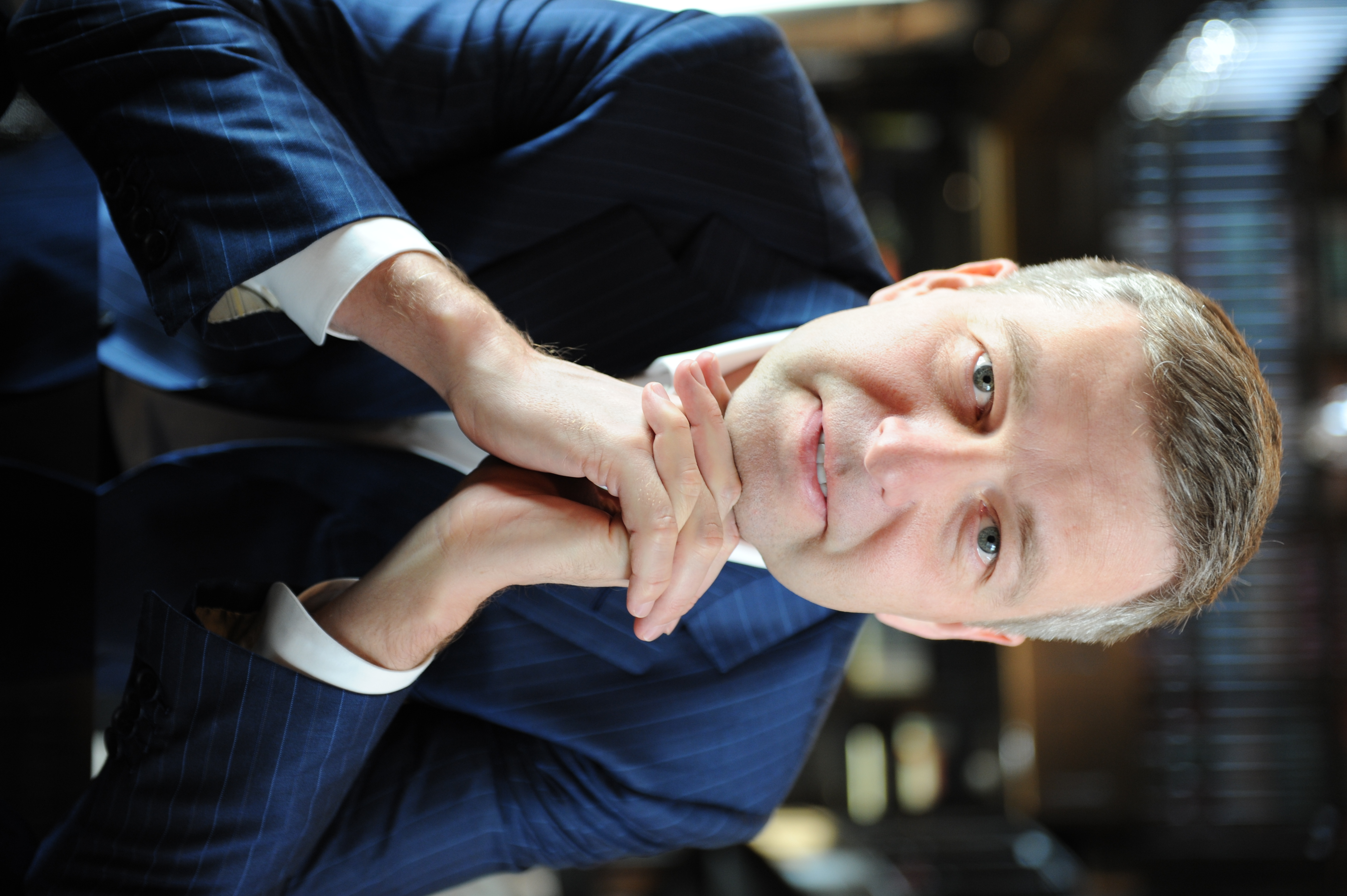
Dmitry Yevgenyevich Rybolovlev (Russian: Дмитрий Евгеньевич Рыболовлев, IPA: [ˈdmʲitrʲɪj jɪvˈɡʲenʲjɪvʲɪtɕ rɨbɐˈlovlʲɪf]; born 22 November 1966) is a Russian oligarch, billionaire businessman, and investor. Rybolovlev became chairman of the Russian fertilizer producer Uralkali in 1995. In 2010, he sold his majority share of Uralkali to three Kremlin-linked oligarchs for $6.5 billion. As of 2021, Rybolovlev had a reported net worth of $6.7 billion, which ranked him 391st on Forbes's list of billionaires. In 2011, Rybolovlev became the majority owner and president of the football club Monaco. He is one of the alleged victims of Swiss art transporter Yves Bouvier as part of the Bouvier Affair. His hobbies include sailing where his yachts named Skorpis race competitively, winning the ClubSwan 50 World Championship and taking line honour in the 2021 Fastnet Race sailing his ClubSwan 125.
Dmitry Rybolovlev was born in a Russian family, in Perm. His parents worked at the department at the Perm State Medical University named after Academician E.A Wagner.
He entered the business world in 1990 after graduating from the Perm Medical Institute. He worked as a doctor before going into business. As a doctor's income was no longer enough to comfortably support a family during the final years of the Soviet Union, he began his first business project, a small medical enterprise that served the workers of local factories he set up together with his father, a professor of medicine. Rybolovlev earned his first million dollars by reselling products, which the factories used to pay for in services rather than cash as was then a common practice in Russia. In 1992, Rybolovlev went to Moscow to take a business course and received a brokerage license from the Russian Ministry of Finance, one of the first in Russia and the first in the Perm region, which permitted him to trade and deal with securities. Upon his return to Perm, he founded a brokerage and investment company and started buying up shares of local enterprises such as Uralkali, Silvinit, Azot, Metafrax, and Solikamskbumprom.
In early 1994, Rybolovlev persuaded directors of these and some other enterprises to establish a bank, which he headed. He later decided to concentrate on two assets, Uralkali and Silvinit, given that the Russian potash industry was underdeveloped at the time due to the lack of interest from investors, unlike in the oil and gas sectors. Additionally, no one had been able to acquire controlling stakes in the industry's firms. From 1993 to 1995, Rybolovlev's portfolio included securities of Uralkali, Silvinit, Metafrax and Neftekhimik. These companies jointly developed the Verkhnekamskoye potash deposit, one of the world's largest. The violent nature of capital accumulation in early to mid-1990s Russia, including in the country's industrially developed regions like the Perm Krai, gave rise to violent criminals battling over control of companies and imposing "protection" fees on businesses. Refusing to cooperate with criminal gangs, Rybolovlev was forced to hire a bodyguard in 1993 before moving his family to safety in Switzerland in 1995. He also assigned bodyguards to all the directors of his enterprises, with only one, Evgeny Panteleimonov, director of Neftekhimik, refusing to accept. Together with Rybolovlev, he had insisted on stopping the supply of the company's products through a mafia-controlled straw firm, "Trade House FD". That same year, Evgeny Panteleimonov was killed at the doorstep of his house. A local gangster, Oleg Lomakin, turned out to be the organizer of the murder and was detained in April 1996. He accused Rybolovlev of being behind the murder, which led to Rybolovlev being arrested and spending 11 months in pretrial detention. Lomakin eventually withdrew his testimony, and, together with two accomplices, was sentenced to 15 years in prison for the murder of Panteleimonov. The judge concluded that the gangsters had killed the director of the company for breaking off relations with "Trade House FD". In 1997, Rybolovlev was acquitted by courts of law at three levels, including the Presidium of the Supreme Court of the Russian Federation. In media reports, he stated that he was extorted in jail to sell the shares of his company in exchange for his freedom, but had refused.
Over the next 15 years, Rybolovlev focused on developing Uralkali and eventually built it into a major global enterprise. According to the Russian business newspaper Vedomosti, by 2000 he had consolidated his controlling interest in the company and begun to reform and develop it. While in 2000 the capitalization of Uralkali was around $15 million, in eight years it reached $20 billion. While the overall market outlook for mineral fertilizers improved over this time, reforms made under Rybolovlev's leadership played an important role in transforming a Soviet-era enterprise into a worldwide industry leader. In 2000, Rybolovlev replaced the entire management of Uralkali, setting an increase in labor productivity as a key indicator, and as a result, it increased by 2.5 times in the period from 2000 to 2007. Following this rapid growth throughout the early 2000s, in 2002 Uralkali built the Baltic Bulk Terminal in St. Petersburg port as its own transport hub, providing the company with a high-tech universal transshipment complex for mineral fertilizers, and thereby improving logistics capabilities. In 2005, Uralkali and Belarusian potash producer Belaruskali combined their trade flows via a single trader, the Belarusian Potash Company (BPC). There were plans to float Uralkali on the London Stock Exchange in 2006, but Rybolovlev canceled the listing after the order book had already been closed because he considered the company's valuation by investors to be unfairly low. The decision turned out to be correct in many respects, since just a few days after the cancellation of the IPO, a major accident occurred at one of Uralkali's mines. Uralkali's IPO finally went ahead in 2007, making it one of the most successful in the history of Russian business. For 14.38% of shares, Uralkali raised almost $1 billion, with demand for shares exceeding supply by 23 times. The listing attracted major international investors due to the company's strong financial results and proved to be a pivot point for the traditionally closed-off Russian chemical industry, setting new standards for corporate governance transparency. In June 2010, Rybolovlev sold a 53% shareholding in Uralkali to a group of Russian investors: Kaliha Finance Limited (Suleyman Kerimov, 25%), Aerellia Investments Limited (Alexander Nesis, 15%) and Becounioco Holdings Limited (Filaret Galchev, 13.2%). The transaction price was not disclosed but was reported to be around $5.3 billion. In December 2010, Uralkali bought a 20% stake in Silvinit for $1.4 billion from Rybolovlev. The merger was finalized in July 2011, after Rybolovlev had sold the remaining shares of Uralkali. After he had sold his stakes in 2010, Rybolovlev left Russia to permanently relocate to Monaco.
In October 2006, a freshwater spring began flowing into one of Uralkali's mines under the city of Berezniki, leading the walls and pillars supporting the ceilings of large caverns to dissolve. There were attempts to keep the mine operable, but Rybolovlev decided to close it to avoid fatalities. As a result, mining equipment worth tens of millions of dollars and unexploited reserves of potash ore remained underground, but human casualties were avoided. As a result of the mine's collapse, large sinkholes appeared around the mine and in the city of Berezniki, forcing some 12,000 residents to evacuate their homes. New sinkholes continue to appear regularly throughout the Perm region though it is not clear whether all of them are caused by mining activities. The causes of the accident were investigated by commissions of Rostekhnadzor, the Ministry of Emergencies, and the Ministry of Natural Resources. The investigation concluded that the accident occurred for geological reasons, specifically a "previously unknown anomaly of geological structure". Then-head of the Ministry of Emergency Situations, Sergei Shoygu, said "the situation that we have today has been accumulating for decades. There are mistakes, including wartime, when very active and, perhaps, not very cautious works were performed". The neutrality of the commission's report has been challenged by some observers, who argued that the report was partly written by OAO Galurgia, a company affiliated with Uralkali. Some Russian sources claimed that Uralkali failed to undertake all the necessary work in order to fill the holes in the mines, which may have directly caused the appearance of the sinkholes. Uralkali repeatedly denied the allegations, with Russian economic newspaper Kommersant reporting that the company's experts carried out the backfilling of the mines based on the technical projects and mining operations plans in the volumes necessary to ensure the safety of existing mines. When Rybolovlev became a shareholder in Uralkali, the company began to actively engage in backfilling the voids inherited from the Soviet era. More than 70% of the funding was provided by Uralkali, the rest came from the federal budget. A report in The New York Times suggested that the situation was partially caused by the fact that Berezniki began as a Soviet labor camp, and was built directly over the mine to be within marching distance of work areas. Alleged state asset grab In October 2008, Russian Vice Premier Igor Sechin reopened the investigation, prompting speculation in international news outlets, including The New York Times, that a raider attack had been launched against Uralkali. The results of this investigation turned out to be almost identical to the conclusion of the first investigation, namely that the cause of the accident was a combination of geological and technological factors. Industry analysts at the time considered the re-opening of the investigation "an opportunistic move to gain a foothold in that industry or take some assets", where individuals close to the top echelons of government had sought to expand into the natural resources sector, in line with Putin's view that "Russia made a colossal error in the 1990s by allowing its enormous reserves of oil, gas and other natural resources to fall into private hands." In December 2008, Uralkali pledged to pay $218 million to the Russian government as compensation for costs incurred by the mine collapse. In February 2009, the company agreed to a payment of $71.8 million to the Perm region.