Background and career
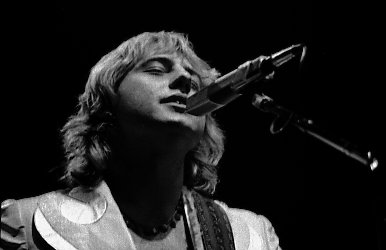
Gregory Stuart Lake (10 November 1947 – 7 December 2016) was an English musician, singer, and songwriter. He gained prominence as a founding member of the progressive rock bands King Crimson and Emerson, Lake & Palmer (ELP). Born and brought up in Dorset, Lake began to play the guitar at the age of 12 and wrote his first song, "Lucky Man", at the same age. He became a full-time musician at 17, playing in several rock bands until his friend and fellow Dorset guitarist Robert Fripp invited him to join King Crimson as lead singer and bassist. They found commercial success with their influential debut album, In the Court of the Crimson King (1969). Lake left the band in 1970 and achieved significant success in the 1970s and beyond as the singer, guitarist, bassist, and producer of ELP. As a member of ELP, Lake wrote and recorded several popular songs including "Lucky Man" and "From the Beginning". Both songs entered the UK and US singles charts. Lake launched a solo career, beginning with his 1975 single "I Believe in Father Christmas" which reached number two in the UK (behind Queen's "Bohemian Rhapsody"). He went on to release three solo albums with his Greg Lake Band and guitarist Gary Moore, recorded 1981 through 1983 (two studio albums, one live album). He was also briefly but notably a member of pop rock band Asia in 1983, replacing vocalist/bassist John Wetton (another former member of King Crimson) for three concerts in Tokyo. As well as collaborating and performing with other artists and with various groups in the 1980s, he had occasional ELP reunions in the 1990s and in 2010, and toured regularly as a solo artist into the 21st century. Lake also sponsored other artists, producing their recordings and helping them to get recording contracts. He also was a fundraiser for the National Center for Missing & Exploited Children. In 2026, Loudwire ranked him as the 5th greatest progressive rock singer of all time. He died on 7 December 2016 in London, of pancreatic cancer, at the age of 69.
Gregory Stuart Lake was born on 10 November 1947 in the Parkstone area of Poole in Dorset, to Harry, an engineer, and Pearl, a housewife. He grew up in the residential suburb of Oakdale. Speaking about his childhood, Lake said he was "born in an asbestos prefab housing unit" into a "very poor" family, and remembered several cold winters at home, but credits his parents for sending him money and food during his time as a struggling musician. He later described his upbringing as a happy one. Lake discovered rock and roll in 1957 when he bought Little Richard's "Lucille". At the age of 12, he first learned to play the guitar and wrote his first song, "Lucky Man", which he didn't write down, simply committing it to memory. He named his mother, a pianist, as his initial musical influence and she bought Lake a second hand guitar to learn on. Lake then took guitar lessons from Don Strike, who had a shop in Westbourne. Strike taught him "these awful Bert Weedon things", reading musical notation exercises with violin pieces by Niccolò Paganini, and playing 1930s pop tunes, the latter of which became an influence on Lake at the time. After roughly one year with Strike, Lake ended his tuition as he wished to learn songs by the Shadows, a favourite band of his, but Strike "wouldn't have any of it". Lake's second guitar was a pink Fender Stratocaster. Lake attended Oakdale Junior School followed by Henry Harbin Secondary Modern School, and left the latter in 1963 or 1964. He then took up work loading and unloading cargo at the Poole docks, and as a draughtsman for a short period. Lake then decided to become a full-time musician at the age of 17.
Lake joined his first band, Unit Four, playing cover songs as their singer and guitarist. Following their split in 1965, Lake and Unit Four bassist Dave Genes formed another covers group, the Time Checks, until 1966. He then became a member of the Shame, where he is featured on their single, "Don't Go Away Little Girl", written by Janis Ian. During his stay in Carlisle for a gig, Lake contracted pneumonia and continued to perform on stage. His bandmates refused to drive back home that night, leaving Lake to sleep in the van where he "woke up blue ... When we got home I was nearly dead ... That was probably the worst I went through". Following a brief stint in the Shy Limbs, by 1968 Lake was involved with the Gods, based in Hatfield, which he described as "a very poor training college", but the group secured a residency at the Marquee Club in London. Lake left the group in 1968 over creative differences as the band were to enter the recording studio. Their keyboardist Ken Hensley later said that Lake "was far too talented to be kept in the background".
In the 1960s, Lake formed a friendship with guitarist Robert Fripp, who would later lead King Crimson. Lake and Fripp were from Dorset and both received lessons from Don Strike. Fripp saw Lake perform in Unit Four in Poole, and was asked to be a roadie for a gig at Ventnor, Isle of Wight; when no audience turned up, Lake and Fripp decided to play tunes from their guitar lessons that Strike had taught them. In 1968 Fripp formed King Crimson after Giles, Giles and Fripp ended due to creative tensions and lack of commercial success. Michael Giles stayed as drummer and Ian McDonald joined on keyboards, flute and saxophone. Vocalist/bassist Peter Giles left the group, and was replaced by Lake. This was Lake's first time playing bass guitar; he had primarily been a guitarist for eleven years. Peter Sinfield was the band's primary lyricist, with Lake contributing some of the lyrics for their debut album In the Court of the Crimson King. After their contracted producer Tony Clarke walked away from the project, Lake produced the album. Released in October 1969, the album was an immediate commercial and critical success. Lake recalled: "There was this huge wave of response. The audiences were really into us because we were an underground thing – the critics loved us because we offered something fresh". King Crimson supported In the Court of the Crimson King with a tour of the UK and the US, with some of the shows featuring rock band the Nice as the opening act. In San Francisco during the US tour, Lake struck up a friendship with Nice keyboardist Keith Emerson; the two shared similar musical interests, were ready to leave their respective bands, and talked about the benefits of their forming a new group together. When King Crimson returned to the UK in early 1970, Lake agreed to sing on the band's second album In the Wake of Poseidon, and appear on the music television show Top of the Pops with them, performing the song "Cat Food".
In April 1970, Lake left King Crimson and joined with Emerson and drummer Carl Palmer of the Crazy World of Arthur Brown and Atomic Rooster, to form the progressive rock supergroup, Emerson, Lake & Palmer. Lake began with a Fender bass before he switched to a Gibson Ripper. Lake also contributed some work on acoustic and electric guitar to Emerson, Lake & Palmer, and his voice had a wider and more diverse range than anything the Nice had previously recorded. Emerson, Lake & Palmer became one of the most successful groups in the 1970s. Lake became known for performing on an expensive Persian carpet on stage; sometimes criticized as being one of the band's lavish egocentric stagepieces, Lake stated that it served a practical purpose: it covered a rubber mat he stood on at his microphone to address his fear of electrocution after he received an electric shock from a microphone on stage. Sinfield, who stated he went with Lake to purchase the carpet, felt that this was half the story; he believed that Lake was driven to keep up with Emerson's extravagant equipment: "He was one of those classic keep-up-with-the-Joneses cases." Emerson, Lake & Palmer conflicted between Emerson's interest in complex, classically influenced music and Lake's more straightforward rock tastes. Lake complained that Emerson chose to play in keys that were not a good fit for his voice. During the making of the band's second album Tarkus, Lake initially rejected the title track, but was persuaded to record it following a band meeting with management, which ended in the addition of an original Lake tune, "Battlefield", into the suite. Lake's track "From the Beginning", released on Trilogy in 1972, had no particular source of inspiration; "I just felt an inspiration to do it, and it flowed through me in a natural way. My hands fell upon these very unusual chords;... It was kind of a gift". It was released as a single, and reached number 39 in the US. In 1974, Emerson, Lake & Palmer took a break in activity. Lake used this time to focus on his family life, travel, and to write and release music. By then the band were tax exiles and relocated to Switzerland, France, Canada and the Bahamas as they were restricted to two months' stay in England a year. In March 1977, the band released Works Volume 1, a double album, with each member of the group getting one side of an album for his solo music, and the fourth side for the group to work together. Lake wrote five acoustic songs with lyrical assistance from Sinfield, with a conscious effort not to record "just ballads" in favor of recording a wider variety of musical styles. He then incorporated orchestral overdubs to the songs. One of them, "C'est la Vie", was released as a single. Lake called the album the "beginning of the end" of the band, as he stopped producing their albums, neither of which were a "really innovative record". In November 1977, the band released Works Volume 2. The band split up in 1979 following the unsuccessful album Love Beach, which the group were contractually obliged to record. The group reformed for a number of years in the mid-1990s and released two albums, Black Moon in 1992 and In The Hot Seat in 1994, before permanently disbanding except for one reunion concert in 2010 at London's High Voltage Festival.
In 1975, while still a member of ELP, when they were on hiatus, Lake achieved solo chart success when his single, "I Believe in Father Christmas", reached number two on the UK Singles Chart. It has become a Yuletide perennial. In the UK, the single sold over 13,000 copies in two days. Several months following the break-up of ELP in 1979, Lake began to write new songs and had "put down a tremendous amount of material" for his first solo album. He travelled to Los Angeles and worked with a group of session musicians to develop his songs further, but he found a lack of personality in the music, though not at the fault of the performers. Lake realised he wished to play as part of a group, and began to assemble members of the Greg Lake Band. The result, Greg Lake, was released in September 1981 on Chrysalis Records, and reached number 62 in both the UK and the US. The debut concert for the tour of the album took place in August 1981 at the Reading Festival, with bandmates Gary Moore on guitar, Ted McKenna on drums, Tommy Eyre on keyboards, and Tristram Margetts on bass. A concert at the Hammersmith Odeon during the tour in 1981, broadcast live on the King Biscuit Flower Hour, was released as a live album in 1995. Lake's second solo album Manoeuvres was released in July 1983. He disbanded the Greg Lake Band soon after completing it, without promoting or touring the album, and split with his record company. Adding to the decision, lead guitarist Gary Moore had written solo material that brought him a recording contract. In October 1983, at Carl Palmer's request, Lake briefly joined Palmer in the 1980s supergroup Asia, to replace fellow King Crimson alumnus John Wetton for four scheduled concerts in Japan. Lake agreed and spent six weeks learning Asia's songs, culminating in his performance in the "Asia in Asia" concert at the Nippon Budokan Hall in Tokyo, 6 December 1983, the first concert broadcast over satellite to MTV in the United States, and later made into a home video. Lake left the group after the tour, having joined as a favor for the Japanese concerts only. In 1986, Lake and Emerson decided to re-form Emerson, Lake & Palmer to record another album. However, Palmer continued to have commitments to Asia, so Lake and Emerson auditioned other artists. They found good rapport with drummer Cozy Powell, and recorded their eponymous album Emerson, Lake & Powell with him.


