Background and career
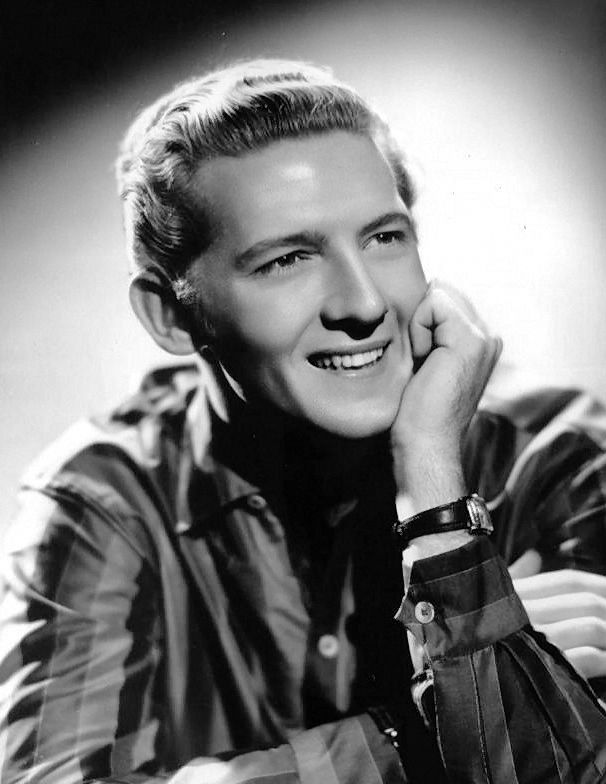
Jerry Lee Lewis (September 29, 1935 – October 28, 2022) was an American country music and rock and roll pianist, singer, and songwriter. Nicknamed "The Killer", he was described as "rock 'n' roll's first great wild man". A pioneer of rock and roll and rockabilly music, Lewis made his first recordings in 1952 at Cosimo Matassa's J&M Studio in New Orleans, Louisiana, and early recordings in 1956 at Sun Records in Memphis, Tennessee. He later became known for his chart topping country music recordings from the 1960s and 1970s. "Crazy Arms" sold 300,000 copies in the Southern United States, but his 1957 hit "Whole Lotta Shakin' Goin' On" shot Lewis to worldwide fame. He followed this with the major hits "Great Balls of Fire", "Breathless", and "High School Confidential". His rock and roll career faltered in the wake of his marriage to Myra Gale Brown, his 13-year-old cousin. His popularity quickly eroded following the scandal, and with few exceptions, such as a cover of Ray Charles's "What'd I Say", he did not have much chart success in the early 1960s. His live performances at this time were increasingly wild and energetic. His 1964 live album Live at the Star Club, Hamburg is regarded by many music journalists and fans as one of the wildest and greatest live rock albums ever. In 1968, Lewis made a transition into country music, and had hits with songs such as "Another Place, Another Time". This reignited his career, and throughout the late 1960s and 1970s, he regularly topped the country-western charts; throughout his seven-decade career, Lewis had 30 songs reach the top 10 on the Billboard Country and Western Chart. His number-one country hits included "To Make Love Sweeter for You", "There Must Be More to Love Than This", "Would You Take Another Chance on Me", and "Me and Bobby McGee". Lewis's successes continued throughout the decades, and he embraced his rock and roll past with songs such as a cover of The Big Bopper's "Chantilly Lace" and Mack Vickery's "Rockin' My Life Away". In the 21st century, Lewis continued to tour worldwide and release new albums. His 2006 album Last Man Standing was his best-selling release, with over a million copies worldwide. This was followed by Mean Old Man in 2010, another of his bestselling albums. Lewis had a dozen gold records in rock and country. He won four Grammy awards, including a Grammy Lifetime Achievement Award and two Grammy Hall of Fame Awards. Lewis was inducted into the inaugural class of the Rock and Roll Hall of Fame in 1986, and his pioneering contribution to the genre was recognized by the Rockabilly Hall of Fame. He was also a member of the inaugural class inducted into the Memphis Music Hall of Fame. He was inducted into the Country Music Hall of Fame in 2022. In 1989, his life was chronicled in the movie Great Balls of Fire, starring Dennis Quaid. In 2003, Rolling Stone listed his box set All Killer, No Filler: The Anthology at number 242 on their list of "500 Greatest Albums of All Time". In 2004, they ranked him No. 24 on their list of the 100 Greatest Artists of All Time. Lewis was the last surviving member of Sun Records' Million Dollar Quartet and the album Class of '55, which also included Johnny Cash, Carl Perkins, Roy Orbison, and Elvis Presley. Music critic Robert Christgau said of Lewis: "His drive, his timing, his offhand vocal power, his unmistakable boogie-plus piano, and his absolute confidence in the face of the void make Jerry Lee the quintessential rock and roller."
Jerry Lee Lewis was born on September 29, 1935, to Elmo Kidd Lewis Sr. and Mary "Mamie" Herron Lewis in Ferriday, Louisiana. He grew up in an impoverished farming family in Eastern Louisiana. In his youth, he began playing the piano with two of his cousins, Mickey Gilley (later a popular country music singer) and Jimmy Swaggart (later a popular televangelist). His parents mortgaged their farm to buy him a piano. Lewis was influenced by a piano-playing older cousin, Carl McVoy (who later recorded with Bill Black's Combo), the radio, and the sounds from Haney's Big House, a black juke joint across the tracks. On November 19, 1949, Lewis made his first public performance of his career, playing with a country and western band at a car dealership in Ferriday. The hit of his set was his performance of R&B artist Stick McGhee's "Drinkin' Wine, Spo-Dee-O-Dee". On the live album By Request, More of the Greatest Live Show on Earth, Lewis is heard naming Moon Mullican as an artist who inspired him. His mother enrolled him at the Southwest Bible Institute in Waxahachie, Texas, so that he could sing evangelical songs exclusively. When Lewis daringly played a boogie-woogie rendition of "My God Is Real" at a church assembly, his association with the school ended the same night. Pearry Green, then president of the student body, related how during a talent show, Lewis played some "worldly" music. The next morning, the dean of the school called Lewis and Green into his office to expel them. After that incident, he went home and started playing at clubs in and around Ferriday and Natchez, Mississippi, becoming part of the burgeoning new rock and roll sound and cutting his first demonstration recording in 1952 for Cosimo Matassa in New Orleans. Around 1955, he traveled to Nashville, where he played in clubs and attempted to build interest, but was turned down by the Grand Ole Opry, as he was already at the Louisiana Hayride country stage and radio show in Shreveport.
Lewis made his first recordings in 1952 at Cosimo Matassa's J&M Recording Studio in New Orleans, Louisiana. He covered Lefty Frizzell's "Don't Stay Away (Till Love Grows Cold)" and his own instrumental composition "Jerry's Boogie" (a.k.a. "New Orleans Boogie").
In November 1956, Lewis traveled to Memphis to audition for Sun Records. Label owner Sam Phillips was in Florida, but producer and engineer Jack Clement recorded Lewis's rendition of Ray Price's "Crazy Arms" and his own composition "End of the Road". In December 1956, Lewis began recording prolifically as a solo artist and as a session musician for other Sun artists, including Carl Perkins and Johnny Cash. His distinctive piano playing can be heard on many tracks recorded at Sun in late 1956 and early 1957, including Carl Perkins's "Matchbox", "Your True Love", and "Put Your Cat Clothes On", and Billy Lee Riley's "Flyin' Saucers Rock'n'Roll". On December 4, 1956, Elvis Presley dropped in on Phillips to pay a social visit while Perkins was in the studio cutting new tracks with Lewis backing him on piano. Johnny Cash was also there watching Perkins. The four then started an impromptu jam session and Phillips left the tape running. These recordings, almost half of which were gospel songs, were released on CD as Million Dollar Quartet. Tracks also include Elvis Presley's "Don't Be Cruel" and "Paralyzed", Chuck Berry's "Brown Eyed Handsome Man", and Pat Boone's "Don't Forbid Me".
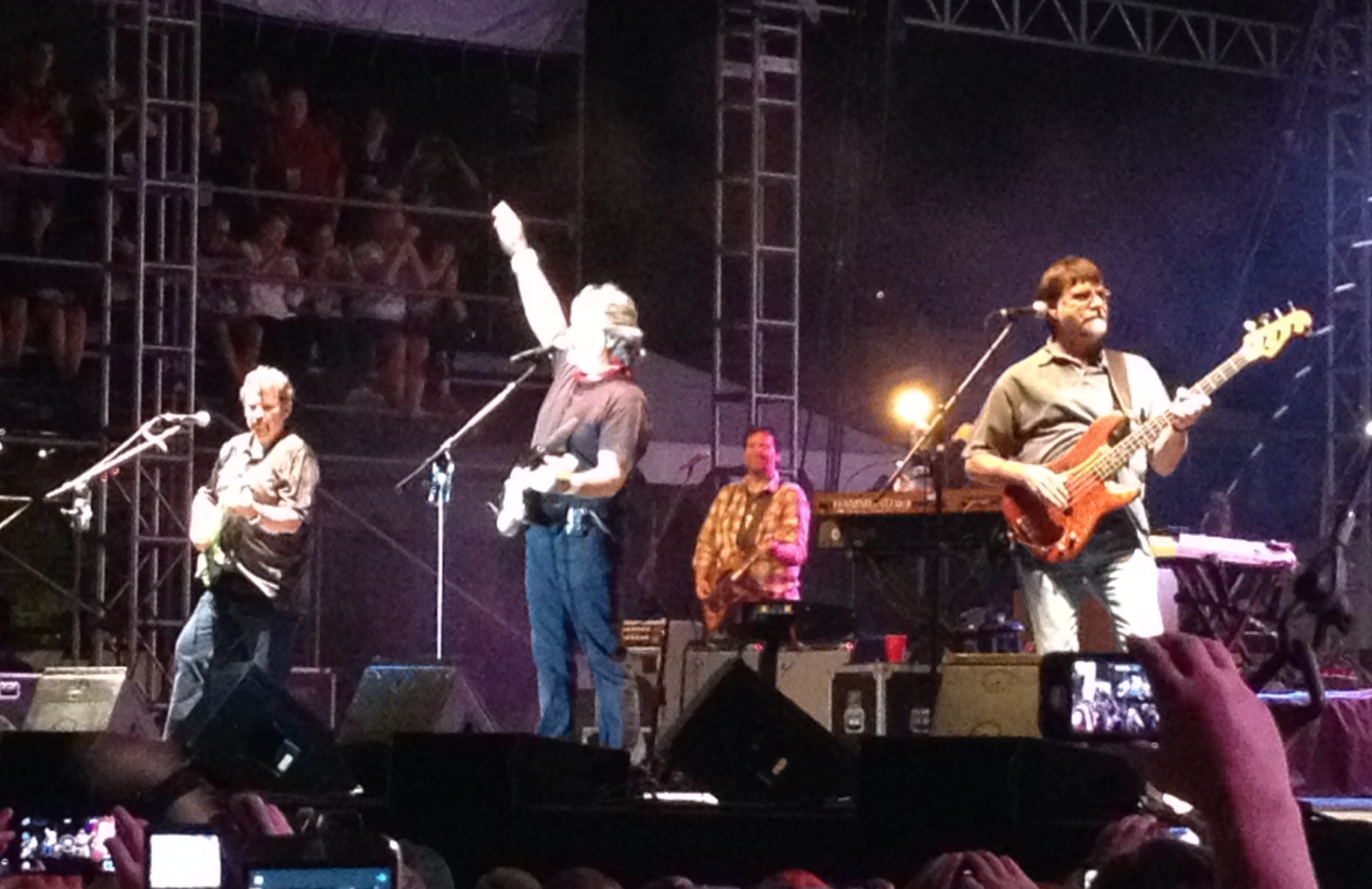
Lewis's own singles (on which he was billed as "Jerry Lee Lewis and his Pumping Piano") advanced his career as a soloist during 1957, with hits such as "Whole Lotta Shakin' Goin' On", a Big Maybelle cover, and "Great Balls of Fire", his biggest hit, bringing him international fame and criticism of the songs, which prompted some radio stations to boycott them. In 2005, "Whole Lotta Shakin' Goin' On" was selected for permanent preservation in the National Recording Registry of the Library of Congress. According to several first-hand sources, including Johnny Cash, Lewis, a devout Christian, was troubled by the sinful nature of his own material, which he believed was leading his audience and himself to Hell. This aspect of Lewis's character was depicted in Waylon Payne's portrayal of Lewis in the 2005 film Walk the Line, based on Cash's autobiographies. As part of his stage act, Lewis pounded the keys with his heel, kicked the piano bench aside, and played standing, raking his hands up and down the keys, sat on the keyboard, and stood on the piano. He told the Pop Chronicles that kicking over the bench originally happened by accident, but when it got a favorable response, he kept it in the act. His inaugural television appearance, in which he demonstrated some of these moves, was on The Steve Allen Show on July 28, 1957, where he played "Whole Lotta Shakin' Goin On". His dynamic performance style can be seen in films such as High School Confidential (he sang the title song from the back of a flatbed truck), and Jamboree. Cub Koda called him "rock and roll's first great wild man" and also "rock and roll's first great eclectic". Classical composer Michael Nyman has also cited Lewis's style as the progenitor of his own aesthetic. In 1960, Phillips opened a new state-of-the-art studio at 639 Madison Avenue in Memphis, abandoning the old Union Avenue studio where Phillips had recorded B.B. King, Howlin' Wolf, Elvis Presley, Roy Orbison, Carl Perkins, Lewis, Johnny Cash, and others, and also opened a studio in Nashville. At the latter studio, Lewis recorded his only major hit during this period, a rendition of Ray Charles's "What'd I Say" in 1961. In Europe, other updated versions of "Sweet Little Sixteen" (September 1962 UK) and "Good Golly, Miss Molly" (March 1963) entered the hit parade. On popular EPs, "Hang Up My Rock and Roll Shoes", "I've Been Twistin'", "Money", and "Hello Josephine" also became turntable hits, especially in nascent discothèques. Another recording of Lewis playing an instrumental boogie arrangement of the Glenn Miller Orchestra's "In the Mood" was issued on the Phillips International label under the pseudonym "The Hawk".
Lewis's turbulent personal life was hidden from the public until a May 1958 British tour where Ray Berry, a news agency reporter at London's Heathrow Airport (the only journalist present), learned about Lewis's third wife, Myra Gale Brown. She is Lewis's cousin and was 13 years old when they married—though Lewis, who was 22 years old at the time, claimed she was actually 15. The publicity caused an uproar, and the tour was canceled after only three concerts.
Sources
Net-worth figure: Celebrity Net Worth (October 2026), in USD. Biography and career facts: the person's Wikipedia article and linked reporting. Snapshot date for all StarWorth figures: 28 October 2026.