Background and career
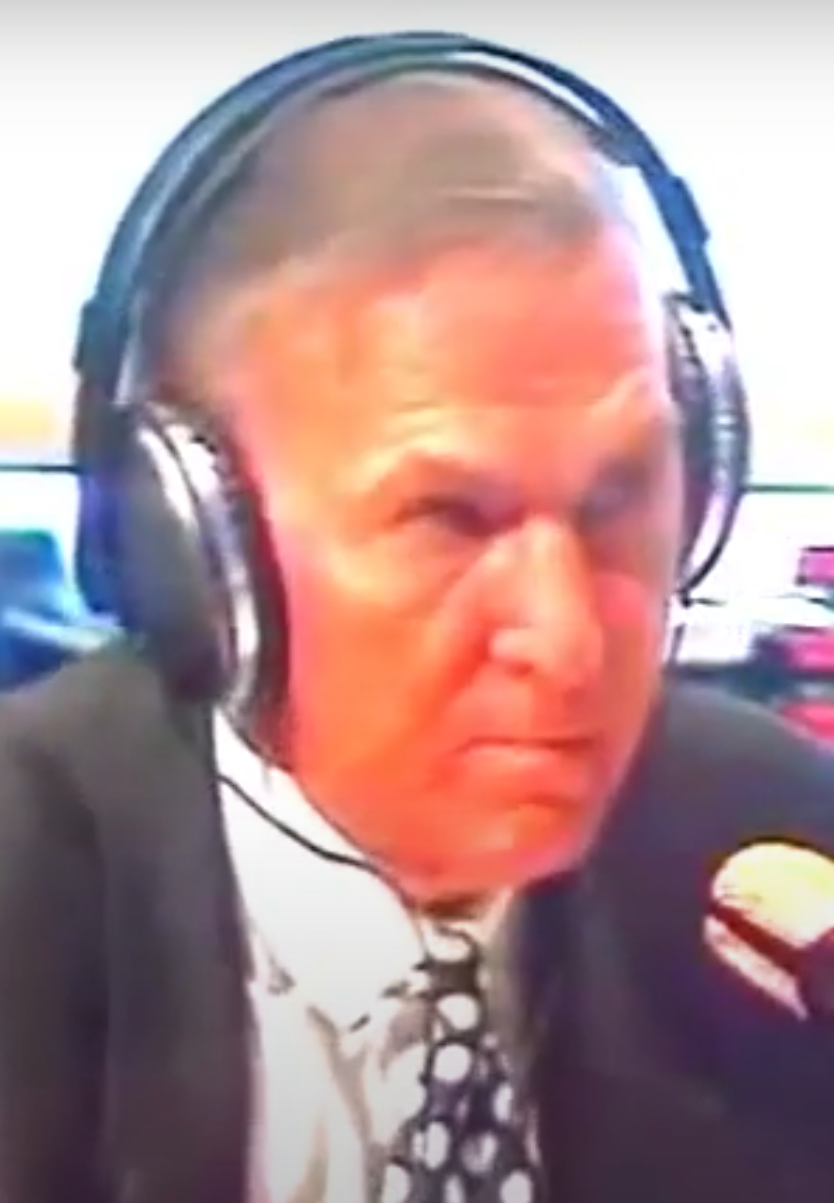
Richard John Sinclair Laws (8 August 1935 – 9 November 2025) was an Australian radio announcer who had a broadcasting career spanning 71 years. His distinctive voice earned him the nickname Golden Tonsils.
Born in Wau, Papua New Guinea, on 8 August 1935, to Australian parents, Laws contracted polio twice – once as a child, and again as a young man. He was educated at Mosman Preparatory School and Knox Grammar School in Sydney.
Best known as a talkback radio broadcaster, Laws was one of Australia's highest-paid radio personalities and was involved with Australian talkback radio broadcasting much longer than any other presenter. Although regularly commentating on topical news, Laws did not regard himself as a journalist but as an entertainer and salesman. He was nonetheless one of the few commercial radio personalities whose interviews with state and federal political leaders are considered to have a significant influence on the course of politics in New South Wales especially, and Australia in general. He also often appeared as a television show host and enjoyed a long recording career, as well as publishing many books of poetry. Laws' radio show was broadcast throughout Australia for many years. Laws is also a familiar voice for generations of Australians through work as a voice-over artist for commercials, and as a celebrity endorser of commercial products, including Valvoline motor oil, with his catchphrase "Valvoline, you know what I mean" and Oral-B toothbrushes (the slogan "Oral-B, the toothbrush more dentists use").
Laws began his radio career in 1953 at 3BO in Bendigo before working at several other rural radio stations and joining 2UE in 1957, the first of four terms at the Sydney radio station, during which time he became one of the first Australian disc jockeys to play rock 'n' roll music (along with Bob Rogers, Tony Withers and Stan Rofe). Laws pioneered the practice (soon taken up by Rofe) of using contacts in the airline industry to supply him with the latest international pop releases, giving him an edge at a time when Australian releases of many British and American pop records might be delayed for months. Laws left 2UE in 1959, and moved to the Hunter Valley, where he ran a farm. In the period between 1959 and 1962 Laws worked at both 2HD Newcastle and his first stint at 2SM. The newspaper advertisement for his move to the Sydney station showed him holding a small Mexican puppy. It was during this time he first worked with John Brennan. From 1957 to 1959 on 2UE each of the 3 pop presenters: Laws; Tony Withers and Bob Rogers had shows lasting just half an hour from 5:00pm playing the latest hits. During this time the afternoon newspaper the Daily Mirror ran a story about the imminent death due to cancer of Withers. In truth Withers was running away to Britain to broadcast on the new offshore pirate radio station ships due to his desire to hide his homosexuality, a life style not tolerated sympathetically in Australia at the time. Brennan; Laws and Withers are said to have had the best voices on radio during this period. In 1962, he moved back to Sydney, where he joined 2GB, remaining with the station for two years before he rejoined 2UE in 1964. His stint at 2UE continued until 1969, at which point he contracted to 2UW, where he was to remain for almost 10 years. He returned to 2UE in 1979, this time for another five years. He then moved to 2GB after a highly publicised bid for his services, but returned to the 2UE fold when the station was number eight in the ratings. The return of Laws was the primary cause of the station becoming number one in Sydney for many years. Laws' radio program was syndicated nationwide, and was especially popular in rural areas. Capital city stations taking Laws included 4BC in Brisbane, 2CC in Canberra, 7HOFM in Hobart and Mix 104.9 in Darwin. In 1983, Communications lecturer Glen Lewis wrote of Laws:
He sets the agenda by complaining vigorously about something, lays down the line for the day, then accepts calls which mostly reflect his own viewpoint... he mostly gets the restatement of cliched views [from callers]... Technically, he foregrounds minority group negative stereotyping in his show. Informally, he specialises in moral crusades against the unrespectable weak – the unemployed, prisoners, homosexuals, anti-nuclear demonstrators – in the name of the upright citizen and honest taxpayer.
Though best known as a radio host, Laws often worked as a television host and panelist. His early 1960s show Startime assisted in introducing mainstream Australia to Dame Edna Everage at which time Laws claimed Everage was "a very close friend of mine". Laws told columnist Valda Marshall in 1970 that he was 'not basically a TV star' and didn't 'feel altogether happy with the medium'. He was a judge on Australia's New Faces in 1969 and took over as host from Noel Ferrier on the panel advice show Beauty and the Beast in 1970. He also appeared on television in 1970 in an acting role in the children's drama Skippy. Laws quit Beauty and the Beast in 1971; a spokesman for the station which produced the show, Channel 7, claimed Laws had asked for a higher salary. In May 1971, he began hosting a daytime show called His and Hers. In 1982, he hosted a revived Beauty and the Beast for Network 10. In 1998, John Laws – In One Lifetime, a historical documentary program he compered, premiered on Network Ten and LAWS on Foxtel. While LAWS continued until 2000, John Laws – In One Lifetime was dropped after two episodes, although the remaining five episodes commissioned by Network 10 were aired later that year.