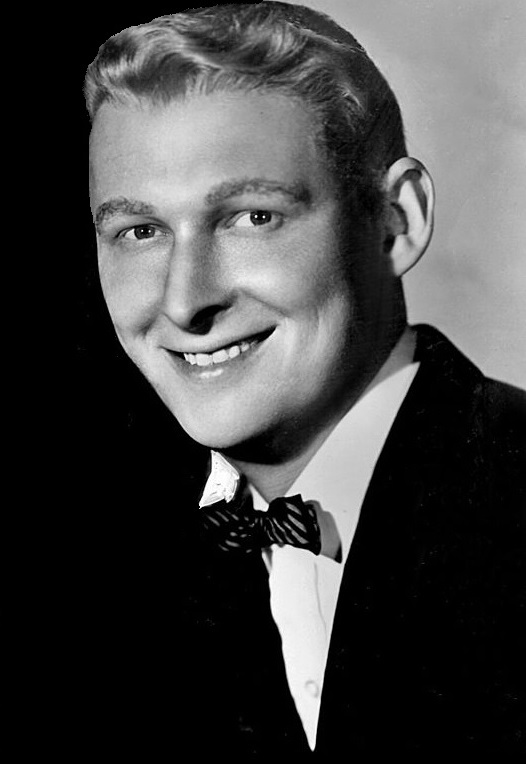
Background and career
Mike Nichols (born Igor Mikhail Peschkowsky; November 6, 1931 – November 19, 2014) was an American film and theatre director and comedian. He worked across a range of genres and had an aptitude for getting the best out of actors regardless of their experience. He is one of 28 people to have won all four of the major American entertainment awards: Emmy, Grammy, Oscar, and Tony (EGOT). His other honors included three BAFTA Awards, the Lincoln Center Gala Tribute in 1999, the National Medal of Arts in 2001, the Kennedy Center Honors in 2003 and the AFI Life Achievement Award in 2010. His films received a total of 42 Academy Award nominations, and seven wins. Nichols began his career in the 1950s with the comedy improvisational troupe The Compass Players, predecessor of The Second City, in Chicago. He then teamed up with his improv partner, Elaine May, to form the comedy duo Nichols and May. Their live improv act was a hit on Broadway, and each of their three albums was nominated for the Grammy Award for Best Comedy Album; their second album, An Evening with Mike Nichols and Elaine May, won the award in 1962. After they disbanded, he began directing plays, and quickly became known for his innovative theatre productions. His Broadway directing debut was Neil Simon's Barefoot in the Park in 1963, with Robert Redford and Elizabeth Ashley. He continued to direct plays on Broadway, including Luv (1964), and The Odd Couple (1965) for each of which he received Tony Awards. He won his sixth Tony Award for Best Direction of a Play with a revival of Arthur Miller's Death of a Salesman (2012) starring Philip Seymour Hoffman. His final directing credit was the revival of Harold Pinter's Betrayal (2013). Nichols directed and/or produced more than 25 Broadway plays throughout his prolific career. Warner Bros. invited Nichols to direct his first film, Who's Afraid of Virginia Woolf? (1966), followed by The Graduate (1967) for which Nichols won the Academy Award for Best Director. Nichols also directed Catch-22 (1970), Carnal Knowledge (1971), Silkwood (1983), Working Girl (1988), Postcards from the Edge (1990), Wolf (1994), The Birdcage (1996), Primary Colors (1998), Closer (2004), and Charlie Wilson's War (2007). Nichols additionally directed the HBO television film Wit (2001), and miniseries Angels in America (2003), both of which won him the Primetime Emmy Award for Outstanding Directing for a Limited or Anthology Series or Movie.
Nichols was born Igor Mikhail Peschkowsky on November 6, 1931, in Berlin, Germany. He was a son of Brigitte Claudia (née Landauer) and Pavel Peschkowsky, a physician. His father was born in Vienna, Austria, to a Russian-Jewish immigrant family. Nichols's father's family had been wealthy and lived in Siberia, leaving after the Russian Revolution, and settling in Germany around 1920. Nichols's mother's family were German Jews. His maternal grandparents were Gustav Landauer, a leading theorist on anarchism, and author Hedwig Lachmann. Around the age of four, Nichols had lost his hair following an allergic reaction to an inoculation for whooping cough; as a result, he wore wigs and false eyebrows throughout his entire adulthood. In April 1939, when the Nazis were arresting Jews in Berlin, seven-year-old Mikhail and his three-year-old brother Robert were sent alone to the United States to join their father, who had fled months earlier. His mother joined the family by escaping through Italy in 1940. The family moved to New York City on April 28, 1939. His father, whose original name was Pavel Nikolaevich Peschkowsky, changed his name to Paul Nichols, Nichols derived from his Russian patronymic. Before Paul Nichols had received his U.S. medical license, he was employed by a union on 42nd Street, X-raying union members. He later had a successful medical practice in Manhattan, enabling the family to live near Central Park.
Before he established his practice, he was a union doctor, and part of his job was X-raying union members. They didn't know about shielding X-ray machines, and he died of leukemia at 44. [in 1944] – Mike Nichols In 1944, Mike Nichols became a naturalized citizen of the United States and attended public elementary school in Manhattan (PS 87). After graduating from the Walden School, a private progressive school on Central Park West, Nichols briefly attended New York University before dropping out. In 1950, he enrolled in the pre-med program at the University of Chicago. He later described this college period as "paradise", recalling how "I never had a friend from the time I came to this country until I got to the University of Chicago." While in Chicago in 1953, Nichols joined the staff of struggling classical music station WFMT, 98.7 FM, as an announcer. Co-owner Rita Jacobs asked Nichols to create a folk music program on Saturday nights, which he named The Midnight Special. He hosted the program for two years before leaving for New York City. Nichols frequently invited musicians to perform live in the studio and eventually created a unique blend of "folk music and farce, showtunes and satire, odds and ends", along with his successor Norm Pellegrini. The program celebrated its 70th anniversary in the same time slot in 2023.
Nichols first saw Elaine May when she was sitting in the front row while he was playing the lead in a Chicago production of Miss Julie, and they made eye contact. Weeks later he ran into her in a train station where he started a conversation in an assumed accent, pretending to be a spy, and she played along, using another accent. They hit it off immediately, which led to a brief romance. Later in his career, he said "Elaine was very important to me from the moment I saw her." In 1953, Nichols left Chicago for New York City to study method acting under Lee Strasberg, but was unable to find stage work there. He was invited back to join Chicago's Compass Players in 1955, the predecessor to Chicago's Second City, whose members included May, Shelley Berman, Del Close, and Nancy Ponder, directed by Paul Sills. In Chicago, he started doing improvisational routines with May, which eventually led to the formation of the comedy duo Nichols and May in 1958, first performing in New York City. They performed live satirical comedy acts and eventually released three records of their routines, which became best-sellers. They also appeared in nightclubs and were on radio and television. Jack Rollins, who later became Woody Allen's manager and producer, invited them to audition and was most impressed: "Their work was so startling, so new, as fresh as could be. I was stunned by how really good they were, actually as impressed by their acting technique as by their comedy ... I thought, My God, these are two people writing hilarious comedy on their feet!" In 1960, Nichols and May opened the Broadway show An Evening With Mike Nichols and Elaine May, directed by Arthur Penn. The LP album of the show won the 1962 Grammy Award for Best Comedy Album. Personal idiosyncrasies and tensions, such as on the unsuccessful A Matter of Position, a play written by May and starring Nichols, eventually drove the duo apart to pursue other projects in 1961. About their sudden breakup, director Arthur Penn said, "They set the standard and then they had to move on," while talk show host Dick Cavett said "they were one of the comic meteors in the sky." Comedy historian Gerald Nachman describes the effect of their break-up on American comedy:
Nichols and May are perhaps the most ardently missed of all the satirical comedians of their era. When Nichols and May split up, they left no imitators, no descendants, no blueprints or footprints to follow. No one could touch them. They later reconciled and worked together many times. They appeared together at President Jimmy Carter's inaugural gala, in 1977, and in a 1980 New Haven stage revival of Who's Afraid of Virginia Woolf? with Swoosie Kurtz and James Naughton. May scripted Nichols's films The Birdcage (1996) and Primary Colors (1998). In 2010, at the AFI's "Life Achievement Award" ceremony, May gave a humor-filled tribute to Nichols.
Pre-film stage career After the professional split with May, Nichols went to Vancouver, British Columbia, to work in the theater, directing a production of Oscar Wilde's The Importance of Being Earnest and acting in a revival of George Bernard Shaw's St. Joan. In 1963, Nichols was chosen to direct Neil Simon's play Barefoot in the Park. He realized at once that he was meant to be a director, saying in a 2003 interview: "On the first day of rehearsal, I thought, 'Well, look at this. Here is what I was meant to do.' I knew instantly that I was home". Barefoot in the Park was a big hit, running for 1,530 performances and earning Nichols a Tony Award for his direction. This began a series of highly successful plays on Broadway (often from works by Simon) that would establish his reputation. After directing an off-Broadway production of Ann Jellicoe's The Knack, Nichols directed Murray Schisgal's play Luv in 1964. Again the show was a hit and Nichols won a Tony Award (shared with The Odd Couple). In 1965 he directed another play by Neil Simon, The Odd Couple. The original production starred Art Carney as Felix Ungar and Walter Matthau as Oscar Madison. The play ran for 966 performances and won Tony Awards for Nichols, Simon and Matthau. Overall, Nichols won nine Tony Awards, including six for Best Director of either a play or a musical, one for Best Play, and one for Best Musical. Who's Afraid of Virginia Woolf? In 1966, Nichols was a star stage director and Time magazine called him "the most in-demand director in the American theatre." Although he had no experience in filmmaking, after he befriended Elizabeth Taylor and Richard Burton, Warner Bros. invited Nichols to direct a screen adaptation of Edward Albee's Who's Afraid of Virginia Woolf?, starring Taylor, Burton, George Segal, and Sandy Dennis, for which he received a fee of $400,000. The film was critically acclaimed, with critics calling Nichols "the new Orson Welles", and a financial success, the number 1 film of 1966. The film was considered groundbreaking for having a level of profanity and sexual innuendo unheard of at that time. It won five Academy Awards and garnered thirteen nominations (including Nichols's first nomination for Best Director), earning the distinctions of being one of only two films nominated in every eligible category at the Oscars (the other being Cimarron), and the first film to have its entire credited cast nominated for acting Oscars. It also won three BAFTA Awards and was later ranked No. 67 in AFI's 100 Years ... 100 Movies (10th Anniversary Edition). The Graduate


