Background and career
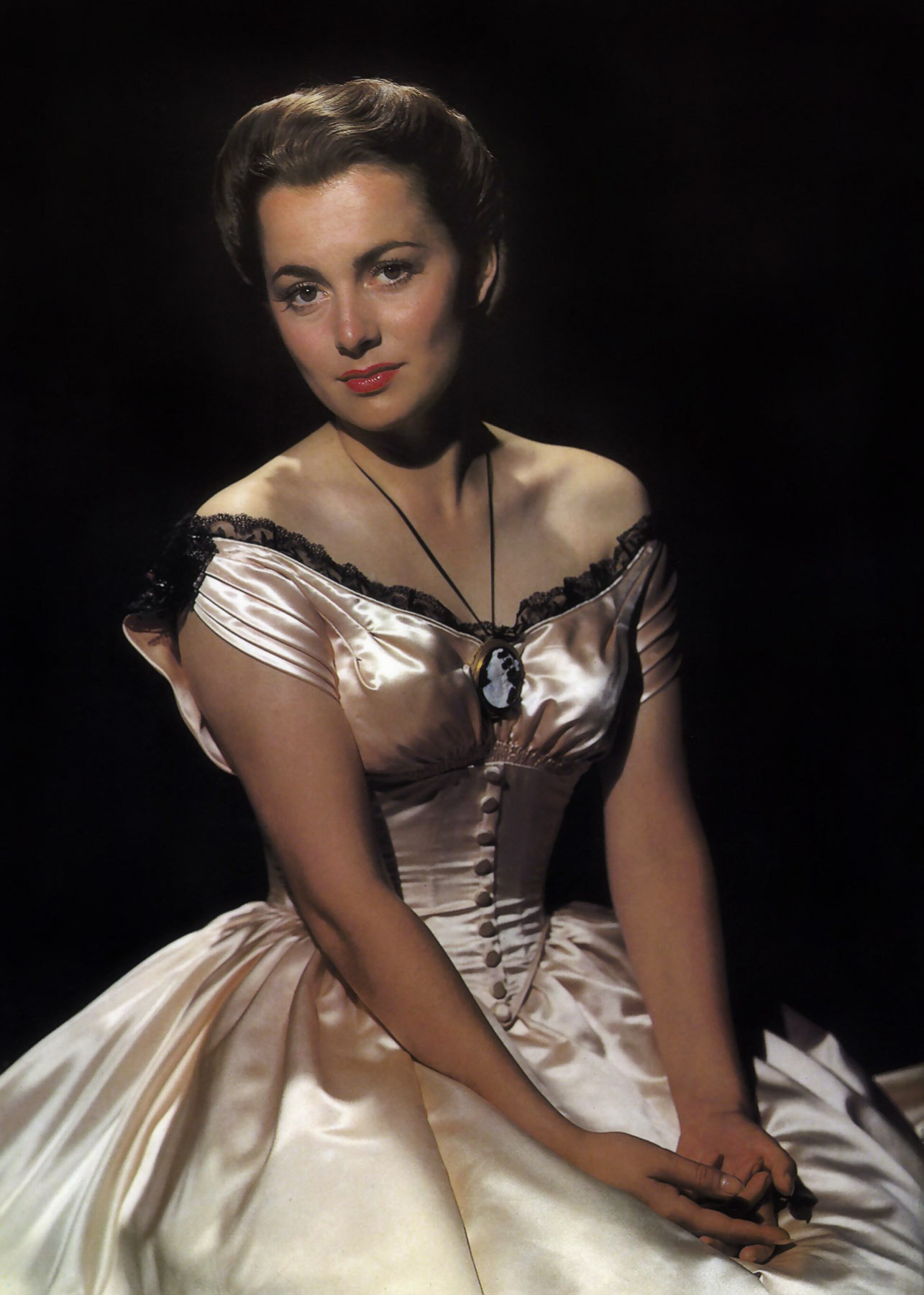
Dame Olivia Mary de Havilland (; July 1, 1916 – July 26, 2020) was a British, American, and French actress. She appeared in 49 feature films throughout her career, with the major works of her cinematic career spanning from 1935 to 1988. Before her death in 2020 at the age of 104, she was the oldest living and earliest surviving Academy Award winner and was one of the last surviving major stars from the Golden Age of Hollywood cinema. Her younger sister, with whom she had a noted rivalry that was well documented in the media, was the Oscar-winning actress Joan Fontaine. De Havilland first came to prominence with Errol Flynn as a screen couple in adventure films such as Captain Blood (1935) and The Adventures of Robin Hood (1938). One of her best-known roles is that of Melanie Hamilton in Gone with the Wind (1939), for which she received the first of her five Oscar nominations, the only one for Best Supporting Actress. In the 1940s, De Havilland departed from ingénue roles and distinguished herself for performances in Hold Back the Dawn (1941), To Each His Own (1946), The Snake Pit (1948), and The Heiress (1949), receiving four Best Actress nominations and winning for To Each His Own and The Heiress. She was also successful in work on stage and television. From the 1950s, de Havilland lived in Paris and received honors such as the National Medal of the Arts, the Légion d'honneur, and the appointment to Dame Commander of the Order of the British Empire at the age of 101. In addition to her film career, de Havilland continued her work in the theater, appearing three times on Broadway, in Romeo and Juliet (1951), Candida (1952), and A Gift of Time (1962). She also worked in television, appearing in the successful miniseries Roots: The Next Generations (1979), and Anastasia: The Mystery of Anna (1986) for which she received a Primetime Emmy Award nomination and won the Golden Globe Award for Best Supporting Actress in a Television Movie or Series. During her film career, de Havilland collected two New York Film Critics Circle Awards, the National Board of Review Award for Best Actress, and the Venice Film Festival Volpi Cup. For her contributions to the motion picture industry, she received a star on the Hollywood Walk of Fame. Her sister and she remain the only siblings to have won major acting Academy Awards.
By birth, Olivia was a member of the de Havilland family, which belonged to British landed gentry that had originated from mainland Normandy. Her mother Lilian Fontaine (née Ruse; 1886–1975) was educated at the Royal Academy of Dramatic Art in London and became a stage actress. She also sang with Sir Walter Parratt, who was Master of the King's Music, and she toured the United Kingdom with the composer Ralph Vaughan Williams. Olivia's father Walter de Havilland (1872–1968) served as an English professor at Tokyo Imperial University before becoming a patent attorney. Her paternal cousin was Sir Geoffrey de Havilland (1882–1965), an aircraft designer and founder of the de Havilland aircraft company. Walter and Lilian met in Japan in 1913 and married the following year; it was not a happy marriage, owing in part to Walter's infidelities. Olivia Mary de Havilland was born on July 1, 1916. The family moved into a large house in Tokyo City, where Lilian gave informal singing recitals. Olivia's younger sister Joan (Joan de Beauvoir de Havilland)—later known as actress Joan Fontaine—was born on October 22, 1917, when Olivia was 15 months old. Both sisters became British subjects automatically by birthright. In February 1919, Lilian persuaded her husband to take the family back to Britain, as its climate was better suited to their ailing daughters. They sailed aboard the SS Siberia Maru to San Francisco, where the family stopped to treat Olivia's tonsillitis. Joan developed pneumonia, so Lilian decided to remain with her daughters in California, and they eventually settled in the village of Saratoga, 50 miles (80 km) south of San Francisco. Walter abandoned the family and returned to his Japanese housekeeper, who eventually became his second wife.
Olivia was raised to appreciate the arts, beginning with ballet lessons at the age of four and piano lessons a year later. She learned to read before she was six, and her mother, who occasionally taught drama, music, and elocution, had her recite passages from Shakespeare to strengthen her diction. During this period, Olivia's sister first started calling her "Livvie", a nickname that lasted throughout her life. De Havilland entered Saratoga Grammar School in 1922 and did well in her studies. She enjoyed reading, writing poetry, and drawing, and once represented her grammar school in a county spelling bee, finishing in second place. Lilian had a new Tudor-style house built in 1923, and the family resided there until the early 1930s. In April 1925, after her divorce was finalized, Lilian married George Milan Fontaine, a department-store manager for O. A. Hale and Co. in San Jose. Fontaine was a respectable businessman and a good provider, but his strict parenting style generated animosity and later rebellion in both of his new stepdaughters.
De Havilland continued her education at Los Gatos High School near her home in Saratoga. There, she excelled in oratory and field hockey and participated in school plays and the school drama club, eventually becoming the club's secretary. With plans of becoming a schoolteacher in English and speech, she also attended Notre Dame Convent in Belmont. In 1933, a teenaged de Havilland made her amateur theater debut in Alice in Wonderland, a production of the Saratoga Community Players based on the novel by Lewis Carroll. She appeared in several school plays, including The Merchant of Venice and Hansel and Gretel. Her passion for drama eventually led to a confrontation with her stepfather, who forbade her from participating in further extracurricular activities. When he learned that she had won the lead role of Elizabeth Bennet in a school fund-raising production of Jane Austen's Pride and Prejudice, he told her that she had to choose between staying at home or appearing in the production and not being allowed home. Not wanting to let her school and classmates down, she left home and moved in with a family friend. After graduating from high school in 1934, de Havilland was offered a scholarship to Mills College in Oakland to pursue her chosen career as an English teacher. She was also offered the role of Puck in the Saratoga Community Theater production of Shakespeare's A Midsummer Night's Dream. That summer, Austrian director Max Reinhardt came to California for a major new production of the same play due to premiere at the Hollywood Bowl. One of Reinhardt's assistants saw de Havilland performing in Saratoga, and he offered her the second understudy position for the role of Hermia. One week before the premiere, the understudy Jean Rouverol and the lead actress Gloria Stuart both left the project, leaving 18-year-old de Havilland to play Hermia. Impressed with her performance, Reinhardt offered her the part in the four-week autumn tour that followed. During the tour, Reinhardt received word that he was to direct the Warner Bros. film version of his stage production, and he offered de Havilland the film role of Hermia. She initially wavered, with her mind still set on becoming a teacher, but Reinhardt and executive producer Henry Blanke eventually persuaded her to sign a five-year contract with Warner Bros. on November 12, 1934, with a starting salary of $200 a week (equivalent to $4,800 in 2025), marking the beginning of a professional acting career that would span more than 50 years.
De Havilland made her screen debut in Reinhardt's A Midsummer Night's Dream (1935), which was filmed at Warner Bros.' studios from December 19, 1934, to March 9, 1935. During the production, de Havilland picked up film-acting techniques from the film's co-director William Dieterle and camera techniques from cinematographer Hal Mohr, who was impressed with her questions about his work. By the end of filming, she had learned the effect of lighting and camera angles on how she appeared on screen and how to find her best lighting. Following premieres in New York City and Beverly Hills, the film was released on October 30, 1935. Despite the publicity campaign, the film generated little enthusiasm with audiences. While the critical response was mixed, de Havilland's performance was praised by The San Francisco Examiner critic. In his review in the Brooklyn Daily Eagle, Winston Burdett wrote that she "acts graciously and does greater justice to Shakespeare's language than anyone else in the cast". Two minor comedies followed, Alibi Ike (1935) with Joe E. Brown and The Irish in Us (1935) with James Cagney. In both films, she played the sweet and charming love interest—a role into which she would later become typecast. After the experience of being a Reinhardt player, de Havilland felt disappointed being assigned these routine heroine roles. In March, de Havilland and her mother moved into an apartment at the Chateau des Fleurs at 6626 Franklin Avenue in Hollywood. Although Warner Bros. studio had assumed that the many costumed films that studios such as MGM had earlier produced would never succeed during the years of the Great Depression in the United States, they nonetheless took a chance by producing Captain Blood (1935). The film is a swashbuckler action drama based on the novel by Rafael Sabatini and directed by Michael Curtiz. Captain Blood starred a then-little-known contract bit-part actor and former extra Errol Flynn with the equally little-known de Havilland. According to film historian Tony Thomas, both actors had "classic good looks, cultured speaking voices, and a sense of distant aristocracy about them". Filmed between August 5 and October 29, 1935, Captain Blood gave de Havilland the opportunity to appear in her first costumed historical romance and adventure epic, a genre to which she was well suited, given her beauty and elegance. In the film, she played Arabella Bishop, the niece of a Jamaica plantation owner who purchases at auction an Irish physician wrongly condemned to servitude. The on-screen chemistry between de Havilland and Flynn was evident from their first scenes together, where clashes between her character's spirited hauteur and his character's playful braggadocio did not mask their mutual attraction. Arabella is a feisty young woman who knows what she wants and is willing to fight for it. The bantering tone of their exchanges in the film—the healthy give-and-take and mutual respect—became the basis for their on-screen relationship in subsequent films. Captain Blood was released on December 28, 1935, and received good reviews and wide public appeal. De Havilland's performance was singled out in The New York Times and Variety. The film was nominated for four Academy Awards, including Best Picture. The popular success of the film, as well as the critical response to the on-screen couple, led to seven additional collaborations: The Charge of the Light Brigade (1936), The Adventures of Robin Hood (1938), Four's a Crowd (1938), Dodge City (1939), The Private Lives of Elizabeth and Essex (1939, although de Havilland played a supporting role with Bette Davis as Flynn's leading lady), Santa Fe Trail (1940), and They Died with Their Boots On (1941).
De Havilland appeared in Mervyn LeRoy's historical drama Anthony Adverse (1936) with Fredric March. Based on the popular novel by Hervey Allen, the film follows the adventures of an orphan raised by a Scottish merchant whose pursuit of fortune separates him from the innocent peasant girl he loves, marries, and eventually loses. De Havilland played a peasant girl, Angela, who after being separated from her slave-trader husband, becomes opera star Mademoiselle Georges, the mistress of Napoleon. The film earned six Academy Award nominations, including Best Picture. It garnered de Havilland good exposure and the opportunity to portray a character as she develops over time. Howard Barnes of the New York Herald Tribune found her later scenes as Mademoiselle Georges "not very credible", but Frank S. Nugent of The New York Times called her "a winsome Angela". That same year, she was reunited with Flynn in Michael Curtiz's period action film The Charge of the Light Brigade (1936), featuring Flynn look-alike Patric Knowles (playing Flynn's brother) and David Niven. The picture was set during the Crimean War and became a major box-office hit. During the film's production, de Havilland renegotiated her contract with Warner Bros. and signed a seven-year contract on April 14, 1936, with a starting weekly salary of $500 (equivalent to $11,600 in 2025). Toward the end of the year, 20-year-old de Havilland and her mother moved to 2337 Nella Vista Avenue in the Los Feliz section of Los Angeles. De Havilland had her first top billing in Archie Mayo's comedy Call It a Day (1937), about a middle-class English family struggling with the romantic effects of spring fever during the course of a single day. De Havilland played daughter Catherine Hilton, who falls in love with the handsome artist hired to paint her portrait. The film did not do well at the box office and did little to advance her career. She fared better in Mayo's screwball comedy It's Love I'm After (1937) with Leslie Howard and Bette Davis. De Havilland played Marcia West, a debutante and theater fan enamored with a Barrymore-like matinee idol who decides to help the girl's fiancé by pretending to be an abominable cad. The film received good reviews, with Variety calling it "fresh, clever, excellently directed and produced, and acted by an ensemble that clicks from start to finish" and praising de Havilland. Also released during 1937 was another period film with de Havilland, beginning with The Great Garrick, a fictional romantic comedy about the 18th-century English actor's encounter with jealous players from the Comédie-Française, who plot to embarrass him on his way to Paris. Wise to their prank, Garrick plays along with the ruse, determined to get the last laugh, even on a lovely young aristocrat, de Havilland's Germaine Dupont, whom he mistakenly believes to be one of the players. With her refined demeanor and diction, de Havilland delivers a performance that is "lighthearted and thoroughly believable", according to Judith Kass. Variety praised the film, calling it "a production of superlative workmanship". Despite the positive reviews, the film did not do as well at the box office. The Michael Curtiz-directed romantic drama Gold Is Where You Find It is a film about the late 19th-century conflict in the Sacramento Valley between gold miners and their hydraulic equipment and farmers whose land is being flooded. De Havilland played the daughter of a farmer, Serena Ferris, who falls in love with the mining engineer responsible for the flooding portrayed by George Brent. The picture also stars Claude Rains. The film was released in February 1938, and was her first appearance in a Technicolor film but not her last. She would make three more Technicolor films within the next two years, two of which would arguably remain her most fondly remembered by audiences across the decades since their release.


