Background and career
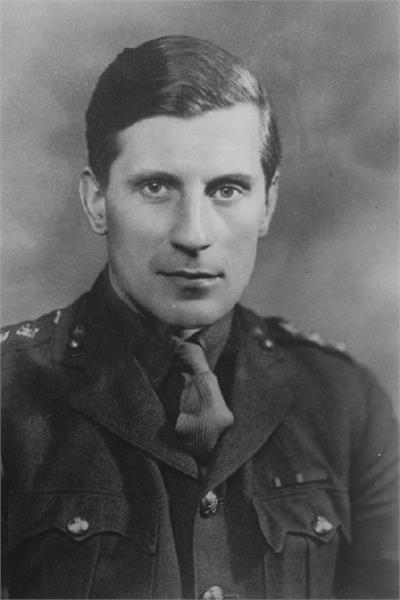
Major-General Orde Charles Wingate, (26 February 1903 – 24 March 1944) was a senior British Army officer. He was a supporter of unconventional military thinking and surprise tactics. He was also a fervent Christian Zionist. In Mandatory Palestine, he set up a joint British–Jewish counter-insurgency unit called the Special Night Squads. Under the patronage of the area commander Archibald Wavell, Wingate was given increasing latitude to put his ideas into practice during the Second World War. He created units in Abyssinia and Burma. Wingate attracted British Prime Minister Winston Churchill's attention with a self-reliant aggressive philosophy of war and was given resources to stage a large-scale operation. He became known for the Chindit deep-penetration missions in Japanese-held territory during the Burma Campaign of the Second World War.The last Chindit campaign may have determined the outcome of the Battle of Kohima, although the offensive into India by the Japanese may have occurred because Wingate's first operation had demonstrated the possibility of moving through the jungle. In practice, both Japanese and British forces suffered severe supply problems and malnutrition. Wingate died in an aircraft accident in March 1944 along with eight others.
Orde Wingate, the third of seven children, was born on 26 February 1903 at Naini Tal near Almora in Kumaon, India, into a military family (cousins of the Wingate baronets). His father, Colonel George Wingate (1852–1936), had become a committed member of the Plymouth Brethren early in his army career in India; at the age of 46, after wooing her for 20 years, he married (Mary) Ethel (1867–1943), the oldest daughter of the Orde Browne family, who were also Plymouth Brethren. His father retired from the army two years after Wingate was born. Most of Wingate's childhood was spent in England. For the first 12 years of his life, he socialised primarily with his siblings. The seven Wingate children received a Christian education typical for that period, and time was set aside each day for studying and memorising the Scriptures. In 1916, his family moved to Godalming where Wingate attended Charterhouse as a day boy. He did not board at the school nor did he participate in the activities of a public school education. Instead, he was kept busy at home by his parents, who encouraged their children to tackle challenging projects which fostered independent thought, initiative and self-reliance.
After four years, Wingate left Charterhouse and in 1921 he was accepted at the Royal Military Academy at Woolwich, the Royal Artillery's officers' training school. For committing a minor offence against the rules, a first-year student would be subjected to a ragging ritual named "running". This ritual consisted of the first-year being stripped and forced to run a gauntlet of senior students, all of whom wielded a knotted towel which was used to hit the accused on his journey along the line. On reaching the end, the first-year would then be thrown into an icy-cold cistern of water. When it came time for Wingate to run the gauntlet for allegedly returning a horse late to the stables, he walked up to the first senior student and dared him to strike. The senior refused. Wingate moved to the next senior and did the same; he too refused. In turn, each senior declined to strike; coming to the end of the line, Wingate walked to the cistern and dived straight into the icy-cold water. In 1923, Wingate received his Royal Artillery officer's commission and was posted to the 5th Medium Brigade at Larkhill on Salisbury Plain. During this period, he was able to indulge in his love of horse-back riding, gaining a reputation for his skill in point-to-point races and fox hunting. He was especially good at finding suitable places to cross rivers, which earned him the nickname "Otter". As it was difficult for a 1920s army officer to live on his pay, Wingate also gained a reputation as a late payer of his bills. He was promoted to lieutenant on 29 August 1925. In 1926, Wingate was posted to the Army School of Equitation, where he excelled, much to the chagrin of the majority of the cavalry officers who found him insufferable; he frequently challenged the instructors, as a demonstration of his rebellious nature.
Wingate's father's cousin, Sir Reginald Wingate, a retired army general who had been governor-general of the Sudan and high commissioner of Egypt, influenced Wingate's career by interesting him in Middle East affairs and the study of Arabic. Wingate applied to take a course in Arabic at the School of Oriental Studies in London and passed the course, which lasted from October 1926 to March 1927, with a mark of 85/100. In June 1927, with Cousin Rex's encouragement, Wingate obtained six months' leave in order to mount an expedition in the Sudan. Rex had suggested that he travel via Cairo and then try to obtain secondment to the Sudan Defence Force (SDF). Sending his luggage ahead of him, Wingate set off in September 1927 by bicycle, travelling first through France and Germany before making his way to Genoa via Czechoslovakia, Austria and Yugoslavia. From Genoa he took a boat to Egypt. From Cairo he travelled to Khartoum. In April 1928, his application to transfer to the SDF came through and he was posted to the East Arab Corps, serving in the area of Roseires and Gallabat on the borders of Ethiopia, where the SDF patrolled to catch slave traders and ivory poachers. He changed the method of regular patrolling to ambushes. In March 1930, Wingate was given command of a company of 300 soldiers with the local rank of bimbashi (major). At HQ in Khartoum, he antagonised the other officers with his aggressive and argumentative personality. He was granted the local rank of captain in the regular army on 16 April 1930. At the end of his tour, Wingate mounted a short expedition into the Libyan desert to investigate the lost army of Cambyses, mentioned in the writings of Herodotus, and to search for the lost oasis of Zerzura. Supported by equipment from the Royal Geographical Society (the findings of the expedition were published in the Royal Geographical Magazine in April 1934) and the Sudan Survey Department, the expedition set off in January 1933. Although they did not find the oasis, Wingate saw the expedition as an opportunity to test his endurance in a very harsh physical environment, and also his organisational and leadership abilities. He concluded his service in the Sudan on 2 April 1933.
On his return to the UK in 1933, Wingate was posted to Bulford on Salisbury Plain and was heavily involved in retraining, as British artillery units were being mechanised. On the sea voyage from Egypt he met Lorna Moncrieff Patterson, who was 16 years old and travelling with her mother. They were married two years later, on 24 January 1935. From 13 January 1935, Wingate was seconded to the Territorial Army as the adjutant of the 71st (West Riding) Field Brigade, a Territorial Army unit of the Royal Artillery, with the temporary rank of captain. He was promoted to the substantive rank of captain on 16 May 1936, and vacated his appointment as adjutant on 8 September.
In September 1936, Wingate was assigned to a staff officer position in Mandatory Palestine and became an intelligence officer. From his arrival he saw the creation of a Jewish State in Palestine as a religious duty and allied himself with the Jewish political leaders. Palestinian Arab guerrillas had at the time of his arrival begun a campaign of attacks against both British mandate officials and Jewish communities. Wingate was an ardent Christian Zionist. He returned often to Kibbutz En Harod because of its association with the biblical judge Gideon who fought in this area. He conceived the idea of raising small assault units of British-led Jewish commandos armed with grenades and light infantry small arms to combat the Arab revolt. Wingate suggested this idea to Archibald Wavell, who was then commander of British forces in Palestine. After Wavell agreed, Wingate convinced the Zionist Jewish Agency and the leadership of Hagana. In June 1938, the new British commander, General Haining, gave permission to create the Special Night Squads (SNSs), armed groups formed of British and Haganah volunteers. The Jewish Agency helped pay salaries and other costs. The SNSs were regarded as "well-oiled killing machines", while another British official called them "just thuggery really". Wingate trained, commanded and accompanied them on their patrols. The units frequently ambushed Arab saboteurs who attacked oil pipelines of the Iraq Petroleum Company, raiding border villages the attackers had used as bases. In these raids, Wingate's men sometimes imposed severe collective punishments on the villagers. This included killing Arabs who happened to be in the village but were not involved in blowing up the pipeline. In another instance, the SNS went into a village, lined up all the male villagers and shot every eighth man. These methods were criticised by Wingate's British superiors. Israeli novelist Yoram Kaniuk wrote about Wingate's brutality: "The operations came more frequently and became more ruthless. The Arabs complained to the British about Wingate's brutality and harsh punitive methods. Even members of the field squads complained ... that during the raids on Bedouin encampments Wingate would behave with extreme viciousness and fire mercilessly. Wingate believed in the principle of surprise in punishment, which was designed to confine the gangs to their villages. More than once he had lined rioters up in a row and shot them in cold blood. Wingate did not try to justify himself; weapons and war cannot be pure." Wingate employed various forms of torture against the Arabs, some non-lethal. Wingate would force sand into villagers' mouths until they vomited. In one case, when Arab saboteurs had caused an oil leak, he took all the men from an Arab village and threw them into a pool of crude oil.


