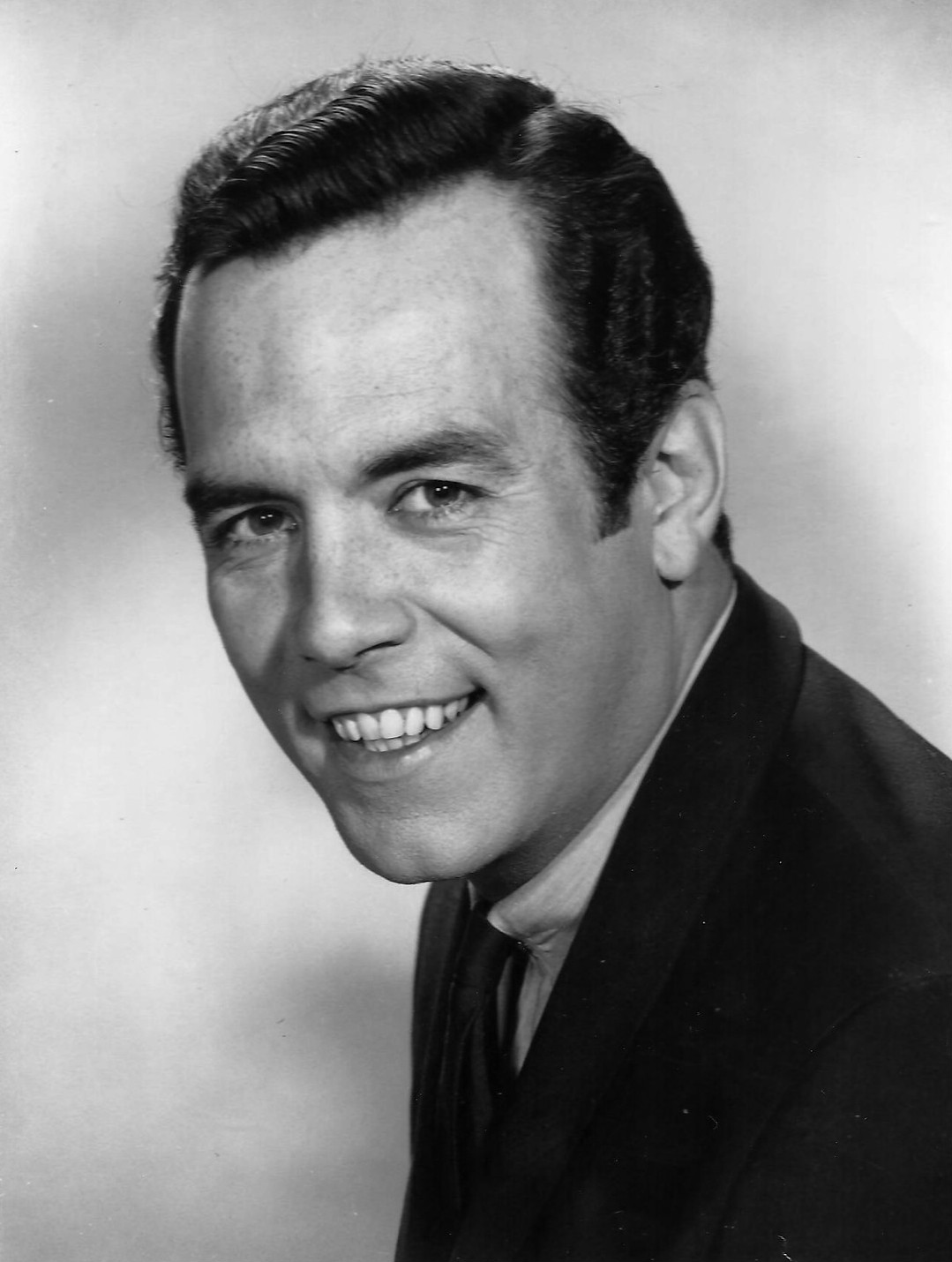
Background and career
Pernell Elven Roberts Jr. (May 18, 1928 – January 24, 2010) was an American stage, film, and television actor, activist, and singer. In addition to guest-starring in over 60 television series, he was best known for his roles as Ben Cartwright's eldest son Adam Cartwright on the Western television series Bonanza (1959–1965), and as chief surgeon John McIntyre, the title character on Trapper John, M.D. (1979–1986). Roberts was also known for his lifelong activism, which included participation in the Selma to Montgomery marches in 1965 and pressuring NBC to refrain from hiring white actors to portray non-white characters.
Roberts was born on May 18, 1928, in Waycross, Georgia, the only child of Pernell Elven Roberts Sr., a Dr Pepper salesman, and Minnie (Betty) Myrtle Morgan Roberts. During his high-school years, Pernell played the horn, acted in school and church plays, and sang in local USO shows. He attended, but did not graduate from, Georgia Tech. Enlisting in 1946, he served for two years in the United States Marine Corps. He played the tuba and horn in the Marine Corps Band, and he was also skilled at playing the sousaphone and percussion. He later attended, also without graduating, the University of Maryland, where he had his first exposure to acting in classical theatre. He appeared in four productions while a student, including Othello and Antigone, but left school to act in summer stock.
In 1949, he made his professional stage debut with Moss Hart and Kitty Carlisle in The Man Who Came to Dinner at the Olney Theatre in Olney, Maryland. Later, he spent eight weeks at the Bryn Mawr College Theatre in Philadelphia, portraying Dan in Emlyn Williams's Night Must Fall and Alfred Doolittle in Bernard Shaw's Pygmalion. In 1952, Roberts moved to New York City, where he appeared first off-Broadway in one-act operas and ballets with the North American Lyric Theatre, with the Shakespearewrights, at the Equity Library Theatre, and later on Broadway with performances in Tonight in Samarkand (also in Washington, DC), The Lovers opposite Joanne Woodward, and A Clearing in the Woods with Robert Culp and Kim Stanley. He won a Drama Desk Award in 1955 for his performance in an off-Broadway rendition of Macbeth, which was followed by the role of Mercutio in Romeo and Juliet. He performed in Twelfth Night, The Merchant of Venice, Dr. Faustus, and The Taming of the Shrew at the American Shakespeare Festival, and later on Broadway. He performed in St. Joan (1954, Cleveland), Down in the Valley (at the Provincetown Playhouse), The Duchess of Malfi, Measure for Measure, and King John. In 1956, Roberts returned to the Olney Theatre, starring opposite Jan Farrand in Much Ado About Nothing with the Players, Inc. group. The same year, Roberts made his television debut in the "Shadow of Suspicion" episode of Kraft Television Theatre, followed by guest-starring roles in Whirlybirds, Gunsmoke, Cimarron City, Buckskin, Sugarfoot, and Cheyenne.
Roberts signed a contract with Columbia Pictures in 1957, and made his film debut a year later as one of Burl Ives's contentious sons in Desire Under the Elms (1958). The film was nominated for an Academy Award for Best Cinematography. He also landed a character role in The Sheepman (1958), opposite Glenn Ford and Shirley MacLaine, and continued to guest-star on television shows such as episodes of Shirley Temple Storybook Theater ("The Emperor's New Clothes", "Rumplestiltskin", "The Sleeping Beauty", and "Hiawatha"), the live-broadcast Matinee Theater, where he starred again in Shakespeare's Much Ado About Nothing, and in The Heart's Desire. This was followed by appearances in Trackdown, Buckskin, and episodes of Zane Grey Theatre. Roberts guest-starred as Captain Jacques Chavez on the NBC adventure series Northwest Passage (1958). He appeared with fellow guest star Fay Spain in the 1958 episode "Pick Up the Gun" of Tombstone Territory and played the lead villain Travis in the 31st episode ("Hey Boy's Revenge") of Have Gun – Will Travel, portraying a killer boss exploiter of Chinese coolie laborers. The episode aired 4/11/1958. In 1959, Roberts guest-starred in episodes of General Electric Theater, Cimarron City, Sugarfoot, Lawman, One Step Beyond, Bronco, 77 Sunset Strip, and The Detectives. Also in 1959, he co-starred in the film Ride Lonesome. "If Roberts felt typecast by Westerns, they also provided his finest role in this film, arguably the greatest of the B-movies starring Randolph Scott and directed by Budd Boetticher. Roberts recognized the film's classic structure; his engaging outlaw, Sam Boone, counterpoints Scott's granite-faced Ben Brigade, maintaining the tension of whether they will work together or clash. He similarly played off James Coburn, who was making his film debut as Boone's quiet sidekick, Whit." The same year, he was cast in Bonanza.
Roberts played Ben Cartwright's urbane eldest son Adam, in the Western television series Bonanza. Unlike his brothers, Adam was a university-educated architectural engineer. Roberts, having largely been "a stage actor, accustomed as he was to a rigorous diet of the classics" and to freely move about from part to part, found the "transition to a television series", playing the same character, "without costume changes", a difficult one. "It was perhaps not surprising that, despite enormous success, he left Bonanza after the 1964–65 season, criticizing the show's simple-minded content and lack of minority actors ...". It particularly distressed him that his character, a man in his 30s, had to defer continually to the wishes of his widowed father, and he reportedly disliked the series itself, calling it "junk" television and accusing NBC of "perpetuating banality and contributing to the dehumanization of the industry." The equally self-critical Roberts ("I guess I'll never be satisfied with my own work"), "had long disdained the medium's commercialization of his craft and its mass-production, assembly-line mindset." Frustrated with Bonanza and angry, he told a reporter in 1965, "I feel I'm an aristocrat in my field of endeavor. My being part of Bonanza was like Isaac Stern sitting in with Lawrence Welk".
In much later interviews, Roberts denied statements about Bonanza attributed to him. "I did not enjoy Bonanza anymore ... but I never said those things people said I said." He was, however, "too wise not to recognize its weaknesses." In a 1963 interview, he asked a reporter, "Isn't it a bit silly for three adult males to have to ask father's permission for everything they do?" "They told me the four characters (Lorne Greene, patriarch Ben, Dan Blocker and Michael Landon as his brothers) would be carefully defined and the scripts carefully prepared; none of it ever happened," he complained to the Associated Press in 1964. He objected to how Bonanza portrayed the relationship between the "father" and adult "sons", describing it as "adolescent". Roberts acknowledged reasons for Bonanza's appeal, but pointed to his personal need for story lines with greater social relevance, adult themes, and dialogue. He wanted Bonanza to be "a little more grown up" (Mike Douglas Show, 1966). He also noted that he was not suited to the "procedural" and "confining aspect" of series television, another reason for his dissatisfaction, while on the show.(Mike Douglas Show, 1966)


