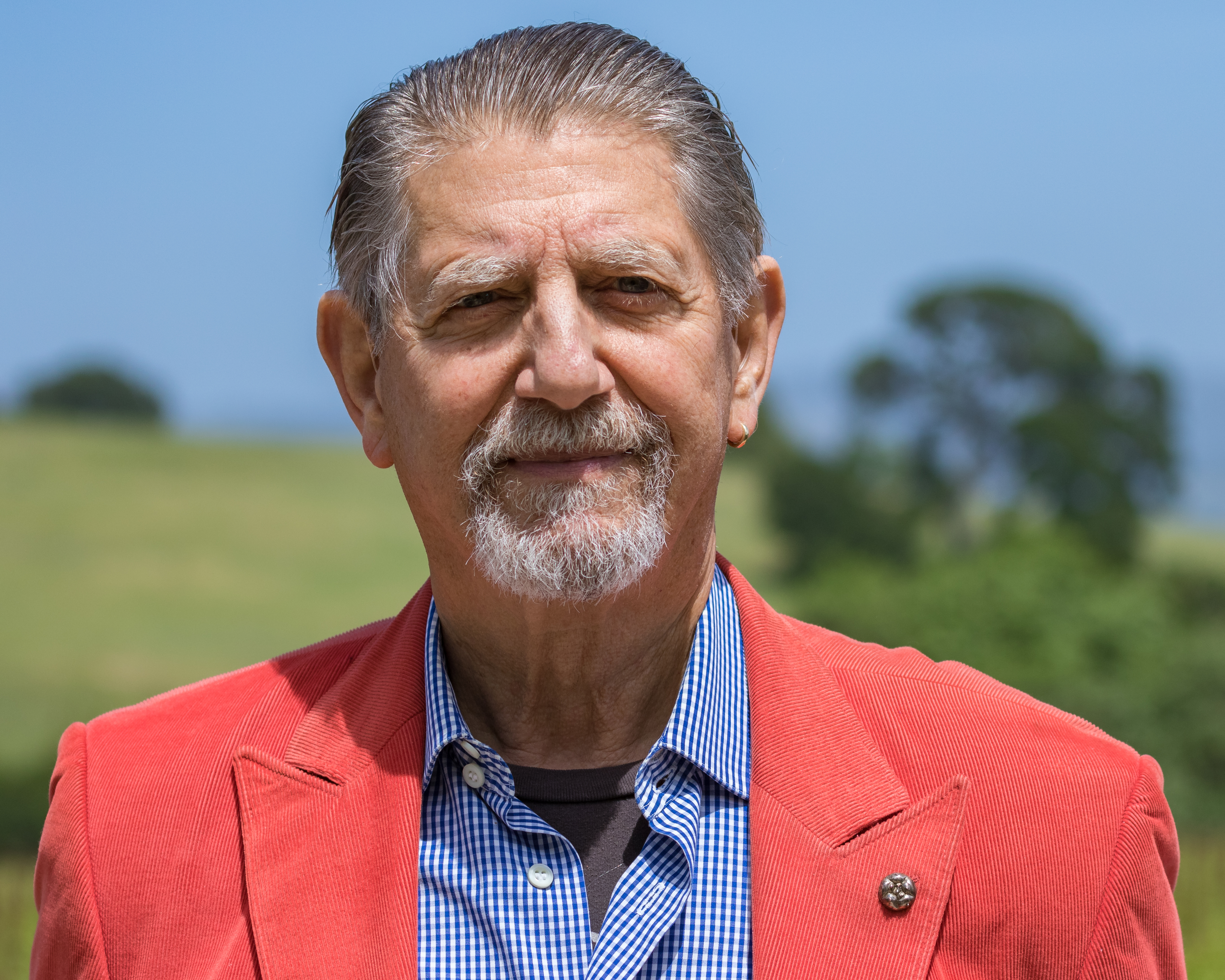
Background and career
Peter Coyote (born Robert Peter Cohon; October 10, 1941) is an American actor, director, screenwriter, author, and narrator of films, theater, television, and audiobooks. He is known for his appearances in films such as E.T. the Extra-Terrestrial (1982), Cross Creek (1983), Jagged Edge (1985), Bitter Moon (1992), Kika (1993), Patch Adams (1998), Erin Brockovich (2000), A Walk to Remember (2002), and Femme Fatale (2002). His voice work includes his narration for the opening ceremony of the 2002 Winter Olympics. He narrated the PBS series The Pacific Century (1992), winning an Emmy. He won a Primetime Emmy Award for Outstanding Narrator in 2015 for his work on Ken Burns's documentary miniseries The Roosevelts: An Intimate History. Coyote was one of the founders of the Diggers, an anarchist improv group active in Haight-Ashbury during the mid-1960s, including the Summer of Love.
Coyote was born Robert Peter Cohon on October 10, 1941, in New York City, the son of Ruth (née Fidler) and Morris Cohon, an investment banker. His father was of Sephardic Jewish descent and his mother came from a working-class Ashkenazi Jewish family. Her father, trained as a rabbi in Russia, escaped being drafted into the Imperial Russian Army, and eventually ran a small candy store in the Bronx. Coyote "was raised in a highly intellectual, cultural but unreligious family", involved in left-wing politics. He grew up in Englewood, New Jersey, and graduated from Dwight Morrow High School there in 1959. Coyote later said that he was "half black and half white inside" due to the strong influence of Susie Nelson, his family's African-American housekeeper. Coyote is the maternal uncle of librarian Jessamyn West. While a student at Grinnell College, Iowa, in 1961, Coyote was one of the organizers of a group of twelve students who traveled to Washington, D.C. during the Cuban Missile Crisis supporting President John F. Kennedy's "peace race". Kennedy invited the group into the White House, the first time protesters had ever been so recognized, and they met for several hours with McGeorge Bundy. The group received wide press coverage. They mimeographed the resulting headlines and sent them to every college in the United States. He was also in a band called the Kittatinny Mountain Boys. Upon graduation from Grinnell with a Bachelor of Arts in English literature in 1964, he moved to the West Coast, despite having been accepted at the Iowa Writers' Workshop, and commenced working toward a master's degree in creative writing at San Francisco State University.
While still at Grinnell, Coyote ingested peyote and had a profound experience with something he recognized as an animal spirit. At the next dawn he came to in a cornfield dotted with paw-prints. A few years later, he came across Coyote's Journal, a poetry magazine, and recognized its logo as the same paw-prints he had seen during his peyote experience. After meeting Rolling Thunder (John Pope), a purported Paiute-Shoshone shaman, who informed him that there were two ways to regard what he had experienced. "You could consider it a hallucination", he said, "and you'll just remain a white man and be ok. Or, you could consider that the Universe opened itself to you, and if you consider it deeply enough, you might become a human being." Peter considered what he had been saying for several months, and then changed his last name to Coyote.
After a short apprenticeship at the San Francisco Actor's Workshop, he joined the San Francisco Mime Troupe, a radical political street theater whose members were arrested for performing in parks without permits. Coyote acted, wrote scripts, and directed in the Mime Troupe. Coyote directed the first cross-country tour of The Minstrel Show, Civil Rights in a Cracker Barrel, a controversial play closed by authorities in several cities. From 1967 to 1975, Coyote was a prominent member of the San Francisco Haight-Ashbury counterculture community and a founding member, along with Emmett Grogan, Peter Berg, Judy Goldhaft, Kent Minault, Nina Blasenheim, David Simpson, Jane Lapiner, and Billy Murcott, of the Diggers, an anarchist group known for operating anonymously and without money. They created provocative "theater" events designed to heighten awareness of problems associated with the notion of private property, consumerism, and identification with one's work. They fed nearly 600 people a day for "free", asking only that people pass through a six-foot by six-foot square known as The Free Frame of Reference. They ran a Free Store, (where not only the goods, but the management roles were free), a Free Medical Clinic, and even a short-lived Free Bank. The Diggers evolved into a group known as the Free Family, which established chains of communes around the Pacific Northwest and Southwest. Coyote was the best known resident of the Black Bear Ranch commune in Siskiyou County, California.
Coyote had first discovered Zen in his teens via the works of Jack Kerouac, Gary Snyder, and other Beats. Coyote met Snyder with the Diggers and was impressed with Snyder's "gravitas and elegance, his care and deliberation". In 1975, Coyote undertook meditation practice and eventually became a dedicated practitioner of American Zen Buddhism, moving into the San Francisco Zen Center. He was later ordained a lay priest in the Sōtō tradition and was ordained as a Zen Priest in 2015. Coyote performed audiobook recordings of Shunryu Suzuki's Zen Mind, Beginner's Mind and Paul Reps's Zen Flesh, Zen Bones as well as narrating the documentary Inquiry into the Great Matter: A History of Zen Buddhism.
In 1975, Coyote was hired as an artist under the Comprehensive Employment and Training Act, which placed him in community settings. His experiences under CETA led to his becoming part of the San Francisco Arts Commission. In 1976, Governor Jerry Brown appointed him to the California Arts Council, where he served until 1983 (three years as Chair).


