Background and career
Prince Harry, Duke of Sussex (Henry Charles Albert David; born 15 September 1984), is a member of the British royal family. He is the younger son of King Charles III and Diana, Princess of Wales, and is fifth in the line of succession to the British throne. Harry was born during the reign of his paternal grandmother, Queen Elizabeth II. He was educated at Wetherby School, Ludgrove School, and Eton College, before completing officer training at the Royal Military Academy Sandhurst. Harry was commissioned as a cornet in the Blues and Royals and served briefly alongside his elder brother, Prince William. He was deployed twice on active service in Afghanistan: for ten weeks in Helmand Province during 2007–2008, and for twenty weeks with the Army Air Corps in 2012–2013. Inspired by the Warrior Games in the United States, Harry founded the Invictus Games in 2014 and remains actively involved as its patron. In 2016, together with his brother William and sister-in-law Catherine, he co-founded the mental health awareness initiative Heads Together. In 2018, Harry was created Duke of Sussex ahead of his wedding to American actress Meghan Markle. The couple have two children, Archie and Lilibet. In January 2020, Harry and Meghan stepped back from their roles as working members of the royal family and relocated to Southern California. They subsequently established Archewell Inc., a Beverly Hills–based organisation encompassing both commercial and charitable ventures. In March 2021, Harry and Meghan gave a widely publicised interview to Oprah Winfrey on Oprah with Meghan and Harry. In December 2022, they appeared in the Netflix documentary series Harry & Meghan. In 2023, Harry published his memoir, Spare. In August 2026, he and Meghan relocated to the UK with their children, without plans to resume public duties as working members of the royal family.
Harry was born on 15 September 1984 at St Mary's Hospital, London, during the reign of his paternal grandmother, Queen Elizabeth II. He is the second child of Charles, Prince of Wales (later King Charles III), and his first wife, Diana, Princess of Wales. He was christened Henry Charles Albert David on 21 December at St George's Chapel, Windsor Castle, by Robert Runcie, the then-archbishop of Canterbury. From childhood he was known as "Harry" to family, friends, and the public, and was nicknamed "Harold" by his elder brother, William. Harry and William were raised at Kensington Palace in London, and at Highgrove House in Gloucestershire. Diana sought to give her sons a broader range of experiences and a clearer understanding of ordinary life than previous generations of royal children. She took them to venues that ranged from Walt Disney World and McDonald's to AIDS clinics and homeless shelters. Harry began accompanying his parents on official visits at an early age; his first overseas tour was to Italy in 1985. He later travelled with his family to Canada in 1991 and 1998. Harry's parents divorced in 1996. The following year, his mother died in a car crash in Paris while he and William were staying with their father at Balmoral Castle. Charles informed his sons of her death. At Diana's funeral, Harry, then aged 12, walked behind the cortège from Kensington Palace to Westminster Abbey alongside his father, his brother, his paternal grandfather, Prince Philip, Duke of Edinburgh, and his maternal uncle Charles Spencer, 9th Earl Spencer. Harry and William inherited the "bulk" of the £12.9 million left by their mother on their 30th birthdays, a sum that had increased to about £10 million each by 2014. In the same year, they inherited Diana's wedding dress and many of her personal possessions, including dresses, diamond tiaras, jewellery, letters, and paintings. They also received the original lyrics and score of "Candle in the Wind", by Bernie Taupin and Elton John, as performed by John at Diana's funeral. In 2002, The Times reported that Harry would share with his brother a disbursement of £4.9 million from trust funds established by their great-grandmother Queen Elizabeth the Queen Mother on their 21st birthdays, and a further £8 million on their 40th birthdays. It was also reported that Harry would inherit the larger share of the money left by the Queen Mother for the two brothers, as William is expected to ascend the throne and receive additional financial benefits.
Like his father and brother, Harry was educated at private schools. He began at London's Jane Mynors' nursery school and the pre-preparatory Wetherby School. He then attended Ludgrove School in Berkshire. After passing entrance exams, he was admitted to Eton College. The decision to place him at Eton departed from the past practice of the Mountbatten-Windsors, who traditionally sent their children to Gordonstoun, which his grandfather, father, two uncles, and two cousins had attended. It did, however, see Harry follow in his brother's footsteps and the Spencer family tradition, as both his maternal grandfather and his maternal uncle attended Eton. As with William, the royal family and the tabloid press agreed that Harry would be allowed to study free from intrusion in exchange for occasional photograph opportunities, in what became known as the "pressure cooker agreement". In June 2003, Harry completed his education at Eton with two A-Levels, achieving a grade B in art and a D in geography, having decided to drop history of art after AS level. He has been described as "a top tier athlete", having played competitive polo and rugby union. One of his former teachers, Sarah Forsyth, asserted that he was a "weak student" and claimed that staff at Eton conspired to help him cheat on examinations. Both Eton and Harry denied the allegations. A tribunal made no ruling on the cheating claim, but it "accepted the prince had received help in preparing his A-level 'expressive' project, which he needed to pass to secure his place at Sandhurst." While at Eton, Harry joined the Combined Cadet Force and was made cadet officer in his final year, leading the corps' annual parade at the Eton tattoo. After leaving school, Harry took a gap year, during which he spent time in Australia working as a jackaroo on a cattle station and taking part in the Young England vs Young Australia Polo Test match. He also travelled to Lesotho, where he worked with orphaned children and produced the documentary film The Forgotten Kingdom: Prince Harry in Lesotho.
Harry passed the Regular Commissions Board (RCB) in September 2004 and entered the Royal Military Academy Sandhurst on 8 May 2005, where he was known as Officer Cadet Wales and joined Alamein Company. His entry into the academy had been delayed for four months while he recovered from an injury to his left knee. In April 2006, he completed his officer training and was commissioned as a Cornet (second lieutenant) in the Blues and Royals, a regiment of the Household Cavalry in the British Army. On 13 April 2008, after reaching two years' seniority, he was promoted to lieutenant. In 2006, it was announced that Harry's unit was scheduled to be deployed to Iraq the following year. A public debate followed over whether he should serve there. In April 2006, the Ministry of Defence stated that Harry would be shielded from the front line if his unit went to war, with a spokeswoman noting that he was expected to "undertake the fullest range of deployments", but that his role required monitoring because "his overt presence might attract additional attention" that could endanger him or those he commanded. Defence Secretary John Reid argued that he should be allowed to serve on the front line. Harry agreed, saying, "If they said 'no, you can't go front line' then I wouldn't drag my sorry ass through Sandhurst and I wouldn't be where I am now." Harry completed the Troop Leaders' Course in October 2006 and rejoined his regiment in Windsor, where he was put in charge of a troop of 11 soldiers and four Scimitar reconnaissance vehicles. On 22 February 2007, the Ministry of Defence and Clarence House jointly announced that Harry would be deployed with his regiment to Iraq as part of the 1st Mechanised Brigade of the 3rd Mechanised Division – a move supported by Harry, who had said he would leave the army if ordered to remain in safety while his regiment went to war. General Sir Richard Dannatt, the head of the British Army said on 30 April 2007 that he had personally decided Harry would serve with his unit in Iraq as a troop commander, and he was scheduled for deployment in May or June 2007 to patrol the Maysan Governorate. By 16 May, however, Dannatt announced that Harry would not serve in Iraq; concerns included his status as a high-value target – several threats had already been made against him – and the risks this posed to the soldiers around him should any attempt be made on his life or if he were captured. Clarence House made public Harry's disappointment with the decision, though he said he would abide by it. In the summer of 2007 Harry trained as a joint terminal attack controller at RAF Leeming. In early June 2007, it was reported that he had arrived in Canada to train alongside soldiers of the Canadian Forces and the British Army at CFB Suffield near Medicine Hat, Alberta, in preparation for a possible deployment to Afghanistan, where Canadian and British forces were serving in the NATO-led Afghan War. This was confirmed in February 2008 when the Ministry of Defence revealed that Harry had been secretly deployed as a joint terminal attack controller to Helmand Province in Afghanistan for the previous ten weeks. The revelation followed breaches of the media blackout by Bild and New Idea. He was immediately withdrawn due to concerns that the publicity would endanger him and fellow soldiers. Harry returned on a flight carrying servicemen injured by an IED, including Ben McBean. It was later reported that Harry had helped Gurkha troops repel an attack by Taliban insurgents, and had carried out patrol duties in hostile areas while in Afghanistan. Harry's tour made him the first member of the British royal family to serve in a war zone since his uncle Prince Andrew, who flew helicopters during the Falklands War. For Harry's service, his aunt Princess Anne presented him with the Operational Service Medal for Afghanistan at Combermere Barracks in May 2008.
In October 2008, it was announced that Harry would follow his brother, father, and uncle, in learning to fly military helicopters. He attended the Defence Helicopter Flying School at RAF Shawbury, where he joined his brother. Harry initially failed his pilot's theory test in February 2009. Prince Charles presented him with his flying brevet (wings) on 7 May 2010 at a ceremony at the Army Air Corps Base (AAC) at Middle Wallop. Harry was awarded his Apache Flying Badge on 14 April 2011. On 16 April, it was announced that he had been promoted to captain. In June 2011, Clarence House announced that Harry would be available for deployment in current operations in Afghanistan as an Apache helicopter pilot. The final decision rested with the Ministry of Defence's senior commanders, principally the Chief of the Defence Staff, in consultation with the wishes of Harry, the Prince of Wales, and the Queen. In October 2011, Harry was transferred to a United States military base in California to complete his helicopter gunship training. This final phase included live-fire training and "environmental and judgment training" at naval and air force facilities in California and Arizona. Later that month, it was reported that he had placed top of his class in extensive training undertaken at the Naval Air Facility, El Centro, California. While training in Southern California, Harry also spent time in San Diego. In November 2011, he returned to England and went to Wattisham Airfield in Suffolk to complete his training to fly Apache helicopters. Around 2012, Harry was trained in skydiving by the Red Devils. On 7 September 2012, Harry arrived at Camp Bastion in southern Afghanistan as part of the 100-strong 662 Squadron, 3 Regiment, Army Air Corps, to begin a four-month combat tour as a co-pilot and gunner for an Apache helicopter. On 10 September, within days of his arrival, it was reported that the Taliban had threatened his life. On 18 September, Harry was moved to a safe location after a Taliban attack on Camp Bastion that killed two US marines. Defence Secretary Philip Hammond stated that "additional security arrangements" had been put in place because Harry could be a potential target, but added that he would face "the same risk as any other Apache pilot" while in combat. Files later obtained on the incident quoted Major General Gregg A. Sturdevant as saying "The night of the attack, he slept through the entire thing. We didn't do anything special for him. He came and went, and you never would have known he was there" and, "The only thing special we did for him was we had a place identified as a safe house in case the base came under attack." On 21 January 2013, it was announced that Harry was returning from a 20-week deployment in Afghanistan. On 8 July 2013, the Ministry of Defence announced that he had successfully qualified as an Apache aircraft commander. Harry compared operating the Apache's weapons systems in Afghanistan to playing video games. Harry later revealed in his 2023 memoir Spare that he flew on six missions that resulted in him killing 25 Taliban members, writing that he felt he had been trained not to view them as "people" but as "chess pieces" removed from the board. He added, "It's not a number that gave me any satisfaction. But neither was it a number that made me feel ashamed." Following the publication of Harry's claims, Pen Farthing, a British former Royal Marines commando and founder of the Nowzad Dogs charity, was evacuated from Kabul on 6 January 2023 to avoid "potential reprisal attacks on ex-forces people". Harry's revelations prompted criticism from Taliban members, British politicians, and military figures.
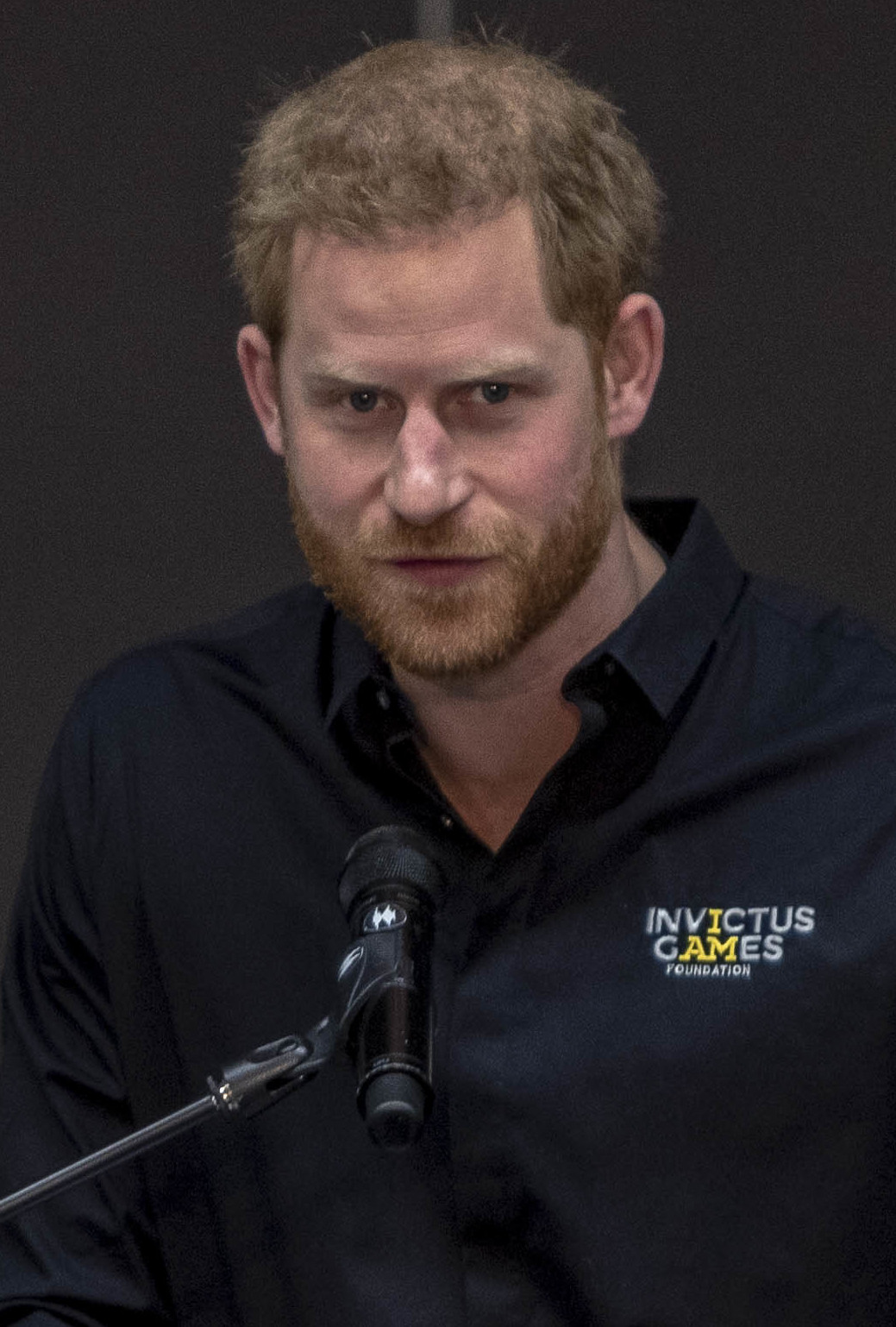
On 17 January 2014, the Ministry of Defence announced that Harry had completed his attachment to 3 Regiment Army Air Corps and would take up a staff officer role, SO3 (Defence Engagement), in HQ London District. His responsibilities included helping to coordinate significant projects and commemorative events involving the Army in London. He was based at Horse Guards in central London. On 6 March 2014, Harry launched Invictus Games, a Paralympic-style sporting event for injured servicemen and women, which was held from 10 to 14 September 2014. He met British hopefuls for the Games at Tedworth House in Wiltshire on 29 April 2014 for the start of the selection process. On 15 May 2014, Harry attended a ticket-sale launch for the Invictus Games at the BT Tower, from where he tweeted on the Games' official Twitter account as its president. To promote the event, he was interviewed by BBC Radio 2's Chris Evans alongside two Invictus Games hopefuls. He said, "[The Invictus Games] is basically my full-time job at the moment, making sure that we pull this off." The programme aired on 31 July 2014. Harry later wrote an article in The Sunday Times about his experiences in Afghanistan, explaining how they had inspired him to support injured personnel and how, after attending the Warrior Games, he had vowed to create the Invictus Games. Harry and officials attended the British Armed Forces Team announcement for the Games at Potters Field Park in August 2014. As president of the Invictus Games, he attended all events related to the competition from 8 to 14 September 2014. In January 2015, it was reported that Harry would take on a new role supporting wounded service personnel by working alongside members of the London District's Personal Recovery Unit for the MOD's Defence Recovery Capability scheme, ensuring that wounded personnel had adequate recovery plans. The palace confirmed weeks later that the scheme had been established in partnership with Help for Heroes and the Royal British Legion. In late January 2015, Harry visited The Battle Back Centre set up by the Royal British Legion, and Fisher House UK at the Queen Elizabeth Hospital Birmingham. The Centre was created through a partnership between Help for Heroes, the Fisher House Foundation, and the Queen Elizabeth Hospital Birmingham (QEHB) Charity. The Fisher House Foundation is one of the Invictus Games' sponsors. In February and March 2015, Harry visited Phoenix House in Catterick Garrison, North Yorkshire, a recovery centre run by Help for Heroes. He also visited Merville Barracks in Colchester, where Chavasse VC House Personnel Recovery Centre is located, run by Help for Heroes in partnership with the Ministry of Defence and Royal British Legion.


