Background and career
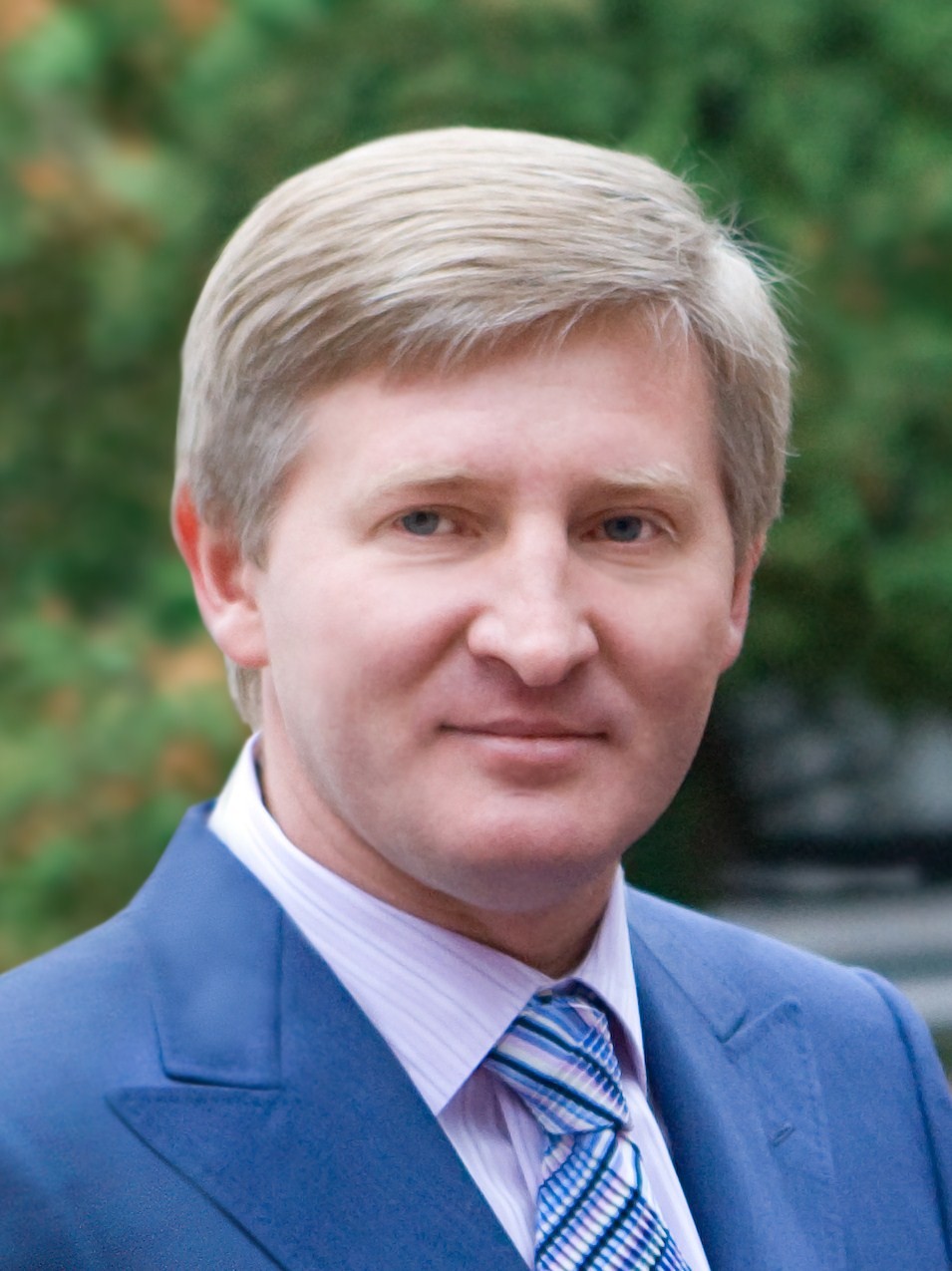
Rinat Leonidovych Akhmetov (born 21 September 1966) is a Ukrainian oligarch, billionaire and businessman. He is the founder and president of international investment group System Capital Management (SCM), and is the wealthiest man in Ukraine. As of May 2026, he was listed as the 483rd richest person in the world with an estimated net worth of US$7.8 billion. This made him one of six Ukrainian billionaires in 2026. Akhmetov is the owner and president of the Ukrainian football club FC Shakhtar Donetsk. Since 2014, the Rinat Akhmetov Foundation has provided over 13 million food kits to the residents of Ukraine, and aid has reached more than 18 million people. SCM businesses, the Rinat Akhmetov Foundation, and Shakhtar Football Club have collectively provided $368 million (UAH 13.5 billion) to aid Ukraine, its military, and civilians as of February 2026. From 2006 to 2007 and 2007–2012, Akhmetov was a member of the Ukrainian Verkhovna Rada (parliament) for the Party of Regions. Later, in a comment to Radio Svoboda, he again called his move into politics a mistake: "And I have no intention of making the same mistake twice".
Rinat Akhmetov was born in Donetsk, Ukrainian SSR, to a working-class family. He is an ethnic Volga Tatar and a practicing Sunni Muslim. His father, Leonid Alekseyevich Akhmetov, was a coal miner. His mother, Nyakiya Nasredinovna, was a shop assistant. His parents are Mishar Tatars and originate from the village of Surgod in the Torbeyevsky District of Mordovia. Akhmetov had an older brother, Igor, who also worked as a coal miner but had to resign due to work-related health complications. Igor died on 24 January 2021. Akhmetov earned a bachelor's degree in economics from Donetsk National University in 2001. Akhmetov is married to Lilia Smirnova, an ethnic Russian. They have two sons.
Details regarding Akhmetov's past, how he obtained his wealth after the fall of communism in Ukraine, and his activities between 1985 and 1995, remain controversial. Akhmetov has stated in interviews that he successfully made risky business investments in the first years after the collapse of the Soviet Union. In an interview with The Guardian in May 2026, the businessman noted: "First of all we decided to trade in coke and coal, earning fairly small money. It started piling up and we began buying minority stakes in industrial companies. Stakes in metallurgy plants were very cheap as there was no competition from western businesspeople to invest in Ukraine, and many locals wanted to take their money to the west". In 1992, Akhmetov said he and two partners started a company called ARS, which processed coal into coke — a key material in producing steel. Akhmetov said Bragin left ARS in 1993, but they remained close friends. In a 2010 interview with Ukrainian News, Akhmetov denied inheriting any money from Akhat Bragin or anyone else, stating that he earned his "first million by trading coal and coke, and spent the money on assets that no one wanted to buy. It was a risk but it was worth it". Many publications in Ukraine and other European countries have made claims about Akhmetov's alleged "criminal past," though one Swiss newspaper later retracted such claims. In a December 2022 interview with the Washington Post, Akhmetov said that he has "never been involved with any criminal organizations, I have never been prosecuted and no criminal charges were pressed against me."
In his documentary book Donetsk Mafia: Anthology, Ukrainian author Serhiy Kuzin claims Akhmetov held the role of a 'mafia thug' in his early years. According to Hans van Zon, Professor of Central and Eastern European Studies in the University of Sunderland, "As early as 1986, Rinat and his brother Igor were involved in criminal activities." In 2008, the Donetsk Appellate Court ruled that the book was a work of plagiarism. The authors of the book, Borys Penchuk, Serhiy Kuzin, and the Anticorruption Foundation, were obliged to pay ₴200,000 in compensation for a breach of copyright to Oleksandr Kuchinsky, the editor-in-chief of Criminal Express regional weekly and the author of The Chronicle of Donetsk Banditry book after the Kyiv District Court found that Kuzin had copied significant portions of the authors' intellectual property while writing Donetsk Mafia: Anthology. In the 1980s, Akhmetov acted as an assistant to Akhat Bragin, whom law enforcement agencies regarded as a powerful crime boss, allegedly in the illegal cloth trading business. Andrew Wilson, a scholar specializing in Ukrainian politics, categorized Akhmetov as an alleged former 'enforcer' and 'leader' of "[Akhat] Bragin's 'Tatar' clan", responsible for the use of "mafia methods to push aside the 'red directors' of the Industrial Union of Donbas (ISD)". By the early 1990s, Akhmetov began acquiring property in Donetsk allegedly by means of extortion with the assistance of Volodymyr Malyshev, Lieutenant-General of The Head of Ministry of Internal Affairs Department in Donetsk Oblast. Malyshev, now a member of Ukraine's Parliament on the committee controlling law enforcement, is accused by Kuzin of using his position to do away with previously existing police records concerning Akhmetov shortly before becoming chief of security for Akhmetov's company. "In [the 1990s], Akhmetov was very different – he was totally private with no public persona, and was trying to find ways to deal with his 'difficult past'", noted U.S. ambassador William Taylor, citing prominent Ukrainian businessman Serhiy Taruta. In October 1995, Bragin, president of Shakhtar Donetsk football club, was killed in a mysterious bombing along with six of his bodyguards at the team's stadium during a match. Some rumours associate Akhmetov with the death of Bragin. Following the assassinations, Akhmetov is said to have "inherited a vast financial empire from Bragin". Akhmetov himself recalls that Akhat was a very close friend of him, his death was a big tragedy for him personally, and he narrowly escaped the explosion himself. "Many say that the bomb detonated in the box (at the stadium). It is a lie. The explosion happened in the tunnel (leading to the box area)," he said. "We arrived at the stadium together, five minutes late. His car pulled up first, mine was second. Because we were late, he left his car and rushed inside without waiting for me. The gap was like five seconds, no more than that. The explosion happened when I opened the door of my car."
Akhmetov headed Dongorbank, formerly Akceptbank, in 1995. In September 1999, an official Ukrainian Ministry of Internal Affairs report titled the "Overview of the Most Dangerous Organized Crime Structures in Ukraine" identified Akhmetov as a leader of an organized crime syndicate. The report tied the group to money laundering, financial fraud, and the control of numerous large and fictitious companies. The report also says that the group's activities "have been stopped," and says further that their criminal natures "have not been confirmed". In a written statement, System Capital Management said that the internal affairs report "has been fully and publicly shown to be a fraud and a forgery" — conclusions that SCM noted were "reached and publicly disclosed in November 2011" by a Ukrainian parliamentary committee and the Ministry of Interior. According to a leaked diplomatic cable, Volodymyr Horbulin, one of Ukraine's most respected policy strategists and former presidential advisor, told the U.S. Ambassador to Ukraine in 2006 that the Party of Regions, which "enjoyed deep pockets, being largely financed by billionaire Donetsk boss Rinat Akhmetov" is partly composed of "pure criminals" and "criminal and anti-democracy figures". In a U.S. diplomatic cable dated 3 February 2006, then U.S. Ambassador John Herbst referred to Akhmetov's Party of Regions as "long a haven for Donetsk-based mobsters and oligarchs" and called Akhmetov the "godfather" of the Donetsk Clan. Further in that article cited the answer of the spokesperson for Akhmetov addressed to the Kyiv Post: "We don't know whether this phrase is authentic and what it actually means. Although, any accusations of Mr Akhmetov's involvement in criminal structures is slander." In 2014, Rinat Akhmetov's support of the peace process in Donbas and his assistance to civilians in Donetsk and Luhansk regions were highly appreciated by the United States. U.S. Ambassador to Ukraine, Geoffrey R. Pyatt who stated that he highly appreciates the efforts of Rinat Akhmetov "who has done probably more than anyone in this country to deliver food and clothes to victims of the violence occurring in Donbas". After Ukraine's Orange Revolution of late 2004, in an attempt to fight corruption, several prominent businessmen who were also Party of Regions members came under criminal investigation. In 2011, Hennadiy Moskal, who in 2005 acted as the Deputy Minister of Internal Affairs of Ukraine, gave an interview to Ukrainian magazine Профиль (profil-ua), where he claimed to have been under Presidential orders in 2005 to investigate and audit Akhmetov for his alleged role in organized crime. Concrete evidence was never officially revealed against him, nor his company. According to Moskal, the MVS investigated all incidents related to missing people in the 1990s in Donetsk region, who had any property left, and its current owners. No connections with Rinat Akhmetov and his entourage were found. Looking back, Moskal concluded that "we had nothing on Akhmetov in 2005". According to political journal's Post-Soviet Affairs, and The Nation, Akhmetov was investigated on murder charges and for his alleged role in organized crime in the Donetsk region. To avoid prosecution he was prompted to flee the country to Monaco. In June 2005, Serhiy Kornich, then head of the Interior Ministry's economic crimes department, stated publicly that Akhmetov was "the head of [an] organized crime group." That year, Borys Kolesnikov, a friend and associate who had been tied to Akhmetov since the 1980s, was arrested on charges of extortion and conspiracy to assassinate a rival Donetsk businessman. Charges against Akhmetov and Kolesnikov were dropped in 2006 amid a significant rise in political power by the former, and the cooperation of the Yushchenko government, ending Akhmetov's exile.
Akhmetov founded System Capital Management Group (JSC "SCM") in 2000. SCM is the largest diversified financial and industrial group in Ukraine with interests around the world. The structure of SCM Group includes more than 250 companies employing about 150,000 people in Ukraine, the U.S., Europe, and across the globe. SCM's main areas of interest and activities are metallurgy and coal mining, power generation, telecommunications, and banking. In various periods, Akhmetov controlled from 90% to 100% of the shares of SCM. He has been its sole proprietor since 2009. The main assets of Rinat Akhmetov, according to information for 2022, include the following companies:


