Background and career
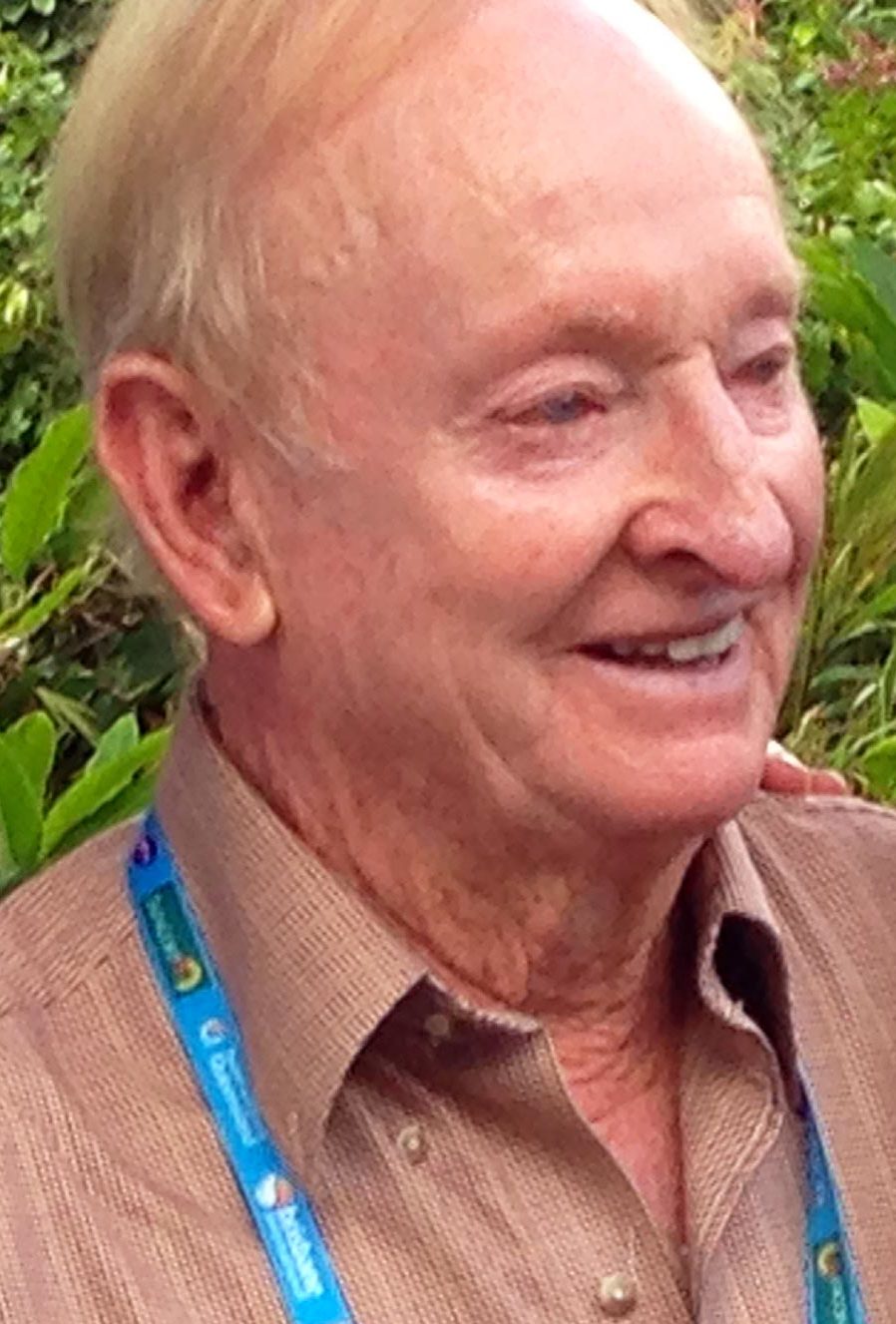
Rodney George Laver (born 9 August 1938) is an Australian former professional tennis player. Laver was ranked as the world number 1 professional player indisputably for five years from 1965 to 1969, and by some sources also in 1964 and 1970. He was also ranked as the number 1 amateur in 1961 and 1962. Laver won 200 singles titles across his amateur and professional careers, the most won by any tennis player. Laver won 11 major singles titles and 8 Pro major titles. He won the Grand Slam (winning all four majors in a calendar year) in singles twice, in 1962 and 1969; the latter remains the only time a man has done so in the Open Era. He also completed the Pro Slam (winning all three pro majors in one year) in 1967. Laver is the only player in the history of tennis (male or female) to have won titles on all court surfaces of his time (grass, clay, hard, carpet, wood), and he contributed to five Davis Cup titles for Australia during a time when the Davis Cup was deemed as significant as the four majors. The Rod Laver Arena (the main show court of the Australian Open) and the Laver Cup tennis tournament is named after him.
Rodney George Laver was born in Rockhampton, Australia, on 9 August 1938. He was the third of four children of Roy Laver, a cattleman and butcher, and his wife Melba Roffey. Amongst his relatives were the cricketers Frank Laver and Jack Laver. He attended Rockhampton State High School in 1951.
Laver was a teenager when he left school to pursue a tennis career that lasted 24 years. He was coached in Queensland by Charlie Hollis and later by the Australian Davis Cup team captain Harry Hopman, who gave Laver the nickname "Rocket". Laver was both Australian and US Junior champion in 1957. He had his breakthrough on the world stage in 1959, when he reached all three finals at Wimbledon, winning the mixed doubles title with Darlene Hard. As an unseeded player, he lost the singles final to Peruvian Alex Olmedo after surviving an 87-game semifinal against American Barry MacKay. His first major singles title was the Australian Championships in 1960, where he defeated fellow Australian Neale Fraser in a five-set final after coming back from two sets down and saving a Fraser championship point in the fourth set. Laver captured his first Wimbledon singles crown in 1961 beating Chuck McKinley in straight sets in the final, which lasted just 53 minutes (one of the shortest men's singles Wimbledon finals on record). Laver was ranked the world No. 1 amateur in 1961 by Lance Tingay.
In 1962, Laver became the first male player since Don Budge in 1938 to win all four Grand Slam singles titles in the same year. He won an additional 18 titles, for a season total of 22. Among those titles were the Italian Championships and the German Championships, giving Laver the "clay court triple" of Paris, Rome, and Hamburg that had been achieved previously only by Lew Hoad in 1956. At the Australian championships, Laver beat Roy Emerson in the final. The biggest hurdle to Laver's winning the Grand Slam was the French Championships on slow clay, where Laver won three consecutive five-setters beginning with the quarterfinals. In his quarterfinal with Martin Mulligan, Laver saved a matchpoint in the fourth set with a backhand volley after coming to the net behind a second serve. In the final, Laver lost the first two sets and was down 0–3 in the fourth set before coming back to defeat Emerson. At Wimbledon, his progress was much easier. Laver lost only one set the whole tournament, to Manuel Santana in a quarterfinal, who held a set point for a two set lead. In the final, Laver beat Mulligan in 52 minutes (a minute shorter than the previous year's final). At the US Championships, Laver lost only two sets during the tournament and defeated Emerson again in the final. Laver was ranked world number one amateur for 1962 by Tingay, by Ned Potter and by an Ulrich Kaiser panel of 13 experts. In February 1963, Laver appeared on the panel game show To Tell the Truth, where all four panelists identified him based on his knowledge of the history of tennis.
In December 1962, Laver turned professional after winning the Davis Cup with the Australian team. After an initial period of adjustment he quickly established himself among the leading professional players such as Ken Rosewall, Lew Hoad and Andrés Gimeno, and also Pancho Gonzales when Gonzales returned to a full-time schedule in 1964. During the next seven years, Laver won the U.S. Pro Tennis Championships five times, including four in a row beginning in 1966. In the beginning of 1963, Laver was beaten consistently by both Rosewall and Hoad on an Australasian tour. Hoad won the first eight matches against Laver, and Rosewall won 11 out of 13. However, Laver won the best-of-five set matches against Rosewall at Kooyong Stadium and at Adelaide's Memorial Stadium. By the end of the year, with six tournament titles, Laver had become the No. 2 professional player behind Rosewall. In the first phase of the World Series tour, Laver finished second, with a 25–16 record. The top two players Rosewall and Laver then played a series of matches against each other to determine the champion. Rosewall won 14–4. Laver's gross earnings for 1963 were first among the pro players. In 1964, Laver and Rosewall both won seven important titles (in minor tournaments Laver won four and Rosewall won three), but Laver won 17 of 24 matches against Rosewall and captured the two most prestigious titles, the US Pro Championships over Gonzales and the Wembley Championships over Rosewall. In Tennis Week, Raymond Lee described the Wembley match, where Laver came from 5–3 down in the fifth set to win 8–6, as possibly their best ever and one that changed tennis history. Lee regards this win as the one that began and established Laver's long reign as world number one. The other prestige title, the French pro, was won by Rosewall. Rosewall finished top of the official points table in 1964 and after winning at Wembley, Laver said "I've still plenty of ambitions left and would like to be the world's No. 1. Despite this win, I am not there yet – Ken is."
In 1965, Laver was clearly the No. 1 professional player, winning 17 titles and 13 of 18 matches against Rosewall. In ten finals, Laver won eight against the still dangerous Gonzales. Laver won the Wembley Pro, beating Gimeno in the final. In 1966, Laver won 16 events, including the US Pro Championships (beating Rosewall in a five-set final), the Wembley Pro Championship (beating Rosewall easily in the final), and eight other important tournaments. In 1967, Laver won 19 titles, including the Wimbledon Pro (beating Rosewall in straight sets in the final), the US Pro Championships (beating Gimeno in the final), the Wembley Pro Championships (beating Rosewall in the final), and the French Pro Championship (beating Gimeno in the final), which gave him a clean sweep of the four most important professional titles, a professional Grand Slam. The Wimbledon Pro tournament in 1967 was the only professional event ever staged on Wimbledon's Centre Court before the Open Era began.


