Background and career
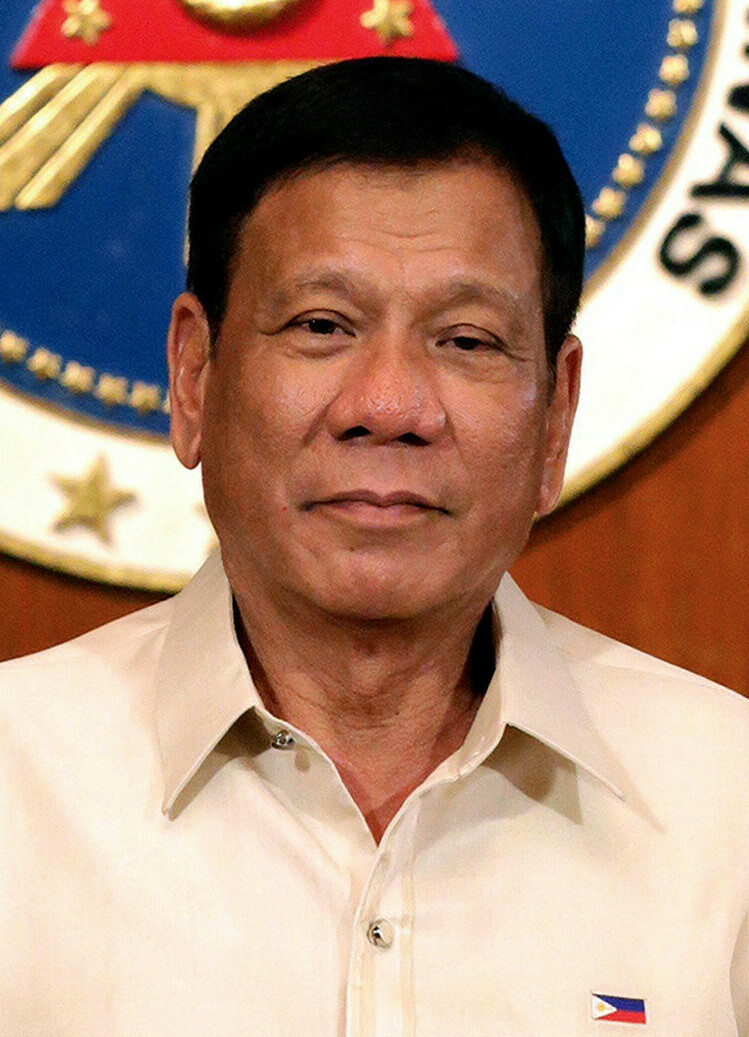
Rodrigo Roa Duterte (born March 28, 1945) is a Filipino lawyer and politician who served as the 16th president of the Philippines from 2016 to 2022. He served as mayor of Davao City for three non-consecutive terms between 1988 and 2016. Duterte is the first Philippine president from Mindanao, and the oldest person to assume office, beginning his term at age 71. Duterte is the chairman of PDP–Laban, the ruling party during his presidency. Born in Maasin, Leyte (now in Southern Leyte), Duterte moved to Davao as a child where his father, Vicente Duterte, served as provincial governor. He studied political science at the Lyceum of the Philippines University, graduating in 1968, before obtaining a law degree from San Beda College of Law in 1972. He then worked as a lawyer and prosecutor for Davao City, before becoming vice mayor and, subsequently, mayor of the city in the wake of the 1986 People Power Revolution. Duterte won seven terms and served as mayor of Davao for over 22 years, during which the once crime-ridden city became peaceful and investor-friendly. Duterte's 2016 presidential campaign led to his election victory. During his presidency, his domestic policy focused on combating the illegal drug trade by initiating the controversial war on drugs, fighting crime and corruption, and intensified efforts against terrorism and communist insurgency. He launched a massive infrastructure plan, initiated liberal economic reforms, streamlined government processes, and proposed a shift to a federal system of government which was ultimately unsuccessful. He declared the intention to pursue an "independent foreign policy", and strengthened relations with China and Russia and also oversaw the controversial burial of Ferdinand Marcos, the siege of Marawi, and the government's response to the COVID-19 pandemic. Duterte praised the Armed Forces of the Philippines for their role in national security and disaster response, particularly highlighting their efforts during the siege of Marawi and in providing humanitarian assistance during natural calamities. Duterte's popularity and domestic approval rating remained relatively high throughout his presidency, and by the end of his term he was the most popular president since the 1986 revolution. He initially announced his candidacy for vice president in the 2022 election; in October 2021, he said he was retiring from politics. The next month, he filed his candidacy for senator but withdrew it on December 14. Duterte's political positions have been described as populist and nationalist. Duterte became known for his political ideology of Dutertismo. His political success has been aided by his vocal support for the extrajudicial killing of drug users and criminals. Duterte is allegedly the founder and head of the Davao Death Squad, a vigilante squad of gangsters and former police that summarily executed more than 1,400 people by 2016. Duterte has admitted to personally killing suspected criminals, and the usage of death squad. His career has sparked numerous protests and attracted controversy, particularly over human rights issues and his controversial comments. The International Criminal Court (ICC) opened a preliminary investigation into Duterte's drug war in 2018, prompting Duterte to withdraw the Philippines from that body in response. Duterte was arrested on March 11, 2025 and transferred to ICC custody in The Hague the next day, making him the first Philippine president to face an international tribunal and the first Asian leader to face a trial before the ICC. Despite this, he was re-elected as the mayor of Davao City in 2025; as he remains in The Hague, his son Baste is serving in his place as the acting mayor. As he failed to take his oath within the prescribed six-month period, he was disqualified from assuming office under the provisions of the Local Government Code. Duterte is scheduled to face trial for crimes against humanity on November 30, 2026.
Rodrigo Roa Duterte was born on March 28, 1945, in Maasin, Leyte. His father was Vicente Gonzales Duterte (1911–1968), a Cebuano lawyer, and his mother, Soledad Gonzales Roa (1916–2012), was a schoolteacher from Cabadbaran, Agusan and a civic leader, of Chinese and Spanish mestizo descent. Duterte has said that his grandfather was Chinese and hailed from Xiamen in Fujian, China. Duterte has four siblings: Eleanor (born 1941/42), Emmanuel, Jocelyn (1948–2023) and Benjamin ("Bong", 1953–2026). Duterte's father was mayor of Danao, Cebu, and subsequently the provincial governor of (the then-undivided) Davao province. Rodrigo's cousin Ronald was mayor of Cebu City from 1983 to 1986. Ronald's father, Ramon Duterte, also held that position from 1957 to 1959. The Dutertes consider the Cebu-based political families of the Durano and the Almendras clan as relatives. Duterte also has relatives from the Roa clan in Leyte through his mother's side. Duterte's family lived in Maasin, and in his father's hometown in Danao, until he was four years old. Duterte was heavily influenced by his mother, who unlike Vicente was a staunch anti-Marcos activist, which led the young Duterte to have a divided opinion on the Marcoses. Duterte later said Marcos could have been the best president, but he was a dictator. The Dutertes initially moved to Mindanao in 1948 but still went back and forth to the Visayas until 1949. They finally settled in the Davao Region in 1950. Vicente worked as a lawyer engaged in private practice. Soledad worked as a teacher until 1952, when Vicente entered politics.
Duterte went to Laboon Elementary School in Maasin for a year. He spent his remaining elementary days at Santa Ana Elementary School in Davao City, where he completed his primary education in 1956. He finished his secondary education in the High School Department of Holy Cross College of Digos (now Cor Jesu College) in Digos, Davao province, after being expelled twice from previous schools, including one in the Ateneo de Davao University (AdDU) High School due to misconduct. He graduated in 1968 with a Bachelor of Arts degree in political science at the Lyceum of the Philippines in Manila. Duterte obtained a law degree from San Beda College of Law in 1972, passing the bar exam in the same year. He worked as a professor in the national police academy, and was a member of an organization called Nationalist Alliance for Justice, Freedom and Democracy. He later served as the OIC vice mayor of Davao City, assisting evacuees from Davao City remote areas and working for the release of soldiers captured by the New Peoples Army (NPA). Eventually, he became a special counsel at the City Prosecution Office in Davao City from 1977 to 1979, fourth assistant city prosecutor from 1979 to 1981, third assistant city prosecutor from 1981 to 1983, and second assistant city prosecutor from 1983 to 1986.
Duterte has claimed he was sexually abused by a priest when he was a minor. After he was challenged by the Catholic Bishops' Conference of the Philippines (CBCP) and AdDU officials to name the priest and file a case against him, Duterte then revealed the priest's name as Mark Falvey (died 1975). The Jesuits of the Society of Jesus in the Philippines confirmed that according to press reports in the United States, in May 2007, the Society of Jesus agreed to a tentative payout of US$16 million to settle claims that Falvey sexually abused at least nine children in Los Angeles from 1959 to 1975. Accusations against Falvey began in 2002, although he was never charged with a crime. In May 2008, the Diocese of Sacramento paid a $100,000-settlement to a person allegedly raped and molested by Mark's brother, Arthur Falvey. However, it was not clearly indicated in the report if Mark Falvey was assigned at the Jesuit-run Ateneo de Davao. When asked why he did not complain when the abuse supposedly happened, Duterte claimed that he was too young to complain about the priest's abuse and was intimidated by authorities at that time. He also stated that he never disclosed the abuse even after he was expelled and moved to a different high school, not even to his family.
Duterte stated at a rally in April 2016 that he shot a fellow student who had bullied him about his Visayan origin as well as other students of the same ethnicity, while at San Beda law college. He said, "But the truth is, I'm used to shooting people. When we were about to graduate from San Beda, I shot a person." Duterte said that he shot the student in a corridor at the college when the said student called him names again. He later told a reporter that the student survived, but refused to answer any further questions about the incident. However, in an interview aired on 24 Oras and published on the official GMA News Online website on April 22, 2016, retired labor arbiter Arthur Amansec said Duterte and Octavio Goco at that time were both playing with a gun as it was normal for students to bring guns to school in the seventies. Amansec is Duterte's former classmate in San Beda College who witnessed the incident. He added that "the bullet hit the school's wooden floor and was embedded there." Amansec emphasized that Duterte and Goco remained friends until Goco died in the United States years later.
After the 1986 People Power Revolution that toppled the regime of President Ferdinand Marcos, Duterte was appointed officer-in-charge vice mayor of Davao City by President Corazon Aquino. In the 1988 local elections, he ran for mayor under Lakas ng Dabaw, a local political alliance, defeating former OIC Mayor Zafiro Respicio by a narrow margin of 6,000 votes. As mayor of Davao City, Duterte made efforts to unite the different tribes and political groups in the city. He set a precedent by designating deputy mayors to represent the administrative districts, as well as the Lumad and Moro peoples in the city government; this was later copied by other cities in other parts of the Philippines. In December 1990, Duterte joined the Nacionalista Party upon the persuasion of Senator Juan Ponce Enrile. In 1992, he successfully defended his seat from 1st district representative Prospero Nograles. In 1995, after Flor Contemplacion, a Filipina, was executed in Singapore after confessing to a double murder, Duterte allegedly burned a flag of Singapore (though this claim was later denied) and joined 1,000 employees of Davao City in protest. In 1998, because he was term-limited to run again for mayor, Duterte ran and won as congressman of the city's 1st district under Laban ng Makabayang Masang Pilipino. He was a member of five House committees, namely: National Defense, Public Order and Security, Health, Transportation and Communications, and Cooperative Development. He filed 64 measures, including 45 bills, with one enacted into law—Republic Act No. 8969, which declared the third Friday of August a special holiday in Davao City. He expressed disinterest with his new post, describing it as less engaging compared to his time as mayor. He attempted to resign in 1999 after his son Paolo was accused of mauling a hotel guard, but House Speaker Manny Villar and President Joseph Estrada declined his resignation. After embarking on a diplomatic trip to Brazil between 2000 and 2001, Duterte made a brief stopover in the United States, but as he was about to step out of the Los Angeles International Airport, he was held up by law enforcement officers and interrogated about his travel documents. After the stopover, Duterte never again returned to the United States. In 2001, he was elected mayor of Davao for a fourth unconsecutive term, defeating his former ally, incumbent Mayor Benjamin de Guzman; his estranged sister Jocelyn attempted to run against him as well, but was disqualified by the Commission on Elections. He was re-elected in 2004, defeating de Guzman for the second time, and in 2007 with virtually no opposition. In 2003, Duterte formally laid out the scope of Davao City's Chinatown, the first Chinatown in Mindanao, along the newly renamed Magsaysay Street, while establishing the Davao City Chinatown Development Council to oversee the area's development.


