Background and career
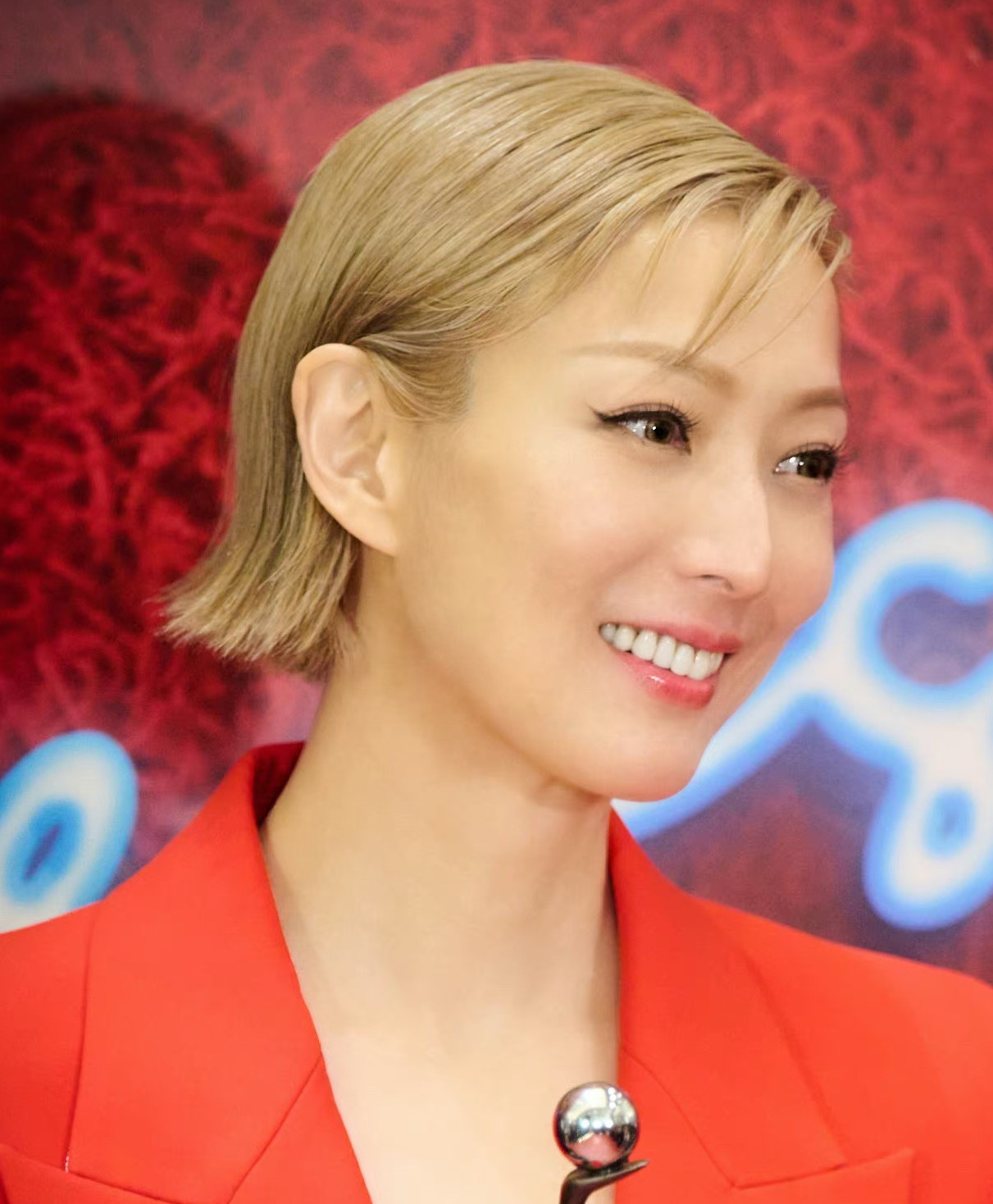
Sammi Cheng Sau-man (Chinese: 鄭秀文; pinyin: Zhèng Xiùwén; born 19 August 1972) is a Hong Kong singer and actress. She is one of the most prominent female singers in Hong Kong, with album sales of over 25 million copies throughout the Asia-pacific. Most notably in the 1990s, she was dubbed by the media as the "Cantopop Diva". Having success in entertainment industry for over three decades, Cheng also played roles in Hong Kong rom-com films in the early 2000s that were box office hits. For her performance in the 2022 film Lost Love, she won 4 best actress honors including the Hong Kong Film Award for Best Actress. Since her debut, Cheng has won the IFPI Hong Kong Music Top Sales Awards for the best-selling Local Female Vocalist of the Year nine times. From 1993 to 2010, Cheng won a total of 12 Top Female Vocalist awards, 14 Best-selling Local Female Vocalist Awards and has 7 albums that are the Best-selling Cantonese Release of the Year.She was even officially recognized six times as the best-selling Hong Kong female artist of the year in Malaysia, including in 2000 and 2001, when she also became the overall best-selling C-Pop female artist in the country; seven times in Taiwan; eight times in Singapore, including in 1996–1997, 1999, 2000, and 2004, when she became the overall best-selling C-Pop female artist in the country; and seven times in North America during 1996–2002 as the overall best-selling C-Pop female artist of the year. She holds the records for the most cumulative weeks at No.1 on both the HKRMA album and video album sales charts, and is also the female artist with the most number-one albums in Hong Kong album sales chart history. She had also previously won the Most Popular Hong Kong Female Artist Award in annual Top Ten Jade Solid Gold Awards Presentation for three times, and in a year winning also the Gold Song Gold Award, the highest-ranked award which is the last to be presented at the ceremony. She also received Honorary Lifetime Achievement Award for Female Singer in 2011 Metro Radio Hits Awards. She had also won many top honors in various Chinese music awards held in Asia, including the MTV Asia Award for Favorite Artist Hong Kong 3 times in 2002, 2003, and 2004. She has produced over 80 studio albums, 10 live concert albums, over 130 songs with also over 30 cover songs and had received numerous awards from acting to singing. She also starred in close to 40 films and 7 television dramas and had held approximately 200 concerts up to date with over 11 concert tours. She is one of the female artists with most concert shows in Hong Kong Coliseum, at 115.
Sammi Cheng was previously named Twinnie Cheng. Contrary to popular belief, "Twiny" is not her birth name. The name came about when Sammi was still in school and her English Language teacher wanted everyone in class to have an English name. When Sammi turned to her sister for help, her sister came up with the name "Twiny". The name was later changed to "Sammi" as "Sammi" sounds a little like "Sau Man". Cheng received her education at SKH St. Peter's Primary School and Tang Shiu Kin Victoria Government Secondary School. She has three sisters and one brother. Two of her sisters are twins.
Cheng entered the entertainment industry at the age of 16 through the New Talent Singing Awards in 1988. Although she came in third in the competition, the sponsoring record company Capital Artists saw her potential and offered her a recording contract. Cheng at the time was still in school, and had to balance her studies with her rising singing career. In December 1988, Sammi Cheng and David Lui recorded two songs—"Cherish This Moment" (珍惜這一刻) and "Chrysanthemum Tears" (菊花淚)—for the television drama series Deadly Secret.Sammi released 3 full-length studio albums prior to leaving school: "Sammi", "Holiday" and "Never Too Late". One of her first major awards was the 1990 RTHK Top 10 Gold Songs Awards, where she was recognized as a best new prospect.
In September 1990, Cheng released her debut album, Sammi, which sold 30,000 copies in Hong Kong —a respectable achievement for a newcomer. The lead single was "Longing" (思念), followed by "Loving You Still" (仍是你) as the second single. The third single was "Fascination" (迷情). The fourth single, "Disillusion" (幻滅)—a cover of the English song "A Long and Lasting Love"—and The final single was "Parting" (離別). As a newcomer under Capital Artists, Cheng did not receive a budget from the label to produce music videos, so the music videos for the first three singles were produced by a television station instead.In addition, this album earned Cheng the "Outstanding Newcomer" award at the 1990 RTHK Top 10 Gold Songs Awards. After receiving it, Cheng was widely praised for her strong potential. Music critic James Wong Jim (黃霑) commended her sweet voice, attractive appearance, and stage presence, while the media predicted that she would become one of Hong Kong's leading divas in the future. On 18 June 1991, Cheng released her second studio album, Holiday. By this time, Cheng's vocal abilities had improved significantly, allowing her to handle several technically challenging songs with ease. The album was noted for its consistent style and distinctive image, which helped her gain moderate popularity for a period. The lead single, "The Season That Never Came " (不來的季節), topped two major music charts in Hong Kong. The second single, "Valentino," was featured as a recommended song on the TV program "Jade Solid Gold." The third and fourth singles were "Friends" and "Love Lost in Vienna" (情斷維也納), respectively. Her appearance in the television drama "A Life of His Own" (浪族闊少爺) boosted album sales, earning the album platinum certification with total sales reaching 70,000 copies in Hong Kong. Cheng's rising popularity in Hong Kong also brought her to the attention of Taiwanese audiences, with journalist Mai Ruoyu from Min Sheng Daily News praising her outstanding performance and noting that her new album reached number one on the charts. Cheng was described as a promising new star among leading female artists. The Cantonese album was also released in Taiwan, giving local fans an introduction to her music. Additionally, the album received positive reviews from Singaporean media, who commended her vocal quality, emotional delivery, and versatility, highlighting her ability to stand out among young newcomers. In July 1992, Cheng released her third studio album, Never Too Late. For this album, Cheng departed from her previous youthful image by adopting a short hairstyle and more mature fashion, fully showcasing the charm of a sophisticated young woman. Due to its more sophisticated style, the singles from the album did not achieve the same chart success as those from her previous release, but the album still surpassed 60,000 copies and achieved platinum certification in Hong Kong. In addition, Cheng emerged as the most promising young female singer of her generation, widely regarded as a top contender to become the next diva of the Hong Kong music industry, and received the "Best Youthful Female Artist" award at Metro Radio's "Beauty Awards" for this album, The lead single was "Say U'll Be Mine." The second single was "Doll's View of the World" (娃娃看天下), followed by the third single, "I Don't Want to Leave Tonight" (這夜我不願離開). The fourth single was "2gether," the theme song for the TVB Japanese drama adaptation "Rookie Cops" (新紮俏警花), and the fifth single was "If You Love Me" (如愛我), an insert song for the drama File of Justice (壹號皇庭).
Cheng capitalized on the attention received from her duet with artist Andy Hui, "Do you really have me in your heart?" (其實你心裡有沒有我), winning the 1993 Jade Solid Gold Top 10 Awards with that song. Cheng then went through a transformation, dying her hair orange, changing her style. Her 4th studio album "Sammi's Happy Maze" (鄭秀文的快樂迷宮) was also released, which include the hit single "Chotto Matte" (Chotto 等等), meaning 'wait a moment' in Japanese. Her new image fitted well with the new single, which was a remake of a Japanese song by Maki Ohguro. The success helped Sammi and boosted her singing career. In 1994 she continued to capitalize on her wild, new image. Her first album of that year was "Big Revenge" (大報復). The album included the hit "Ding Dong" (叮噹), which became one of Sammi's signature songs. But with her new fame also came a lot of backlash from the media. Critics argued that Cheng purposely westernized her Cantonese. Instead of saying "Ding Dong", Sammi pronounced it as "Deen Dong". Despite the criticism, the song was one of the most popular dance songs of that year. In 1994 the racy and controversial cut of "Ten Commandments" (十誡) was banned from the radio for a few days after its initial airplay of the track including tiny bits of what can be recognized as pornography soundtrack. In 1995 Cheng disappeared from the public eye for nearly half a year. Later that year, it was revealed that Warner Music Group had signed her. She let her hair color return to black and temporarily abandoned the wild image she used to have.
In late 1994, Cheng chose not to renew her contract with Capital Artists, following an eight-month period of inactivity during which the label placed her career on hold. After completing this hiatus, she released After (其後) on 25 August 1995, her final album under Capital Artists. To promote the album, the label organized a public autograph session and placed promotional advertisements in Apple Daily. However, due to Cheng's swift transition to Warner Music shortly after the album's release, the promotional period was notably brief. The album's experimental nature and less commercial sound also contributed to its modest initial sales performance. Nevertheless, following her signing with Warner Music and subsequent resurgence in popularity, the album later attracted renewed commercial interest. In September 1995, Cheng officially signed with Warner Music Group. One month after Cheng's departure from Capital Artists, Capital Artists' general manager Ng Yu, noting her renewed surge in popularity, released a compilation album titled It's time:18 Songs, Old and New (是時候新舊對照18首) on 26 October 1995. Initially priced at HK$88, the album contained two previously unreleased tracks. The release was met with strong response, debuting at number one on the IFPI Top 10 Albums Sales Chart and ultimately accumulating sales surpassing double platinum. In November 1996, Capital Artists' general manager Ng Yu acknowledged that although Cheng had already left Capital Artists, her compilations had generated substantial revenue. On 18 November of the same year, she released her first Cantonese-language studio album under Warner Music Group, "Can't Let You Go" (捨不得你). The album was widely regarded by media and industry observers as marking Cheng's rise to diva status in the Hong Kong music scene. It topped the IFPI (Hong Kong Group) Top 10 Album Sales Chart and was officially certified triple platinum by IFPI (Hong Kong Group) and the Hong Kong Record Merchants Association on 22 November 1996, with total sales reaching 175,000 copies. It became one of the best-selling albums in the Hong Kong market that year. "Hey! Man!" (男仕今天你很好) was chosen as the album's lead single, topping four major charts.The second single, "Can't Let You Go" (捨不得你) was featured in a Panasonic portable CD player television commercial, in which Cheng also starred. It likewise reached No. 1 across four major broadcast charts and topped the karaoke chart in Hong Kong for 16 consecutive weeks, leading to her being dubbed the Karaoke Queen by fans and media. The third single was "I Love You Fall Ever" (秋冬愛的故事), followed by the fourth single, "The Elegy of Love" (愛的輓歌), which served as a theme song for the television drama Detective Investigation Files II. The fifth single was "A Glass of Tequila" (Tequila一杯). On 19 December of the same year, Warner Music released Cheng's first Remix EP, Can't Let You Go (Remix) (捨不得你 Remix), to celebrate the album's commercial success. It featured newly recorded remix versions as well as her first Mandarin-language song, Can't Let You Go (Mandarin Version) (捨不得你(國語版)). It had already been included in the Southeast Asia edition of Can't Let You Go (捨不得你), released in November, and received a strong market response, quickly becoming a popular song at karaoke bars in Singapore, Malaysia, and Taiwan. This significantly boosted Cheng's recognition in those countries, paving the way for her expansion into the Mandarin pop market the following year. On 29 May 1996, Cheng released her second Cantonese-language studio album under Warner Music Group," Never Want to Give You Up"(放不低). It debuted at number one on IFPI (Hong Kong Group) Top 10 Album Sales Chart, maintained that position for one week and was officially certified triple platinum by IFPI (Hong Kong Group) and the Hong Kong Record Merchants Association on 22 November 1996, with total sales reaching 175,000 copies. making it the best-selling Cantonese album by a female artist that year.The album was also twice shortlisted for Taiwan's Golden Melody Dragon Tiger Chart, appearing in the fourth and fifth weeks of the autumn season, with sales in Taiwan reaching 30,000 copies."Beware of Woman" (小心女人) was chosen as the album's lead single, topping four major charts. It immediately became a major hit in Hong Kong, with Cheng's trendy styling for the song sparking widespread discussion and later inspiring similar looks among other artists. The second single, "Never Want to Give You Up" (放不低), peaking at number one on three major charts. it was used as the theme song for the TV drama "When a Woman Loves a Man" and was also featured in a commercial for Panasonic Discman, which helped it reach a wider audience. Around the same time, Cheng starred in the film Feel 100% (百分百感覺), for which she performed the theme songs "Owe You Nothing" (不拖不欠) and "Asking Me" (問我). Both tracks became popular hits, with "Owe You Nothing" also released as the album's third single, reaching number one on one major chart, topping karaoke chart for eight consecutive weeks. On 24 June 1996, to celebrate the album's rapid achievement of double platinum certification within one weeks, Cheng released her second Remix EP, Beware of Woman Kara EP Remix (小心女人卡拉EP Remix). In 1996, the company decided it was time for Cheng to expand her market and fan base beyond Hong Kong. In August 1996, Sammi Cheng, with auburn-colored hair, entered the Taiwanese market under the titles of "Hong Kong's new diva" and "successor to the diva throne." On 2 September 1996, she released her first Mandarin-language studio album,"Worth It" (值得). The album immediately reached number one on the Taiwan IFPI sales chart, where it remained for six consecutive weeks. On 11 October, it was certified by IFPI Taiwan as platinum and gold, with sales of 309,489 copies, making Cheng the first artist to receive a chart-topping certificate since the organization's establishment. By early December, sales had reached 500,000 copies, ranking fourth among Taiwan's ten best-selling albums of 1996. By early 1997, cumulative sales had risen to 600,000, later surpassing 700,000 across Taiwan. By early 1997, Worth It had sold one million copies across Taiwan, Singapore, Malaysia, and North America (excluding Hong Kong and mainland China). In North America's Chinese communities alone, sales exceeded 200,000 copies, with the album repeatedly appearing on Virgin Megastore's top ten sales chart. According to Warner Music Asia's president in 1999, Worth It had sold 2.2 million copies across Asia (excluding North America and mainland China), making it Cheng's best-selling album of all time. The album's lead single, "Worth It" (值得), topped multiple music charts and Karaoke charts across Mandarin-speaking regions. The second single, "Betray" (背叛), received stronger response in Hong Kong, earned the "Favorite Mandarin Song (至尊最愛國語歌)" award while the third single, "Depend On" (依靠), was also promoted. In addition, "Beware Of Woman (Mandarin version)" (小心女人) and "Fragile" (脆弱) were released as promotional singles, primarily promoted through karaoke bars in Taiwan. In October 1996, Cheng announced her first solo concert, TCBY Sammi X Live 96 (TCBY鄭秀文X空間演唱會), to be held at the Hong Kong Coliseum. The concert ran for eight consecutive shows, with tickets selling out one month before the opening, setting a record for female singers at the Coliseum in 1996. Promoter Cheung Yiu-wing revealed that 90 percent of tickets were sold within three days, noting the strong response. Due to scheduling constraints, no additional shows could be added, but sixteen concerts were planned for 1997. The eight concerts began on 10 November 1996, staged in a three-sided configuration at the newly renovated venue, accommodating more than 7,000 spectators each night. All eight shows were sold out, with three extra rows of seating added per performance, drawing a total audience of around 60,000. A live album was subsequently released, with the LD edition selling 50,000 copies and the CD edition receiving platinum certification from the IFPI (Hong Kong Group) for two consecutive years, reaching cumulative sales of 100,000 copies—the Best-selling live album by a female singer in Hong Kong during the 1990s. Cheng also received the "My Favorite Concert (我最喜愛的演唱會)" award, voted by more than 30,000 attendees. Following the commercial success of her previous three albums, Cheng released Passion on 22 November 1996, shortly after her concert series, adopting a metropolitan and mature female image."X Party" (X派對) was chosen as the album's lead single, topping three major charts. "Tacit Moment" (From "Feel 100% 2") (默契) was released as the second single, peaking at number one on three major charts. "Sister Theresa"(加爾各答的天使-德蘭修女) was released as the third single, "Talk About Love" (談情說愛) was released as the fourth and final commercial single, reaching number one on Two major charts.On the day of the album's release, Warner Music held a press conference titled "1,000,000 Passion" to promote the record and highlight Cheng's cumulative sales achievements under the label. Her albums had collectively sold over one million copies in Hong Kong and Taiwan. Among them, Can't Let You Go (捨不得你) and Never Want to Give You Up (放不低) had sold a combined total of 350,000 copies in Hong Kong and 50,000 copies in Taiwan; as of November 1996, Worth It (值得) had sold more than 450,000 copies in Taiwan and over 30,000 copies in Hong Kong. In addition, advance orders for Passion exceeded 100,000 copies prior to its release. Ultimately, the album achieved renewed commercial success in Hong Kong, receiving double platinum certification from the IFPI (Hong Kong Group) for two consecutive years, amounting to a total of Quadruple platinum, with cumulative sales exceeding 200,000 copies She won a number of awards, most notably she was voted back-to-back as the most popular female artist by TVB from 1996 to 1997. She went on to win the top female award again in 2001. She would finish that year with her first concert titled "Sammi's X-Dimension Concert" (鄭秀文X空間演唱會). In 1998, she was also a featured star in a Heineken sponsored Music Horizons concert along with international singers such as Boyz II Men and Julian Lennon. By the time Cheng was 24 years old, she had already released four greatest hits albums.
Sources
Net-worth figure: Celebrity Net Worth (October 2026), in USD. Biography and career facts: the person's Wikipedia article and linked reporting. Snapshot date for all StarWorth figures: 28 October 2026.



