Background and career
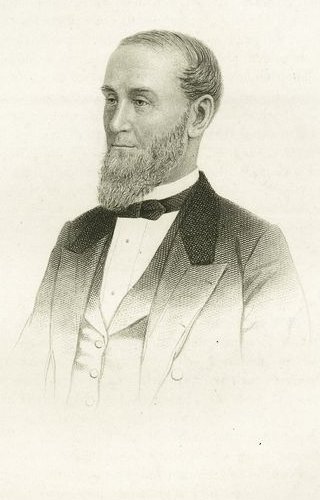
Aníbal António Cavaco Silva (European Portuguese: [ɐˈniβɐl ɐ̃ˈtɔni.u kɐˈvaku ˈsilvɐ, - ɐ̃ˈtɔnju -]; born 15 July 1939) is a Portuguese economist and politician who served as the president of Portugal from 2006 to 2016, and as prime minister of Portugal, from 1985 to 1995. His 10-year tenure was the longest of any prime minister since Salazar, and the longest for a freely elected prime minister in Portugal's republican history. He was the first Portuguese prime minister to win an absolute parliamentary majority under the current constitutional system (dating to 1974). He is most recognized for guiding Portugal into the European Union, liberalizing the Portuguese economy and improving infrastructures across the country. As prime minister, his style and policies came to be known as Cavacoism.
Aníbal António Cavaco Silva was born in Boliqueime, Loulé, Algarve, in 1939, the second son of Teodoro Gonçalves [da] Silva and Maria do Nascimento Cavaco. He was initially an undistinguished student. As a 12-year-old, he failed the 3rd grade of the Commercial School, and his grandfather put him working on the farm as punishment. After returning to school, Cavaco Silva went on to become an accomplished student. Cavaco Silva then went to Lisbon, where he took a vocational education course in accounting from Instituto Comercial de Lisboa (Instituto Superior de Contabilidade e Administração de Lisboa (ISCAL), today) in 1959. In parallel, he was admitted for university education at the Instituto Superior de Ciências Económicas e Financeiras de Lisboa (ISCEF) of the Technical University of Lisbon (UTL) (currently the Instituto Superior de Economia e Gestão (ISEG) of the University of Lisbon), and obtained in 1964, with distinction, a degree in economics and finance (he scored a mark of 16 out of 20). While studying in Lisbon, Cavaco Silva was an athlete of CDUL athletics department from 1958 to 1963. Between 1963 and 1964, he was drafted into the Portuguese Army Artillery for compulsory 11-month military service, serving in a battalion in Lourenço Marques in Portuguese Mozambique. Cavaco Silva studied a graduate course at the University of York in England. Returning to Portugal, he took up a post as assistant professor in ISCEF (1974), professor at the Catholic University of Portugal (1975), extraordinary professor at the New University of Lisbon (1979) and finally director of the Office of Studies of the Bank of Portugal. Cavaco Silva has published several academic works in economics, including in subfields like monetary policy and monetary unions. He received an Honorary Doctorate from Scotland's Heriot-Watt University in 2009.
Cavaco Silva joined the Social Democratic Party in 1974. Between 1980 and 1981, he was finance minister under Prime Minister Francisco Sá Carneiro's government. Five years later, in 1985, Cavaco Silva was elected party leader.
The 1985 legislative election was complicated by the arrival of a new political party, the Democratic Renewal Party (PRD), which had been formed by the supporters of the President, António Ramalho Eanes. In the 250-member Assembly of the Republic, the nation's legislature, the PRD won 45 seats – at the expense of every party except Cavaco Silva's PSD. Despite winning less than 30 per cent of the popular vote, the PSD was the only traditional political party not to suffer substantial losses. Its 88 seats, in fact, represented a gain of 13 over the previous election. Accordingly, Cavaco Silva became prime minister on 6 November 1985. Cavaco Silva headed a minority government. On most issues, his Social Democrats could rely on the 22 votes of the Social and Democratic Center Party (CDS), but the two parties' combined 110 votes fell 16 short of a parliamentary majority. The Socialists (PS) and Communists (CDU) held 57 and 38 seats respectively; Cavaco Silva could govern if the 45 members of the PRD, who held the balance of power, abstained. According to a contemporary report in The New York Times, Cavaco Silva's first government presided over an "economic boom". The article described him as "pro-American" and committed to the European Community.
In 1987, the PRD withdrew its tacit support, and a parliamentary vote of no confidence forced President Mário Soares to call an early election. Cavaco Silva's Social Democrats captured 50.2 per cent of the popular vote and 148 of the 250 seats in the legislature. Far behind were the Socialists, with only 60 seats, and the Communists, with 31. The CDS and the PRD were virtually wiped out, left with only four and seven seats, respectively. This was the first time since the 1974 revolution that a single party had won an outright majority in the national parliament. At the time, it was also the largest majority that a Portuguese party had ever won in a free election.
Although the occurrence of economic growth and a public debt relatively well-contained as a result of the number of civil servants was increased from 485,368 in 1988 to 509,732 in 1991, which was a much lower increase than that which took place in the following years until 2011 marked by irrational and unsustainable State employment, from 1988 to 1993, during the government cabinets led by Cavaco Silva, the Portuguese economy was radically changed. As a result, there was a sharp and rapid decrease in the output of tradable goods and a rise in the importance of the non-tradable goods sector in the Portuguese economy. In the 1991 election Cavaco Silva's party had a majority even larger (50.6 per cent) than the one of four years earlier. After 10 years in office, he decided not to run for another term as party leader, not contesting the 1995 election, and the PSD, lacking a leader of his stature, lost 48 seats and the election to the Socialists.
Sources
Net-worth figure: Celebrity Net Worth (October 2026), in USD. Biography and career facts: the person's Wikipedia article and linked reporting. Snapshot date for all StarWorth figures: 28 October 2026.