Background and career
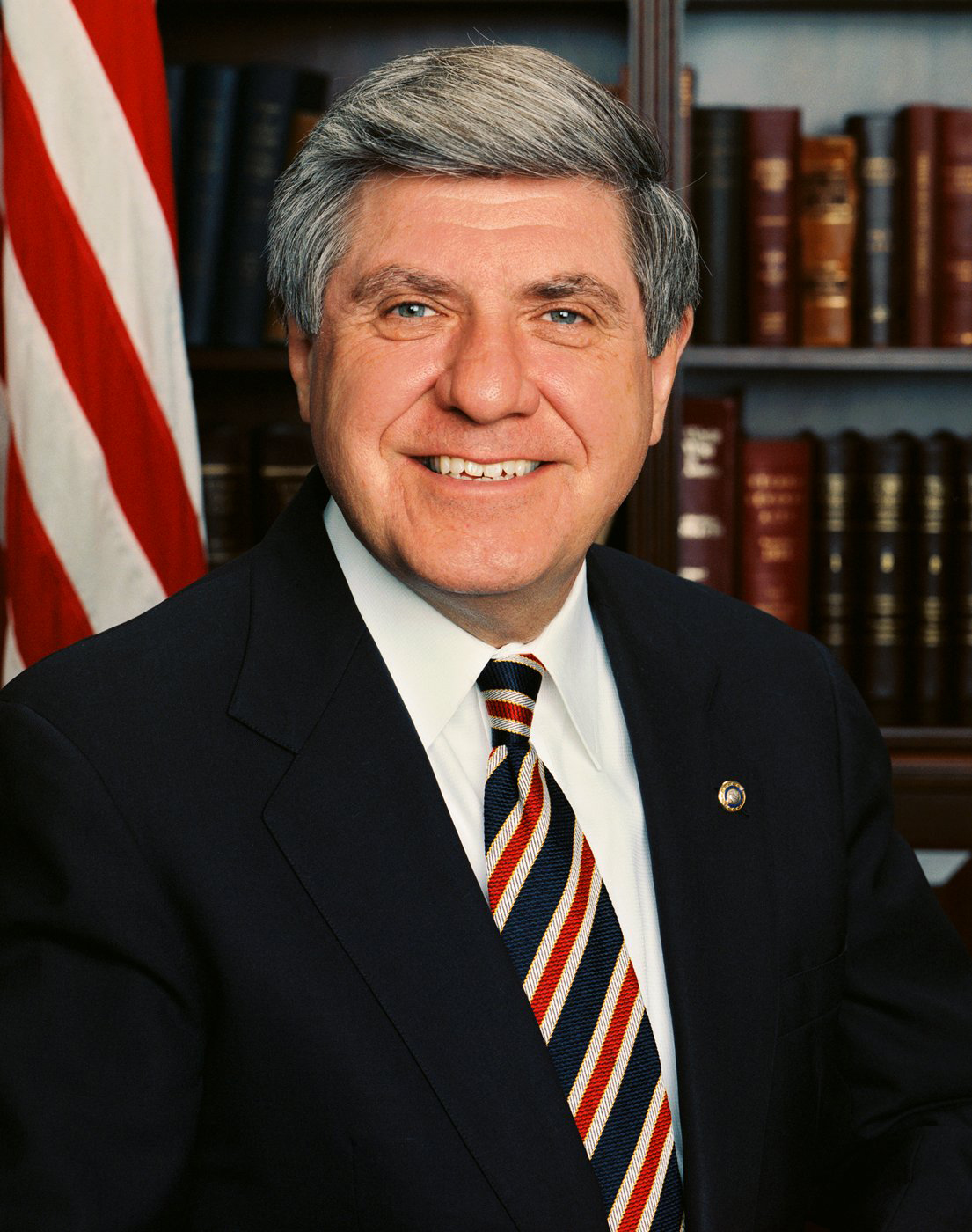
Earl Benjamin Nelson (born May 17, 1941) is an American politician, attorney, and businessman who served as a United States senator from Nebraska from 2001 to 2013. A member of the Democratic Party, he previously served as the 37th governor of Nebraska from 1991 to 1999. As of 2026, he is the last Democrat to have won or held statewide office in Nebraska. Nelson was an insurance executive before he entered politics. His first run for office was in 1990, when he narrowly defeated incumbent Republican governor Kay Orr. He was reelected by a landslide in 1994. He ran for an open U.S. Senate seat in 1996, losing in an upset to Republican Chuck Hagel. He was elected to Nebraska's other Senate seat in 2000, and reelected in 2006. He did not run for a third term in 2012, and was succeeded by Republican Deb Fischer. Nelson was the most conservative Democrat during his time in the U.S. Senate, frequently voting against his party.
Earl Benjamin Nelson was born on May 17, 1941, in McCook, in southwestern Nebraska. He is the only child of Birdella and Benjamin Earl Nelson. He is an Eagle Scout. He earned a Bachelor of Arts in 1963, a Master's degree in 1965, and a Juris Doctor in 1970—all from the University of Nebraska–Lincoln. After graduating from law school, Nelson landed a job as assistant general counsel for Central National Insurance Group of Omaha. After several years in the business, in 1975 the governor appointed him state insurance director. After the administration changed, he returned to work for Central National Insurance as an executive vice president and eventually president.
Nelson became involved in state politics, joining the Democratic Party. In 1986, he served as state chairman of Democrat Helen Boosalis's gubernatorial campaign. She was mayor of Lincoln, Nebraska. Boosalis was defeated by state treasurer Republican Kay Orr, 53% to 47%.
Nelson first ran for electoral office in 1990, defeating first-term Republican incumbent Orr by 4,030 votes out of over 586,000 cast. He was reelected in 1994 with 73% of the vote, the largest margin of victory for a governor in half a century, despite the national Republican gains that year. During his tenure, he introduced legislation to cut crime through the Safe Streets Act and Juvenile Crime Bill, advocated for low-income families through the Kids Connection health care system, and enacted welfare reforms. He also cut taxes for over 400,000 middle-income families. As governor, Nelson took some conservative stances on issues in right-leaning Nebraska. He pushed welfare reform before it was done at a national level and opposed President Bill Clinton's efforts on health care. During the 1990 campaign, Nelson attacked Orr's support for a proposed low-level nuclear waste dump in the state. During his tenure, the Nebraska State Department of Environmental Quality denied the dump's application for an operating license, prompting a lawsuit that Nebraska settled for $145 million. Nelson ran for a seat in the U.S. Senate in 1996 when fellow Democrat Jim Exon retired. He was defeated by Republican businessman and Vietnam veteran Chuck Hagel in an upset. In 1998, Nelson was ineligible to run for re-election because of Nebraska's term-limits law. He was succeeded as governor by Mike Johanns, the Republican mayor of Lincoln. As of 2026, Nelson is the last Democrat to serve as governor of Nebraska.
Nelson was nominated by the Democrats for the Senate in the 2000 election after his fellow Democrat, incumbent Bob Kerrey, announced his retirement. His opponent was Attorney General Don Stenberg. Nelson won the election with 51% of the vote after a campaign in which he spent 50% more ($1,004,985) than Stenberg. Despite initially pledging to work together, Nelson and his fellow colleague Hagel had a somewhat frosty relationship.
Nelson was thought to be in danger of losing his seat in 2006, as it was thought his successor as governor, Mike Johanns, was almost certain to run against him; that speculation ended when Johanns was appointed U.S. Secretary of Agriculture. With Johanns' move to Washington, few high-profile Republicans stepped up to run against Nelson, as the state party focused its attention on the governor's race. The Republican nomination was won by Pete Ricketts, a former TD Ameritrade executive. In the general election, Nelson was endorsed by the National Rifle Association of America, Nebraska Right to Life (National Right to Life's state affiliate), Nebraskans United for Life, the U.S. Chamber of Commerce, the National Federation of Independent Business, Nebraska Farmers Union PAC, National Farmers Union PAC, the Veterans of Foreign Wars PAC, the Business-Industry Political Action Committee, and the Omaha Police Union, all conservative-leaning groups. Nelson defeated Ricketts 64%-36%, the biggest victory margin for a Democratic Senate candidate in Nebraska since Edward Zorinsky won 66% of the vote in 1982. In doing so, he received the votes of 42% of Republicans and 73% of Independents on top of 96% of those from his own party. He also won all but 13 counties in the western part of the state, a surprising feat in normally heavily Republican Nebraska.
Sources
Net-worth figure: Celebrity Net Worth (October 2026), in USD. Biography and career facts: the person's Wikipedia article and linked reporting. Snapshot date for all StarWorth figures: 28 October 2026.