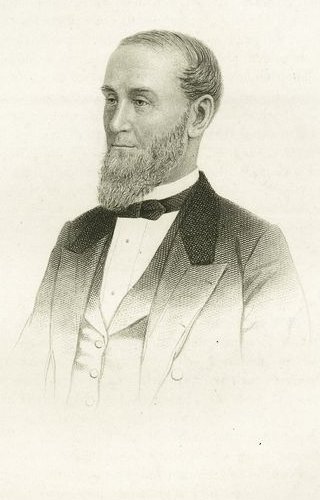
Background and career
Bidzina Ivanishvili (Georgian: ბიძინა ივანიშვილი; born 18 February 1956), also known as Boris Grigoryevich Ivanishvili, is a Georgian businessman, politician and oligarch. In 2012 he founded the Georgian Dream party and led it to the victory in the 2012 Georgian parliamentary election. After briefly serving as the country's prime minister in 2012–2013, Ivanishvili has been the de facto leader of Georgia since then through his informal influence. Since December 2023, he has held a post of the honorary chairman of the ruling Georgian Dream party, a position created specifically for him, granting him a right to nominate the prime ministerial candidate, unlikely to be rejected given Ivanishvili's status as the party's patron. Ivanishvili is the richest man in Georgia, with his wealth estimated at $7.6 billion in 2024, a figure equivalent to 24.8% of Georgia's 2023 GDP. Ivanishvili made his wealth in Russia in the 1990s following the collapse of the Soviet Union. He initially sold computers in Russia before acquiring cheap banking and metals assets when the Russian government privatized its Soviet-era state assets under Mikhail Gorbachev, and subsequently Boris Yeltsin. Ivanishvili left Russia in 2002 and moved to France, becoming a French citizen. Ivanishvili entered Georgian politics in 2012, when he founded the Georgian Dream-Democratic Georgia party and secured victory in the 2012 Georgian parliamentary election against the United National Movement party of incumbent President Mikheil Saakashvili. After serving as Prime Minister of Georgia from October 2012 to November 2013, he claimed that he was leaving political life; however, he continued to be widely viewed as the éminence grise controlling the Georgian political process from behind the scenes. After formally returning to politics in 2018 as chairman of the ruling party, Ivanishvili again claimed to be leaving politics behind in 2021, only to stage yet another comeback in late 2023 as the honorary chairman of Georgian Dream. Since 2024, he has been sanctioned by the United States and several European Union countries "for undermining Georgian democracy and advancing the interests of the Russian Federation".
Bidzina Ivanishvili was born in Chorvila, a village in the Imereti region of Georgia. He was the youngest of five children in a poor family. His father, Grigor Ivanishvili, worked in a manganese factory. As a child, Bidzina was raised in extreme poverty (for example, not having access to shoes). His poor background would later endear him to rural Georgians and help to bring him victory in the 2012 Georgian parliamentary election. Bidzina graduated from high school in Sachkhere. He also graduated from the Faculty of Engineering and Economics of the Tbilisi State University in 1980, and in 1982, went to Moscow to pursue a PhD in economics at the Moscow State University of Railway Engineering.
In 1988, Ivanishvili turned to business. He founded a cooperative — the only private company allowed in the Soviet Union of the 1980s. Prior to 1990, while living in Moscow, Ivanishvili met Vitaly Malkin, a Russian businessman currently into politics, with whom he formed a partnership selling computers, and later importing what was then a novelty in Russia, push-button telephones. The fortune they made from this trade allowed them to cheaply purchase lucrative metals and banking assets when the Russian government privatized its Soviet-era state assets. Metals and banking are source of Ivanishvili's great wealth.
In 1996, Ivanishvili became part of Semibankirschina, a group of influential Russian bankers who supported the re-election of Boris Yeltsin as Russian president during the 1996 Russian presidential election. Ivanishvili sponsored the presidential campaign of Alexander Lebed in an attempt to pull votes from the Communist candidate Gennady Zyuganov, who was Yeltsin's main opponent. Ivanishvili was later criticized by his political opponents in Georgia for his support of Lebed, who was one of the leading Soviet military figures in the April 9 tragedy. Ivanishvili maintained that he was a supporter of Boris Yeltsin who opposed the Communist candidate. Therefore, he was indirectly supporting the independence of Georgia by opposing the return of Communists to power and restoration of the USSR. Ivanishvili left Russia in 2002 and moved to France. In 2003, he returned to Georgia. Upon his return, he began giving out goods such as DVD players and stoves, as well as promising free healthcare for his town's residents. However, at the same time, he remained elusive, preferring to remain out of the attention of the press. Ivanishvili had provided the funds to build Tbilisi's Sameba Cathedral, the largest church in Georgia, the fact that was unknown to the general public until former President of Georgia Eduard Shevardnadze named Ivanishvili in his memoirs. According to Raphaël Glucksmann, Mikheil Saakashvili's French adviser, Ivanishvili supported the Rose Revolution and financed the reforms enacted by the government afterwards. Ivanishvili donated US$1 billion to support the government of Georgia after the Rose Revolution. He provided funds to reform the police and build a new infrastructure in the country. It is speculated that his support for the government after the Rose Revolution may have stemmed from his conflict with another Georgian oligarch Badri Patarkatsishvili who was in opposition to Mikheil Saakashvili. At that time, Ivanishvili was allegedly close to Georgian Interior Minister Vano Merabishvili, while Saakashvili allegedly remained more sceptical of him. However, according to Ivanishvili, he often met Saakashvili as well. Ivanishvili allegedly fell out with Saakashvili at the beginning of 2008. It is speculated that with the death of Patarkatsishvili, Ivanishvili was no longer reliant on the support from the state, which allowed him to break ranks with the government. Ivanishvili himself stated that he came under increasing pressure from the Saakashvili government and was no longer interested in providing funds for the government projects.
Prior to entering politics, Ivanishvili was asked by the opposition leaders to lead the opposition a number of times. For example, in January 2008, the Labor Party leader Shalva Natelashvili said that in case of winning the presidential election, he would offer the office of prime minister to Ivanishvili, without clarifying whether he had Ivanishvili's approval for such move. This statement of Natelashvili came in sharp contrast with his accusation in September 2006 that Ivanishvili was financing Saakashvili. On 7 October 2011, Ivanishvili announced his intention to lead the opposition in the 2012 Georgian parliamentary election in a written statement, citing the perceived authoritarianism of President of Georgia Mikheil Saakashvili. In the same statement, he stated he would renounce his French and Russian citizenship, as well as sell off all of his assets in Russia. His bank Rossiysky Kredit was sold for 352 million dollars, to a group of investors comprising major Russian bankers. His drugstore chain Doktor Stoletov was sold for 60 million dollars to the Imperia-Pharma company. His agriculture company Stoilenskiy Niva was also sold. Four days after declaring his intentions, Ivanishvili was stripped of his citizenship by Georgian authorities, citing article 32 of the Georgian Law on Citizenship. The civil registry agency ruled his citizenship had become invalid since he acquired a French passport in 2004. On 27 December 2011, a Tbilisi court upheld the revocation of Ivanishvili's citizenship, but overturned the revocation of his wife's citizenship. Subsequently, she announced her intentions to run for a seat in the Parliament of Georgia. On 21 February 2012, Ivanishvili announced a coalition by the name of Georgian Dream, composed of his planned political party of the same name, the Republican Party of Georgia, Our Georgia – Free Democrats, and the National Forum. Georgian Dream's 12-point manifesto included among other policies, the development of liberal democracy, deepening integration with the European Union and NATO, and improvement of education and healthcare infrastructure. Following the announcement, the Industry Will Save Georgia party joined the coalition on 11 April 2012. On 21 April 2012, Ivanishvili formally established the Georgian Dream political party. Since Ivanishvili was not a Georgian citizen at the moment of the party's inaugural session, the lawyer Manana Kobakhidze was elected as an interim, nominal chairman of the Georgian Dream – Democratic Georgia. The main goals of Georgian Dream were stated to be a revival of agriculture, lowering taxes on the poor, universal health insurance, normalization of relations with Russia and strengthening Georgia's ties to the EU and NATO. Ivanishvili united much of the Georgian opposition around him. The Georgian Dream coalition included parties of diverse ideological orientations. The coalition was made up of parties ranging from pro-market and pro-western liberals to nationalists and protectionists, united in their dislike of Saakashvili and the United National Movement. The name of the alliance was inspired by a rap song by Ivanishvili's son Bera. Ivanishvili's personal wealth amounted to 6.4 billion dollars, according to Forbes, which was more than the Georgian State budget (5.7 billion dollars). During the pre-election campaign, Ivanishvili was giving out gifts, televisions, dishwashers and washing machines to the residents of his hometown. The Georgian Dream volunteers handed out fliers where people could write down a "Georgian dream" that cost less than GEL1,000 ($600) – implying that a vote for the opposition would be materially rewarded. In June 2012, the administrative court fined Ivanishvili US$90 million for breaking political party funding regulations. The court of appeals upheld the decision of the lower court on the merits, but halved the fine imposed to US$45 million. The court ruled that Ivanishvili used offshore companies linked to him to by-pass the law, illegally donating to the Georgian Dream coalition. LTD Burji and Elita Burji offered preferential prices on car renting and office renovation to the Georgian Dream coalition. Their official representative in Georgia, Kakha Kobiashvili, was a nephew of Bidzina Ivanishvili. The State Audit Service said that this constituted an illegal donation Ivanishvili had made through his companies in violation of the party funding rules and requested the court to fine him. In another case, The Global TV, owned by Ivanishvili's brother, has distributed and installed satellite dishes for free in provinces. The representative of the state audit agency at the court hearing alleged that Global TV launched this campaign only after it received a loan from Cartu Bank, which was presumably owned by Ivanishvili's Cartu Group. In August 2012, Ivanishvili was fined US$12.3 million for irregular party donations on account of being unable to demonstrate that a cash withdrawal of around US$3 million from his private bank account had not been spent furthering the electoral aims of the "Georgian Dream". The court decisions were criticized as poorly evidenced. Ivanishvili was not provided with adequate time or sufficient equality of arms to contest effectively. The Court rejected the defence's applications to call and cross examine the witnesses whose testimony was relied on to establish ownership of Cartu Bank. Ivanishvili was also denied the opportunity to cross-examine State Audit Organization witnesses. Ivanishvili's lawyer criticized the decisions as politically motivated. The Georgian Dream coalition successfully challenged the ruling United National Movement (UNM) in the 2012 parliamentary election. Georgian Dream won the election with 54.97% of the vote. Widespread celebrations in the Georgian capital of Tbilisi were held in support of Georgian Dream. The next day, Saakashvili accepted the results as legitimate, while at the same time noting that he remained deeply opposed to the coalition.
On 25 October 2012, Ivanishvili officially took office as Prime Minister of Georgia, marking the first peaceful transition of power to occur in modern Georgia's history. During this period, the government increased social spending, while continuing on the path of fiscal consolidation. In February 2013, the government introduced the Universal Healthcare Program (UHP). The package covered urgent outpatient assistance, urgent hospital assistance, scheduled outpatient and policlinic services. In July, it was expanded to cover primary health care services, urgent outpatient assistance, extended urgent hospitalization, planned surgeries, treatment of oncological diseases, and child delivery. The reform made state-sponsored health insurance available on a massive scale. Besides, the government also increased pensions, social assistance allowances and education spending. In June 2013, the parliament adopted a new Labour Code in line with International Labour Organization (ILO) standards. According to the Georgian Institute of Politics, under Ivanishvili's leadership, Georgia retained most of the reforms passed during Saakashvili's presidency. Georgia maintained the free market economic model created during Saakashvili's tenure, while also establishing a functional social safety net. The government implemented prison reform. During the previous administration, which pursued a zero-tolerance policy, the prisoner numbers had increased four-fold from over 6,000 in 2003 to 24,000 in 2012. The prisons were overcrowded and prisoners were subject to systematic torture. In September, 2012, mass protests erupted in Georgia following the broadcast of video footage showing abuse and torture of prisoners in Gldani prison in Tbilisi. The new government conceded fundamental problems in the prisons system and promised to carry out a reform. The parliament adopted an amnesty law, which halved the prison population. The mortality rate in prisons considerably went down and prison healthcare was overhauled. The government liberalized criminal policies. The practice of cumulative sentencing ended in April 2013. The government faced a challenge of tackling legacy of abuse committed by the former government officials. More than 20 000 complaints were filed by citizens and inmates with the Prosecutor's Office in connection to injustices of past administration, including 4 000 cases of alleged torture or ill-treatment. Thirty-five officials who had served under the previous government were charged with criminal offences with accusations ranging from embezzlement to abuse of power and torture. Former Prime Minister Vano Merabishvili, governor of Kakheti Zurab Tchiaberashvili and Head of Penitentiary Department Bacho Akhalaia were among the ones who were arrested. Bringing former government officials to justice for the human rights violations was one of the main pre-election promises of Georgian Dream, especially after the Gldani prison scandal confirmed long-standing allegations of ill-treatment in the Georgian prison system. The day before the 2013 anti-homophobia rally in Tbilisi, Ivanishvili has stated that "sexual minorities are the same citizens as we are... [and that] the society will gradually get used to it." In 2013, the Georgian Orthodox Church unsuccessfully lobbied the Georgian government to ban abortions, which it described as a "terrible sin" and "heinous murder", while blaming it for the "grave demographic situation" in the country. Bidzina Ivanishvili brushed off the proposal, stating that solving demographic problems "first and foremost needs economic development". Despite predictions and allegations of then ruling United National Movement, Ivanishvili's election did not see return of Shevardnadze-era levels of corruption and crime. Ivanishvili's Georgia scored well on Transparency International's Corruption Perception Index and Index and Freedom House's Freedom in the World index.
Sources
Net-worth figure: Celebrity Net Worth (October 2026), in USD. Biography and career facts: the person's Wikipedia article and linked reporting. Snapshot date for all StarWorth figures: 28 October 2026.