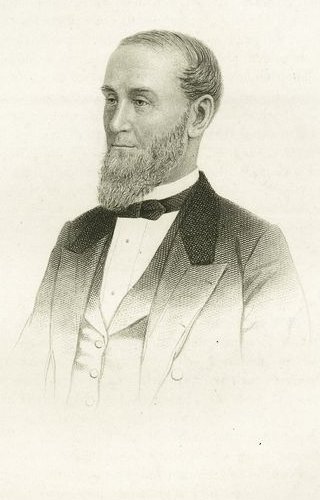
Background and career
Boris Nikolayevich Yeltsin (1 February 1931 – 23 April 2007) was a Soviet and Russian politician who served as President of Russia from 1991 to 1999, having previously served as Chairman of the Supreme Soviet of the Russian SFSR from 1990 to 1991. He was a member of the Communist Party of the Soviet Union (CPSU) from 1961 to 1990. He later stood as a political independent, during which time he was viewed as being ideologically aligned with liberalism. Yeltsin was born in Butka, Ural Oblast. Growing up in Kazan and Berezniki, he worked in construction after studying at the Ural State Technical University. After joining the Communist Party, he rose through its ranks, and in 1976, he became First Secretary of the party's Sverdlovsk Oblast committee. Yeltsin was initially a supporter of the perestroika reforms of Soviet leader Mikhail Gorbachev. He later criticized the reforms as being too moderate and called for a transition to a multi-party representative democracy. In 1987, he was the first person to resign from the Politburo of the Communist Party of the Soviet Union, which established his popularity as an anti-establishment figure and after which he earned the reputation of the leader of the anti-communist movement. Elected chair of the Russian Supreme Soviet in 1990, Yeltsin was elected president of the Russian Soviet Federative Socialist Republic (RSFSR) in 1991, becoming the first popularly-elected head of state in Russian history. He allied with various non-Russian nationalist leaders and was instrumental in the formal dissolution of the Soviet Union in December of that year. With the dissolution of the Soviet Union, the RSFSR became the Russian Federation, an independent state. Through that transition, Yeltsin remained in office as president. He was later re-elected in the 1996 Russian presidential election, which critics assert was rigged. Yeltsin oversaw the transition of Russia's command economy into a capitalist market economy by implementing economic shock therapy, market exchange rate of the ruble, nationwide privatization, and lifting of price controls. Economic downturn, volatility, and inflation ensued. Amid the economic shift, a small number of oligarchs obtained most of the national property and wealth, while international monopolies dominated the market. A constitutional crisis emerged in 1993 after Yeltsin ordered the unconstitutional dissolution of the Russian parliament, leading parliament to impeach him. The crisis ended after troops loyal to Yeltsin stormed the parliament building and stopped an armed uprising; he then introduced a new constitution which significantly expanded the powers of the president. After the crisis, Yeltsin governed the country in a rule by decree until 1994, as the Supreme Soviet of Russia was absent. Secessionist sentiment in the Russian Caucasus led to the First Chechen War, War of Dagestan, and Second Chechen War between 1994 and 1999. Internationally, Yeltsin promoted renewed collaboration with Europe and signed arms control agreements with the United States. Amid growing internal pressure, he resigned by the end of 1999 and was succeeded as president by his chosen successor, Vladimir Putin, whom he had appointed prime minister a few months earlier. After leaving office, he kept a low profile and was accorded a state funeral upon his death in 2007. Domestically, Yeltsin was highly popular in the late 1980s and early 1990s. However, his reputation was severely damaged by the economic and political crises of his presidency, and he left office widely unpopular with the Russian population. He has received praise and criticism for his role in dismantling the Soviet Union, transforming Russia into a representative democracy, and introducing new freedoms to the country. Conversely, he has been accused of economic mismanagement, abuse of presidential power, autocratic behavior, corruption, and of undermining Russia's standing as a major world power.
Boris Nikolayevich Yeltsin was born on 1 February 1931 in Butka, a village in the Ural Oblast, Russian SFSR, Soviet Union. His family, who were ethnic Russians, had lived in this area of the Urals since at least the eighteenth century. His father, Nikolai Yeltsin, had married his mother, Klavdiya Vasilyevna Starygina, in 1928. Yeltsin always remained closer to his mother than to his father; the latter beat his wife and children on various occasions. The Soviet Union was then under the leadership of Joseph Stalin, who led the one-party state governed by the Communist Party of the Soviet Union (CPSU). Seeking to transform the country into a socialist society according to Marxist–Leninist doctrine, in the late 1920s Stalin's government had initiated a project of mass rural collectivisation coupled with dekulakization. As a prosperous farmer, Yeltsin's paternal grandfather, Ignatii, was accused of being a kulak in 1930. His farm, which was in Basmanovo (also known as Basmanovskoye), was confiscated, and he and his family were forced to reside in a cottage in nearby Butka. There, Nikolai and Ignatii's other children were allowed to join the local kolkhoz (collective farm), but Ignatii himself was not; he and his wife, Anna, were exiled in 1934 to Nadezhdinsk, where he died two years later. As an infant, Yeltsin was christened in the Russian Orthodox Church; his mother was devout, and his father unobservant. In the years after his birth, the area was hit by the famine of 1932–1933; throughout his childhood, Yeltsin was often hungry. In 1932, Yeltsin's parents moved to Kazan, where Yeltsin attended kindergarten. There, in 1934, the OGPU state security services arrested Nikolai, accused him of anti-Soviet agitation, and sentenced him to three years in the Dmitrov labor camp. Yeltsin and his mother then were ejected from their residence and were taken in by friends; Klavdiya worked at a garment factory in her husband's absence. In October 1936, Nikolai returned; in July 1937, the couple's second child, Mikhail, was born. That month, they moved to Berezniki, in Perm Krai, where Nikolai got work on a potash combine project. In July 1944, they had a third child, Valentina. Between 1939 and 1945, Yeltsin received a primary education at Berezniki's Railway School Number 95. Academically, he did well at primary school and was repeatedly elected class monitor by fellow pupils. There, he also took part in activities organized by the Komsomol and Vladimir Lenin All-Union Pioneer Organization. This overlapped with Soviet involvement in the Second World War, during which Yeltsin's paternal uncle, Andrian, served in the Red Army and was killed. From 1945 to 1949, Yeltsin studied at the municipal secondary school number 1, also known as Pushkin High School. Yeltsin did well at secondary school, and there took an increasing interest in sports, becoming captain of the school's volleyball squad. He enjoyed playing pranks and in one instance played with a grenade, which blew off the thumb and index finger of his left hand. With friends, he would go on summer walking expeditions in the adjacent taiga, sometimes for many weeks.
In September 1949, Yeltsin was admitted to the Ural Polytechnic Institute (UPI) in Sverdlovsk. He took the stream in industrial and civil engineering, which included courses in maths, physics, materials and soil science, and draftsmanship. He was also required to study Marxist–Leninist doctrine and choose a language course, for which he selected German, although never became adept at it. Tuition was free and he was provided a small stipend to live on, which he supplemented by unloading railway trucks for a small wage. Academically, he achieved high grades, although temporarily dropped out in 1952 when afflicted with tonsillitis and rheumatic fever. He devoted much time to athletics, and joined the UPI volleyball team. He avoided any involvement in political organizations while there. During the summer 1953 break, he traveled across the Soviet Union, touring the Volga, central Russia, Belarus, Ukraine, and Georgia; much of the travel was achieved by hitchhiking on freight trains. It was at UPI that he began a relationship with Naina Iosifovna Girina, a fellow student who would later become his wife. Yeltsin completed his studies in June 1955. Leaving the Ural Polytechnic Institute, Yeltsin was assigned to work with the Lower Iset Construction Directorate in Sverdlovsk; at his request, he served the first year as a trainee in various building trades. He quickly rose through the organization's ranks. In June 1956 he was promoted to foreman (master), and in June 1957 was promoted again, to the position of work superintendent (prorab). In these positions, he confronted widespread alcoholism and a lack of motivation among construction workers, an irregular supply of materials, and the regular theft or vandalism of available materials. He soon imposed fines for those who damaged or stole materials or engaged in absenteeism, and closely monitored productivity. His work on the construction of a textile factory, for which he oversaw 1000 workers, brought him wider recognition. In June 1958 he became a senior work superintendent (starshii prorab) and in January 1960 was made head engineer (glavni inzhener) of Construction Directorate Number 13. At the same time, Yeltsin's family was growing; in September 1956, he married Girina. She soon got work at a scientific research institute, where she remained for 29 years. In August 1957, their daughter Yelena was born, followed by a second daughter, Tatyana, in January 1960. During this period, they moved through a succession of apartments. On family holidays, Yeltsin took his family to a lake in northern Russia and the Black Sea coast.
In March 1960, Yeltsin became a probationary member of the governing Communist Party and a full member in March 1961. In his later autobiography, he stated that his original reasons for joining were "sincere" and rooted in a genuine belief in the party's socialist ideals. In other interviews he instead stated that he joined because membership was a necessity for career advancement. His career continued to progress during the early 1960s; in February 1962 he was promoted chief (nachal'nik) of the construction directorate. In June 1963, Yeltsin was reassigned to the Sverdlovsk House-Building Combine as its head engineer, and in December 1965 became the combine's director. During this period he was largely involved in building residential housing, the expansion of which was a major priority for the government. He gained a reputation within the construction industry as a hard worker who was punctual and effective and who was used to meeting the targets set forth by the state apparatus. There had been plans to award him the Order of Lenin for his work, although this was scrapped after a five-story building he was constructing collapsed in March 1966. An official investigation found that Yeltsin was not culpable for the accident. Within the local Communist Party, Yeltsin gained a patron in Yakov Ryabov, who became the first secretary of the party gorkom in 1963. In April 1968, Ryabov decided to recruit Yeltsin into the regional party apparatus, proposing him for a vacancy in the obkom's department for construction. Ryabov ensured that Yeltsin got the job despite objections that he was not a longstanding party member. That year, Yeltsin and his family moved into a four-room apartment on Mamin-Sibiryak Street, downtown Sverdlovsk. Yeltsin then received his second Order of the Red Banner of Labor for his work completing a cold-rolling mill at the Upper Iset Works, a project for which he had overseen the actions of 15,000 laborers. In the late 1960s, Yeltsin was permitted to visit the West for the first time as he was sent on a trip to France. In 1975, Yeltsin was then made one of the five obkom secretaries in the Sverdlovsk Oblast, a position that gave him responsibility not only for construction in the region but also for the forest and the pulp-and-paper industries. Also in 1975, his family relocated to a flat in the House of Old Bolsheviks on March Street.
In October 1976, Ryabov was promoted to a new position in Moscow. He recommended that Yeltsin replace him as the First Secretary of the Party Committee in Sverdlovsk Oblast. Leonid Brezhnev, who then led the Soviet Union as General Secretary of the party's Central Committee, interviewed Yeltsin personally to determine his suitability and agreed with Ryabov's assessment. At the Central Committee's recommendation, the Sverdlovsk obkom then unanimously voted to appoint Yeltsin as its first secretary. This made him one of the youngest provincial first secretaries in the Russian SFSR, and gave him significant power within the province. Where possible, Yeltsin tried to improve consumer welfare in the province, arguing that it would make for more productive workers. Under his provincial leadership, work started on various construction and infrastructure projects in the city of Sverdlovsk, including a subway system, the replacement of its barracks housing, new theaters and a circus, the refurbishment of its 1912 opera house, and youth housing projects to build new homes for young families. In September 1977, Yeltsin carried out orders to demolish the Ipatiev House, the location where the Romanov royal family had been killed in 1918, over the government's fears that it was attracting growing foreign and domestic attention. He was also responsible for punishing those living in the province who wrote or published material that the Soviet government considered to be seditious or damaging to the established order. Yeltsin sat on the civil-military collegium of the Urals Military District and attended its field exercises. In October 1978, the Ministry of Defence gave him the rank of colonel. Also in 1978, Yeltsin was elected without opposition to the Supreme Soviet. In 1979 Yeltsin and his family moved into a five-room apartment at the Working Youth Embankment in Sverdlovsk. In February 1981, Yeltsin gave a speech to the 26th CPSU Congress and on the final day of the Congress was selected to join the Communist Party Central Committee. Yeltsin's reports to party meetings reflected the ideological conformity that was expected within the authoritarian state. Yeltsin played along with the personality cult surrounding Brezhnev, but he was contemptuous of what he saw as the Soviet leader's vanity and sloth. He later claimed to have quashed plans for a Brezhnev museum in Sverdlovsk. While First Secretary, his world-view began to shift, influenced by his reading; he kept up with a wide range of journals published in the country and also claimed to have read an illegally printed samizdat copy of Aleksandr Solzhenitsyn's The Gulag Archipelago. Many of his concerns about the Soviet system were prosaic rather than ideological, as he believed that the system was losing effectiveness and beginning to decay. He was increasingly faced with the problem of Russia's place within the Soviet Union; unlike other republics in the country, the RSFSR lacked the same levels of autonomy from the central government in Moscow. In the early 1980s, he and Yurii Petrov privately devised a tripartite scheme for reforming the Soviet Union that would involve strengthening the Russian government, but it was never presented publicly. By 1980, Yeltsin had developed the habit of appearing unannounced in factories, shops, and public transport to get a closer look at the realities of Soviet life. In May 1981, he held a question-and-answer session with college students at the Sverdlovsk Youth Palace, where he was unusually frank in his discussion of the country's problems. In December 1982 he then gave a television broadcast for the region in which he responded to various letters. This personalised approach to interacting with the public brought disapproval from some Communist Party figures, such as First Secretary of Tyumen Oblast, Gennadii Bogomyakov, although the Central Committee showed no concern. In 1981, he was awarded the Order of Lenin for his work. The following year, Brezhnev died and was succeeded by Yuri Andropov, who in turn ruled for 15 months before his own death; Yeltsin spoke positively about Andropov. Andropov was succeeded by another short-lived leader, Konstantin Chernenko. After his death, Yeltsin took part in the Central Committee plenum which appointed Mikhail Gorbachev the new General Secretary of the Communist Party of the Soviet Union, and thus de facto Soviet leader, in March 1985.
Gorbachev was interested in reforming the Soviet Union and, at the urging of Yegor Ligachyov, the organizational secretary of the Central Committee, soon summoned Yeltsin to meet with him as a potential ally in his efforts. Yeltsin had some reservations about Gorbachev as a leader, deeming him controlling and patronizing, but committed himself to the latter's project of reform. In April 1985, Gorbachev appointed Yeltsin head of the Construction Department of the Party's Central Committee. Although it entailed moving to the capital city, Yeltsin was unhappy with what he regarded as a demotion. There, he was issued a nomenklatura flat at 54 Second Tverskaya-Yamskaya Street, where his daughter Tatyana and her son and husband soon joined him and his wife. Gorbachev soon promoted Yeltsin to secretary of the Central Committee for construction and capital investment, a position within the powerful CPSU Central Committee Secretariat, a move approved by the Central Committee plenum in July 1985. With Gorbachev's support, in December 1985, Yeltsin was installed as the first secretary of the Moscow gorkom of the CPSU. He was now responsible for managing the Soviet capital city, which had a population of 8.7 million. In February 1986, Yeltsin became a candidate (non-voting) member of the Politburo. At that point he formally left the Secretariat to concentrate on his role in Moscow. Over the coming year he removed many of the old secretaries of the gorkom, replacing them with younger individuals, particularly with backgrounds in factory management. In August 1986, Yeltsin gave a two-hour report to the party conference in which he talked about Moscow's problems, including issues that had previously not been spoken about publicly. Gorbachev described the speech as a "strong fresh wind" for the party. Yeltsin expressed a similar message at the 27th Congress of the CPSU in February 1986 and then in a speech at the House of Political Enlightenment in April.
Sources
Net-worth figure: Celebrity Net Worth (October 2026), in USD. Biography and career facts: the person's Wikipedia article and linked reporting. Snapshot date for all StarWorth figures: 28 October 2026.