Background and career
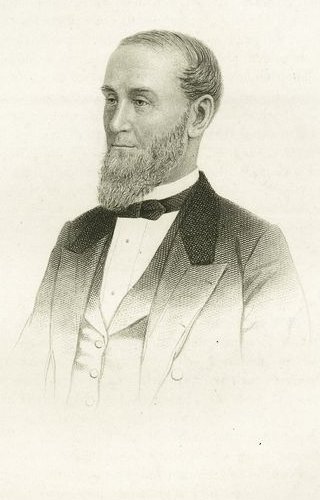
Clifford Michael Irving (November 5, 1930 – December 19, 2017) was an American novelist and investigative reporter. Although he published 20 novels, he is best known for an "autobiography" allegedly written as told to Irving by billionaire recluse Howard Hughes. The fictional work was to have been published in 1972. After Hughes denounced him and sued the publisher, McGraw-Hill, Irving and his collaborators confessed to the hoax. He was sentenced to two and a half years in prison for fraud, of which he served 17 months. Irving later wrote The Hoax (1981), his account of events surrounding the development and sale of the fake autobiography. The book was adapted as a 2006 biopic of the same name starring Richard Gere as Clifford Irving. He continued to write and publish books, including his prison journal.
Irving grew up in a Jewish household in New York City, the son of Jay Irving, a Collier's cover artist and the creator of the syndicated comic strip Pottsy, and his wife, Dorothy. After graduating in 1947 from Manhattan's selective High School of Music and Art, Irving attended Cornell University. He graduated with honors in English. Working as a copy boy at The New York Times, Irving wrote his first novel, On a Darkling Plain (1956), published by Putnam. Irving completed his second novel, The Losers (1958), while traveling in Europe. His third novel, The Valley (1960), is a mythic Western saga, published by McGraw-Hill. After returning to Ibiza, Irving became friendly with Hungarian art forger Elmyr de Hory. The painter asked him to write a biography, which was published as Fake! (1969). Irving and de Hory are both featured in Orson Welles's film documentary, F for Fake (1974), which was inspired by both Fake! and the Hughes autobiography affair.
Irving's first wife was Nina Wilcox. Their marriage was annulled in 1952. Later, on the Spanish island of Ibiza, he met an Englishwoman, Claire Lydon; they married in 1958 and moved to California. She died the following year at Big Sur in a car crash on May 8, 1959. In 1962, after a year spent traveling around the world and living in a houseboat in Kashmir, Irving moved back to Ibiza with his third wife, Fay Desch, an English photographic model, and their newborn son, Josh. This marriage ended in divorce. In 1967, Irving married Swiss/German artist Edith Sommer. They had two sons, John Edmond (aka "Nedsky") and Barnaby. He reportedly had a lengthy affair in the 1970s with the Danish actress and singer Nina van Pallandt. Irving later married English author Maureen "Moish" Earl. From 1984 to 1998, they lived mainly in the mountain town of San Miguel de Allende, Guanajuato, Mexico. After divorcing Earl, Irving married an Australian woman, Julie Schall.
By 1958, millionaire Howard Hughes had become a recluse. In 1970, in Palma de Mallorca, Spain, Irving met with Richard Suskind, a longtime friend who was an author of children's books. They conceived a scheme to write Hughes's purported "autobiography": Irving and Suskind believed that, because Hughes had completely withdrawn from public life, he would never draw attention by denouncing such a book or filing a lawsuit for libel. Suskind took on the work of research in news archives. Irving started by enlisting the aid of artist and writer friends on Ibiza in order to forge letters in Hughes's own hand, imitating authentic letters they had seen displayed in Newsweek magazine. Irving contacted his publisher, McGraw-Hill, and said that Hughes had corresponded with him, saying he admired Irving's book about de Hory, and that Hughes had expressed interest in having Irving ghost write the millionaire's autobiography. The McGraw-Hill editors invited Irving to New York, where the publishers drafted contracts among Hughes, Irving, and the company, with Irving and his friends forging Hughes' signatures. McGraw-Hill paid an advance of US$100,000, with an additional US$400,000 to be paid to Hughes; Irving later bargained the sum up to US$765,000. McGraw-Hill paid by checks made out to "H. R. Hughes", which Irving's Swiss wife Edith deposited to a Swiss bank account that she had opened under the name of "Helga R. Hughes". On December 7, 1971, McGraw-Hill announced that they would be publishing the book.
Learning of the planned book, representatives of Hughes' companies expressed doubts about its authenticity. Frank McCulloch, known for years as the last journalist to interview Hughes, had received an angry call from someone claiming to be Hughes, but after he read the Irving manuscript, became convinced that the book was genuine. McGraw-Hill and Life magazine, which had paid to publish excerpts of the book, continued to support Irving. Osborn Associates, a firm of handwriting experts, further declared the writing samples were authentic. While Irving had to submit to a lie-detector test, this indicated inconsistencies but no lies. On January 7, 1972, Hughes arranged a telephone conference with seven journalists whose end of the conversation was televised: in this conference, Hughes claimed that he had never even met Irving, much less corresponded with him. Hughes' lawyer, Chester Davis, immediately filed suit against McGraw-Hill, Life, Clifford Irving, and Dell Publications, while Swiss authorities investigated the "Helga R. Hughes" bank account: the Irvings by this time had returned to their home on the Balearic island of Ibiza. The bank account was opened under Irving’s wife with a fake passport.
The Irvings confessed on January 28, 1972. They and Suskind were indicted for "conspiracy to defraud through use of the mails" and pleaded guilty on June 16. Irving spent 17 months in prison. He voluntarily returned the US$765,000 advance to his publishers. Edith, a.k.a. "Helga", served prison sentences in the United States and in Switzerland.
Sources
Net-worth figure: Celebrity Net Worth (October 2026), in USD. Biography and career facts: the person's Wikipedia article and linked reporting. Snapshot date for all StarWorth figures: 28 October 2026.