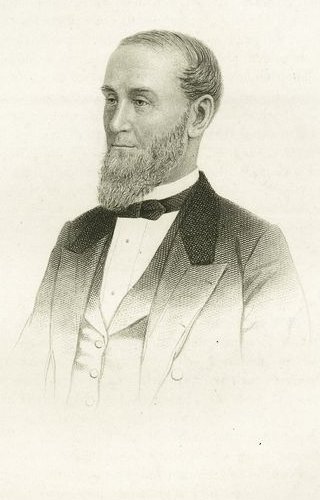
Background and career
Eiji Tsuburaya (Japanese: 円谷 英二, Hepburn: Tsuburaya Eiji; July 7, 1901 – January 25, 1970) was a Japanese special effects director, filmmaker, and cinematographer. A co-creator of the Godzilla and Ultraman franchises, he is considered one of the most important and influential figures in the history of cinema. Tsuburaya is known as the "Father of Tokusatsu", having pioneered Japan's special effects industry and introduced several technological developments in film productions. In a career spanning five decades, Tsuburaya worked on approximately 250 films—including globally renowned features directed by Ishirō Honda, Hiroshi Inagaki, and Akira Kurosawa—and earned six Japan Technical Awards. Following a brief stint as an inventor, Tsuburaya was employed by Japanese cinema pioneer Yoshirō Edamasa in 1919 and began his career working as an assistant cinematographer on Edamasa's A Tune of Pity. Thereafter, he worked as an assistant cinematographer on several films, including Teinosuke Kinugasa's A Page of Madness (1926). At the age of thirty-two, Tsuburaya watched King Kong, which greatly influenced him to work in special effects. Tsuburaya completed the first iron shooting crane in October 1934, and an adaptation of the crane is still in use across the globe today. After filming his directorial debut on the cruiser Asama in the Pacific Ocean, he worked on Princess Kaguya (1935), one of Japan's first major films to incorporate special effects. His first majorly successful film in effects, The Daughter of the Samurai (1937), remarkably featured the first full-scale rear projection. In 1937, Tsuburaya was employed by Toho and established the company's effects department. Tsuburaya directed the effects for The War at Sea from Hawaii to Malaya in 1942, which became the highest-grossing Japanese film in history upon its release. His elaborate effects were believed to be behind the film's major success, and he won an award for his work from the Japan Motion Picture Cinematographers Association. In 1948, however, Tsuburaya was purged from Toho by the Supreme Commander for the Allied Powers because of his involvement in propaganda films during World War II. Thus, he founded Tsuburaya Special Technology Laboratory with his eldest son Hajime and worked without credit at major Japanese studios outside Toho, creating effects for films such as Daiei's The Invisible Man Appears (1949), widely regarded as the first Japanese science fiction film. In 1950, Tsuburaya returned to Toho alongside his effects crew from Tsuburaya Special Technology Laboratory. At age fifty-three, he gained international recognition and won his first Japan Technical Award for Special Skill for directing the effects in Ishirō Honda's kaiju film Godzilla (1954). He served as the effects director for Toho's string of financially successful tokusatsu films that followed, including, Rodan (1956), The Mysterians (1957), The Three Treasures (1959), Mothra, The Last War (both 1961), and King Kong vs. Godzilla (1962). In April 1963, Tsuburaya founded Tsuburaya Special Effects Productions; his company would go onto produce the television shows Ultra Q, Ultraman (both 1966), Ultraseven (1967–1968), and Mighty Jack (1968). Ultra Q and Ultraman were extremely successful upon their 1966 broadcast, with Ultra Q making him a household name in Japan and gaining him more attention from the media who dubbed him the "God of Tokusatsu". While he spent his late years working on several Toho films and operating his company, Tsuburaya's health began to decline, and he died in 1970.
Eiji Tsuburaya was born Eiichi Tsumuraya (圓谷 英一, Tsumuraya Eiichi) on July 7, 1901, at a merchant house called Ōtsukaya in Sukagawa, Iwase, Fukushima Prefecture, where his family ran a malted rice business. He was the first son of Isamu Shiraishi and Sei Tsumuraya, with a large extended family. When Tsuburaya was three years old, his mother Sei died of illness at the age of nineteen, shortly after giving birth to her second son. Bereaved by Sei's death, Shiraishi divorced her posthumously and left the family, leaving Tsuburaya in the care of his grandmother Natsu. Through Natsu, Tsuburaya was related to the Edo period painter Aōdō Denzen, who brought copper printing and Western painting to Japan, from whom Tsuburaya considered to have inherited his manual dexterity. His uncle Ichirō, who was Sei's younger brother, was five years older than him and acted like an elder brother to him. Thus, Tsuburaya began to use the nickname Eiji ("ji" indicating second-born) instead of Eiichi ("ichi" indicating first-born). In 1908, he started attending the Dai'ichi Jinjo Koto Elementary School in Sukagawa, and it was soon realized that he had a talent for drawing. During his boyhood, Tsuburaya became interested in flying because of the recent success of Japanese aviators; he soon started building model airplanes as a hobby, an interest he would pursue throughout his entire life. In 1913, Tsuburaya saw his first film, which featured footage of a volcanic eruption on Sakurajima; in the process, he was more fascinated by the projector than the movie itself. In 1958, Tsuburaya told Kinema Junpo that because he was extremely fascinated by the projector, he purchased a "toy movie viewer" and created his own film strips by "carefully cutting rolled paper, then making sprocket holes, and drawing stick figures [on the paper], frame by frame." Because of his craftwork at a young age, he became a provincial celebrity and was interviewed by the Fukushima Minyu Shimbun. In 1915, at the age of 14, he graduated from junior high school, and begged his family to let him enroll in the Nippon Flying School at Haneda. After the school was closed on account of the accidental death of its founder, Seitaro Tamai, in 1917, Tsuburaya switched to the Tokyo Kanda Electrical Engineering School (now Tokyo Denki University). While at the school, he started working as an inventor at the toy company Utsumi, and devised inventions including the first battery-powered phone capable of making calls, an automatic speed photo box, an "automatic skate" and the toy phone. The latter two earned him a patent fee of ¥500.
During a hanami party held at a tea house in the spring of 1919, Tsuburaya met Yoshirō Edamasa, a pioneer of Japanese cinema. Edamasa asked Tsuburaya if he was interested in movies or photography; after he explained to Edamasa that he was interested in motion pictures, Tsuburaya accepted the director's offer to become an employee at his company, the Natural Color Motion Pictures Company (dubbed "Tenkatsu"). Therefore, Tsuburaya began working in the film industry at the age of eighteen, as Edamasa's camera assistant, contributing to films such as A Tune of Pity (1919) and Tombs of the Island (1920); reportedly, he also served as a screenwriter during this period. Despite Tenkatsu becoming part of the Kokatsu Company and Edamasa leaving his job in March 1920, Tsuburaya kept working at the studio until he was ordered to serve the Imperial Japanese Army between 1921 and December 1922. After leaving the army in 1923, Tsuburaya moved back to his family's house in Sukagawa. However, he suddenly departed just a few months later, in order to pursue a more established career within the filmmaking industry. In the morning of his departure from home, he left a note: "I won't return home until I succeed in the motion picture business, even if I die trying." The next year, he worked as the cinematographer on the film The Hunchback of Enmei'in Temple. Tsuburaya joined Shochiku in 1925 and would have his breakthrough as the cameraman and assistant director on Teinosuke Kinugasa's A Page of Madness (released the following year). In 1927, he shot Minoru Inuzuka's jidaigeki films Children's Swordplay and Melee, both starring Kazuo Hasegawa and Tsuyako Okajima, as well as Toko Yamazaki's The Bat Copybook, Mad Blade Under the Moon, and Record of the Tragic Swords of the Tenpo Era. Because of the financial success of these films, Tsuburaya started being regarded as one of Kyoto's leading cinematographers. In 1928, while working on eleven films at Shochiku, Tsuburaya began creating and utilizing new camera operating techniques, including double-exposure and slow-motion camerawork. The next year, Tsuburaya constructed his own smaller version of D. W. Griffith's 140-foot tall shooting crane: having invented it without the benefit of using blueprints or manuals, the wooden crane allowed Tsuburaya to improve camera movement and was able to be used in and outside the studio. The creation proved to be a success, although it did not guarantee total safety: one day, while Tsuburaya and an assistant were preparing the crane in order to film a scene, the structure collapsed, sending him plummeting to the ground of the studio. A witness of the incident, named Masano Araki, was one of the first people to run to his aid: she visited Tsuburaya daily while he was hospitalized, and the pair formed a relationship shortly thereafter. On February 27, 1930, Tsuburaya married the decade-younger Araki. Their first child, Hajime, was born on April 23, 1931. In May 1932, Tsuburaya, Akira Mimura, Hiroshi Sakai, Kohei Sugiyama, Masao Tamai, and Tadayuki Yokota established the Japan Cameraman Association, which later coalesced with other companies to become the Nippon Cinematographers Club (now known as the Japanese Society of Cinematographers). Shortly after that, the association would start to hold award ceremonies. In November of that same year, Tsuburaya quit Shochiku and joined Nikkatsu Futosou Studios. Around the same time, he began using the professional name "Eiji Tsuburaya". In 1933, Tsuburaya saw the American film King Kong, which inspired him to work on movies featuring special effects. In 1962, Tsuburaya told the Mainichi Shimbun that he attempted to convince Nikkatsu to "import this technical know-how, but they had little interest in it because, at the time, I was seen as merely a cameraman who worked on Kazuo Hasegawa's historical dramas". He managed to acquire a 35mm print of King Kong and started to study the film's special effects frame-by-frame, without the advantage of documents explaining how they were produced: he would later write an analysis of the film's effects for the magazine Photo Times in October 1933. In the same year, Masano gave birth to a second child, a daughter named Miyako. However, the child would die of unknown causes in 1935. In December 1933, Nikkatsu granted Tsuburaya permission to use and study new screen projection technology for the company's jidaigeki films. However, while the studio agreed with his decision to project these films cast into a location use using location plates, not all of his technological developments were met with approval. While he was filming the final scenes for Asataro Descends Mt. Akagi in February 1934, Tsuburaya fell out with Nikkatsu's CEO, who had no acquaintance with what Tsuburaya was creating and assumed that he was wasting the company's money. After the argument, Tsuburaya resigned from his job at Nikkatsu.
Shortly after leaving Nikkatsu, he accepted an offer from Kyoto entrepreneur Yoshio Osawa to work at his company, J.O. Talkies, and research optical printing and screen projection. In October 1934, Tsuburaya and his colleagues completed the first iron shooting crane model and used it to shoot Atsuo Tomioka's The Chorus of a Million. In contrast to his previous prototype, the crane was installed on a truck that operated on tracks, which made it able to change the camera's position in a matter of seconds. In December of that year, Osawa renamed the studio J.O. Studios and designated Tsuburaya as its chief cinematographer. From February to August 1935, he traveled to Hawaii, the Philippines, Australia, and New Zealand on the cruiser Asama in order to shoot his directorial debut, Three Thousand Miles Across the Equator, a feature-length propaganda documentary film. During the expedition, his second son, Noboru, was born on May 10, 1935. Upon returning from the voyage, Tsuburaya began work on Princess Kaguya, an adaptation of the 10th-century Japanese literary tale The Tale of the Bamboo Cutter. He did not only serve as the film's cinematographer, but was also in charge of special effects for the first time. For the film, he worked with animator Kenzō Masaoka to create miniatures, puppets, a composite of Kaguya emerging from a cut bamboo plant, and a sequence in which a ship encounters a storm. While the original print of the film is considered to be lost, a shortened version, screened in England in 1936, was discovered by a researcher at the British Film Institute in May 2015: this version was released in Japan on September 4 and 5, 2021, as part of an event celebrating Tsuburaya's 120th birthday.
In March of the next year, Tsuburaya's directorial debut, the theatrical play Folk Song Collection: Oichi of Torioi Village, was released: it was an adventure film concerning a condemned romance and featuring political tones. Folk Song Collection: Oichi of Torioi Village was the second film to ever star popular geisha singer Ichimaru, while also featuring actor Kenji Susukida. Soon after its completion, Tsuburaya began working on Arnold Fanck's The Daughter of the Samurai (released in 1937). The Daughter of the Samurai was the first German-Japanese co-production, and is considered to be Tsuburaya's first major success as a special effects director, since it featured the first full-scale rear projection. The German staff were allegedly impressed by his elaborate miniature work on the project. In September 1936, Ichizō Kobayashi merged the film studios P.C.L. Studios and P.C.L. Film Company with J.O. Studios to create the film and theatre production company Toho. Film producer Iwao Mori was appointed as production manager at Toho: having become aware of the importance of special effects during a tour in Hollywood, in 1937 Mori hired Tsuburaya at the company's studio in Tokyo, establishing the special effects department on November 27, 1937, and treating him as the section's manager. Shortly after, Tsuburaya received a research budget and began studying optical printers to create Japan's first version of the device, which he designed. Among Tsuburaya's first film assignments at Toho were The Abe Clan, a jidaigeki film directed by Hisatora Kumagai, and the unreleased propaganda musical The Song of Major Nango (both 1938). The latter film was directed and shot by Tsuburaya, and he completed it on September 6 of that year. In 1939, he was ordered to join the Kumagaya Aviation Academy of the Imperial Army Corps, where he was entrusted to shoot flight-training films. After impressing his superiors with his aerial photography, Tsuburaya was given more assignments and a master's certificate during his almost three years at the academy. In November 1939, while Tsuburaya was still at the flight school and undertaking assignments at Toho, he was appointed head of Toho's Special Arts Department. A month after that, he was commissioned to shoot a science film for Toho's then-recently assembled educational section. Under governance demands, Toho was mandated to maintain the creation of propaganda films. Accordingly, in May 1940, Tsuburaya began directing the documentary The Imperial Way of Japan for Toho Education Films' branch, the Toho National Policy Film Association. He was given his first ever credits for special effects for his work on Sotoji Kimura's Navy Bomber Squadron, which featured a bombing scene with a miniature airplane. Navy Bomber Squadron was believed to be lost for over sixty years, until an unfinished copy of the film was discovered and screened in 2006. In September 1940, Yutaka Abe's The Burning Sky, was released to Japanese cinemas. Tsuburaya was in charge of effects for the film and received his first accolade from the Japan Motion Picture Cinematographers Association. His next undertaking, Son Gokū, was released on November 6, 1940. During an interview for the August 1960 issue of American Cinematographer, he broke down the creative process behind Son Gokū, saying: "I was called upon to create and photograph a monkey-like monster which was supposed to fly through the air", adding: "I managed the job with some success and this assignment set the pattern for my future work."
On December 7, 1941, the Imperial Japanese Navy Air Service suddenly attacked the U.S. naval base at Pearl Harbor: consequently, the Imperial Japanese Government tasked Toho to produce a propaganda film that would influence the nation to believe they would win the Pacific War. The resulting film, Kajirō Yamamoto's war epic The War at Sea from Hawaii to Malaya (1942), became the highest-grossing Japanese film in history upon its release in December 1942 and won Kinema Junpo's Best Film Award. Tsuburaya directed its effects, which he created with the assistance of navy-provided photographs of the Pearl Harbor attack: in the process, he also worked with future Godzilla collaborates Akira Watanabe and Teizō Toshimitsu for the first time in his career. His work on the film was supposedly one of the main reasons behind its major success and gained him the Technical Research Award from the Japan Motion Picture Cinematographers Association. The film depicted the attack so realistically that footage from it was later featured in documentaries on the Pearl Harbor attack. Around the same time as The War at Sea from Hawaii to Malaya was in production, Toho's effects department was filming Japan's first puppet film, Ramayana. The film's screenplay—based on the Sanskrit epic of the same name—had been written by future Moonlight Mask creator Kōhan Kawauchi in 1941, under Tsuburaya's supervision. Tsuburaya's next four major productions were all war films: Masahiro Makino's The Opium War, Tadashi Imai's Watchtower Suicide Squad, Kunio Watanabe's Decisive Battle in the Skies and Kajirō Yamamoto's follow-up to The War at Sea from Hawaii to Malaya, General Kato's Falcon Fighters (all produced in 1943). For The Opium War, Tsuburaya and his team created miniature navy battle sequences and animation synthesis in urban landscapes. During the production of General Kato's Falcon Fighters (released in 1944), Tsuburaya had his first meeting with future collaborator and filmmaker Ishirō Honda. After watching The War at Sea from Hawaii to Malaya, Honda became interested in special effects and believed Tsuburaya's work in General Kato's Falcon Fighters was inferior in scope, but the art and gunpowder technology had enhanced. Additionally, Tsuburaya expressed dissatisfaction with the size of the shooting stage, the art materials, the method of performance, etc. Shortly before Toho distributed General Kato's Falcon Fighters in cinemas, Masano and Tsuburaya's third son and last child, Akira, was born on February 12, 1944. Akira was the first of the couple's sons to be baptized, since Masano had been converted to Catholicism by her younger sister. Masano persisted in introducing her children to the Catholic faith and ultimately converted her husband. In 1944, Tsuburaya met future Godzilla producer Tomoyuki Tanaka during the production of the Mikio Naruse-directed war film Until the Day of Victory, which was Tanaka's debut as a film producer. Tanaka stated that he did not develop a serious connection with Tsuburaya during the film's production. The following year, the special effects director collaborated with Tanaka for the second time on Kiyoshi Saeki's Three People of the North. On March 10, 1945, Tsuburaya and his family sought refuge for two hours in their residence's bomb shelter during the Tokyo air raids. During the two-hour-long attacks, he told his children fairy tales to keep them quiet. Later that year, Tsuburaya made the effects in Torajirō Saitō's Five Men from Tokyo, for which he was credited as "Eiichi Tsuburaya". Five Men from Tokyo is a comedy film concerning five men who struggle to make a living after returning to Tokyo and remaining unemployed due to the Tokyo air raids on March 10, 1945, at the end of World War II.
Sources
Net-worth figure: Celebrity Net Worth (October 2026), in USD. Biography and career facts: the person's Wikipedia article and linked reporting. Snapshot date for all StarWorth figures: 28 October 2026.