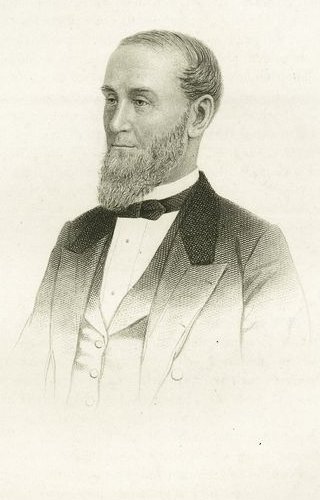
Background and career
Yevgeny Valentinovich Kaspersky (Russian: Евгений Валентинович Касперский; born 4 October 1965) is a Russian cybersecurity expert who is the co-founder and the CEO of Kaspersky Lab, an IT security company with 4,000 employees. He was a cryptologist and officer in the Soviet army until leaving the service in 1991. He co-founded Kaspersky Lab in 1997 and helped identify instances of government-sponsored cyberwarfare as the head of research. He has been an advocate for an international treaty prohibiting cyberwarfare. Kaspersky graduated from The Technical Faculty (cryptology) of the KGB Higher School in 1987 with a degree in mathematical engineering and computer technology. His interest in IT security began when his work computer was infected with the Cascade virus in 1989 and he developed a program to remove it. Kaspersky helped grow Kaspersky Lab through security research and salesmanship. He became the CEO in 2007 and remains so as of 2024.
Kaspersky was born on 4 October 1965 in Novorossiysk, Soviet Union. He grew up near Moscow, where he moved at age nine. His father was an engineer and his mother a historical archivist. As a child he developed an early interest in math and technology. He spent his free time reading math books and won second place in a math competition at age 14. When he was fourteen, Kaspersky began attending A.N. Kolmogorov boarding school, run by Moscow University, specializing in mathematics. He was also a member of the Komsomol. At the age of 16, Kaspersky entered a five-year program with The Technical Faculty of the KGB Higher School, which prepared intelligence officers for the Russian military and KGB. He graduated in 1987 with a degree in mathematical engineering and computer technology. After graduating college, Kaspersky served the Soviet military intelligence service as a software engineer. He met his first wife Natalya Kaspersky at Severskoye, a KGB vacation resort, in 1987.
Kaspersky's interest in IT security began in 1989, when his PC was infected by the Cascade virus, while working for the Ministry of Defence. He studied how the virus worked and developed a program to remove it. Afterwards he continually found new viruses and developed software to remove them, as a hobby. Early on Kaspersky's anti-virus software had just 40 virus definitions and was distributed mostly to friends. In 1991, Kaspersky was granted an early release from his military service and left the defense ministry to take a job at the Information Technology Center of a private company KAMI, in order to work on his antivirus product full-time. There, he and his colleagues improved the software and released it as a product called Antiviral Toolkit Pro in 1992. At first the software was purchased by about ten clients per month. It earned about $100 per month, mostly from companies in Ukraine and Russia. Kaspersky's then-future wife Natalya Kaspersky became his coworker at KAMI. In 1994, Hamburg University in Germany gave Kaspersky's software first place in a competitive analysis of antivirus software. This led to more business for Kaspersky from European and American companies. Kaspersky Lab was founded three years later by Kaspersky, his wife and Kaspersky's friend Alexey De-Monderik. Natalya, who pushed Eugene to start the company, was the CEO, while Eugene was the head of research. The following year, the CIH virus (AKA the Chernobyl virus) created a boon for Kaspersky's anti-virus products, which Kaspersky said was the only software at the time that could cleanse the virus. According to Wired, "their software was advanced for the time." For example, it was the first software to monitor viruses in an isolated quarantine. Kaspersky's company grew quickly in the late 1990s. From 1998 to 2000, its annual revenue grew 280 percent and by 2000 almost sixty percent of revenues were international. By 2000, it had a staff of 65 people, starting from 13 in 1997. The antivirus product was renamed to Kaspersky Antivirus in 2000, after an American company started using the product's original name, which wasn't trademarked. In 2023, after switching to a subscription model, Kaspersky Anti-Virus became Kaspersky Standard and Kaspersky Internet Security was replaced by Kaspersky Plus.
As the head of research, Kaspersky authored papers on viruses and went to conferences to promote the software. He was often quoted in the technology press as an antivirus expert. He helped establish the company's Global Research and Expert Analysis Team (GReAT), which helps corporations and governments investigate IT security threats. Initially he told his team not to discuss cyber-terrorism publicly, to avoid giving governments ideas on how to sabotage their political opponents. After the American film Live Free or Die Hard (AKA Die Hard 4.0) (2007) was released, Kaspersky said the idea was now public. He hired the researcher that identified the Stuxnet worm, which is believed to be the first instance of state-sponsored cyberweapon. Afterwards, the company exposed the Flame virus at the request of the International Telecommunication Union. The virus was believed to have been used for cyber-espionage in Middle-Eastern countries. Kaspersky Lab developed a reputation for discovering cybersecurity threats. In 2015 Kaspersky and Kaspersky Lab discovered a group of hackers known as Carbanak that were stealing money from banks. They also exposed Equation Group, which developed advanced spyware for monitoring computer use and was believed to be affiliated with the National Security Agency in the U.S. According to The Economist, it was these discoveries, Kaspersky's "relentless salesmanship" and the company's anti-virus product that made Kaspersky Lab uncommon as an internationally recognized Russian company.
Kaspersky became CEO of Kaspersky Lab in 2007. According to a 2008 article in USA Today, he traveled to 20 to 30 countries per year promoting Kaspersky Lab products. In early 2009, CRN said his personality contributed to the company's growth from "relative obscurity to now nipping at the heels of its larger, better-known rivals." At the time, Kaspersky Lab was the fourth largest endpoint security company. It introduced new products for the enterprise market and expanded its channel programs. In 2011, Kaspersky made a decision against taking the company public, saying it would make decision-making slow and prevent long-term R&D investments. This led to a series of high-level departures from the company, including his ex-wife and co-founder. Another series of departures occurred in 2014 due to disagreements over how to run the company. Kaspersky himself is the co-author of several patents, including one for a constraint-and-attribute-based security system for controlling software component interaction. As of 2015, Kaspersky Lab employed more than 2,800 people. As of 2012, Kaspersky was working on developing software to protect critical infrastructure, like power plants, from cyberwarfare. In 2013, the company reported revenues of $667 million, which grew to $721 million in 2023. Also during this period, Kaspersky expanded its cybersecurity offerings. In 2012, it announced plans to develop a secure operating system to protect critical infrastructure systems from online attacks. By 2023, the company launched SD-WAN and Kaspersky Container Security, contributing to a 44% growth in non-endpoint solutions. The company faced geopolitical challenges, notably in 2017, when the U.S. government banned its software over alleged ties to the Russian government, which Kaspersky denied. In June 2023, it reported a cyberattack targeting its senior staff's iPhones, which had been ongoing since 2019. In June 2024, following further U.S. sanctions, Kaspersky withdrew from the U.S. market, later replacing its software on American users' systems with UltraAV. Despite these challenges, Kaspersky Lab maintains presence in Europe, Asia, Middle East and Latin America and expanded product range.
Kaspersky Lab has defended itself against allegedly frivolous patent claims more aggressively than most IT companies. In 2012, it was the only one of 35 firms named in a suit by patent troll Information Protection and Authentication (IPAC) to take the case to court, rather than pay a fee. The case was ruled in Kaspersky's favor. Also in 2012, another company, Lodsys, sued Kaspersky and 54 other companies for patent infringement, and that case also resulted in the claimant dropping the case against Kaspersky. In 2016, Kaspersky Lab faced a claim from the American company Wetro Lan, which alleged that the company had infringed US patent No. 6795918B1. This patent, obtained in 2000, described "service level computer security" technology related to data packet filtering. After brief negotiations, the parties agreed on a payment of $5,000 to Kaspersky Lab and the waiver of any future claims on their part. In 2018, a Texas district court dismissed Uniloc's lawsuit against Kaspersky Lab for infringement of US patent 5490216. According to an article in TechWorld, the company's aversion to settling these claims is most likely because Eugene "just hates" patent trolls. In his blog he called them "parasites" and "IT racketeers". Kaspersky aims not only to settle lawsuits, but to invalidate patents being misused by NPEs.
Sources
Net-worth figure: Celebrity Net Worth (October 2026), in USD. Biography and career facts: the person's Wikipedia article and linked reporting. Snapshot date for all StarWorth figures: 28 October 2026.