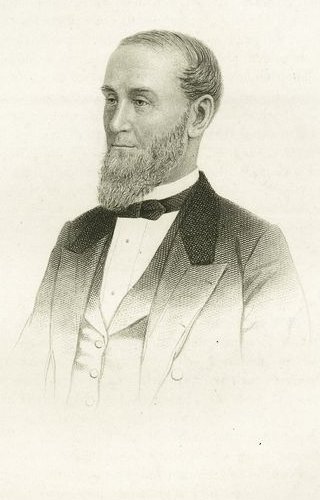
Background and career
Idriss Déby Itno (Arabic: إدريس ديبي إتنو Idrīs Daybī Itnū; 18 June 1952 – 20 April 2021) was a Chadian politician and military officer who was the president of Chad from 1991 until his death in 2021 during the Northern Chad offensive. His term of 30 years makes him Chad's longest-serving president. Déby was a member of the Bidayat clan of the Zaghawa ethnic group. A high-ranking commander of President Hissène Habré's military during the 1980s, Déby played important roles in the Toyota War which led to Chad's victory during the Chadian-Libyan War. He was later purged by Habré after being suspected of plotting a coup, and was forced into exile in Libya. He took power by leading a coup d'état against Habré in December 1990 and was immediately proclaimed transitional president, whom Déby served until he was officially proclaimed president on 28 February 1991. Despite introducing a multi-party system in 1992 after several decades of one-party rule under his predecessors, throughout his presidency, Déby's party, the Patriotic Salvation Movement (MPS) was the dominant party. Déby won presidential elections in 1996 and 2001, and after term limits were eliminated he won again in 2006, 2011, 2016, and 2021. During the Second Congo War, Déby briefly ordered military intervention on the side of the Congolese government but soon withdrew when his forces were accused of looting and human rights abuses. In the early 2000s, oil was discovered in Chad, and Déby made petroleum production the driving force of the country's economy. He survived various rebellions and coup attempts against his rule, including a rebellion led by his former defense minister Youssouf Togoïmi from 1998 to 2002 as well as a civil war from 2005 to 2010 provoked by the refugee crisis of the War in Darfur in neighboring Sudan. Several international media sources have described Déby as authoritarian. During his three decades in office, Chad experienced democratic backsliding, as well as widespread corruption, including cronyism, embezzlement, and a deeply entrenched patronage system. In 2016, the Front for Change and Concord in Chad (FACT) was established with the goal of overthrowing Déby's government. In April 2021, FACT initiated the Northern Chad offensive; Déby was injured on 19 April while commanding troops on the frontline fighting the militants and died the following day.
Déby was born on 18 June 1952, in the village of Berdoba, approximately 190 kilometers from Fada in northern Chad. His father was a herdsman of the Bidayat clan of the Zaghawa community. After attending the Qur'anic School in Tiné, Déby studied at the École Française in Fada and at the Franco-Arab school (Lycée Franco-Arabe) in Abéché. He also attended the Lycée Jacques Moudeina in Bongor and held a bachelor's degree in science. After finishing school, he entered the Officers' School in N'Djamena. From there he was sent to France for training, returning to Chad in 1976 with a professional pilot certificate. He remained loyal to the army and President Félix Malloum even after Chad's central authority crumbled in 1979. He returned from France in February 1979 and found Chad had become a battleground for many armed groups. Déby tied his fortunes to those of Hissène Habré, one of the chief Chadian warlords. A year after Habré became president in 1982, Déby was made commander-in-chief of the army. He distinguished himself in 1984 by destroying pro-Libyan forces in eastern Chad. In 1985, Habré sent him to Paris to attend a course at the École de Guerre and upon his return in 1986, he was made chief military advisor to the president. In 1987, he confronted Libyan forces on the field, with the help of France in the so-called "Toyota War", adopting tactics that inflicted heavy losses on Libyan forces. During the war, he also led a raid on Maaten al-Sarra Air Base in Kufrah, in Libyan territory. A rift emerged on 1 April 1989 between Habré and Déby over the increasing power of the Presidential Guard. According to Human Rights Watch, Habré was found responsible for "widespread political killings, systematic torture, and thousands of arbitrary arrests", as well as ethnic purges when it was perceived that group leaders could pose a threat to his rule, including many of Déby's Zaghawa ethnic group who supported the government. Increasingly paranoid, Habré accused Déby, minister of the interior Mahamat Itno, and then commander-in-chief of the Chadian army Hassan Djamous of plotting a coup d'état. Déby fled first to Darfur, then to Libya, where he was welcomed by Muammar Gaddafi in Tripoli. Itno and Djamous were arrested and killed. Since all three were ethnic Zaghawa, Habré started a targeted campaign against the group which saw hundreds seized, tortured, and imprisoned. Dozens died in detention or were summarily executed. In 2016, Habré was convicted of war crimes by a specially created international tribunal in Senegal. Déby gave the Libyans detailed information about CIA operations in Chad. Gaddafi offered Déby military aid to seize power in Chad in exchange for Libyan prisoners of war. Déby relocated to Sudan in 1989 and formed the Patriotic Salvation Movement, an insurgent group, supported by Libya and Sudan, which started operations against Habré, and on 1 December 1990 Déby's troops marched unopposed into N'Djamena in a successful coup, ousting Habré.
Idriss Déby assumed Chad's presidency in 1991. He was re-elected every five years up until the time of his death in 2021, equaling a total of 30 years in power.
After three months of the provisional government, on 28 February 1991, a charter was approved for Chad with Déby as president. During the following two years, Déby faced a series of coup attempts as government forces clashed with pro-Habré rebel groups, such as the Movement for Democracy and Development (MDD). Seeking to quell dissent, in 1993 Chad legalized political parties and held a National Conference which resulted in the gathering of 750 delegates, the government, trade unions, and the army to discuss the establishment of a pluralist democracy. However, unrest continued. The Comité de Sursaut National pour la Paix et la Démocratie (CSNPD), led by Lt. Moise Kette, and other southern groups sought to prevent the Déby government from exploiting oil in the Doba Basin and started a rebellion that left hundreds dead. A peace agreement was reached in 1994, but it broke down soon thereafter. Two new groups, the Armed Forces for a Federal Republic (FARF) led by former Kette ally Laokein Barde, and the Democratic Front for Renewal (FDR), and a reformulated MDD clashed with government forces from 1994 to 1995. Déby, in the mid-1990s, gradually restored basic functions of government and entered into agreements with the World Bank and IMF to carry out substantial economic reforms. A new constitution was approved by referendum in March 1996, followed by a presidential election in June. Déby fell short of a majority; he was then elected president in the second round of votes held in July, with 69% of the vote. In 1998 the MDJT rebelled against Déby and his government. They signed a peace agreement in 2002.
Déby was re-elected in the May 2001 presidential election, winning in the first round with 63.17% of the vote, according to official results. A civil war between Christians and Muslims erupted in 2005, accompanied by tensions with Sudan. An attempted coup d'état, involving the shooting down of Déby's plane, was foiled in March 2006.
In mid-April 2006, there was fighting with rebels at N'Djaména, although the fighting soon subsided with government forces still in control of the capital. Déby subsequently broke ties with Sudan, accusing it of backing the rebels, and said that the May 2006 election would still take place. Déby was sworn in for another term in office on 8 August 2006. Sudanese president Omar al-Bashir attended Déby's inauguration, when the two leaders agreed to restore diplomatic relations. After Déby's re-election, several rebel groups broke apart. Déby was in Abéché from 11 to 21 September 2006, flying in a helicopter to personally oversee attacks on Rally of Democratic Forces rebels. The rebellion in the east continued, and rebels reached N'Djamena on 2 February 2008, with fighting occurring inside the city. After days of fighting, the government remained in control of N'Djamena. Speaking at a press conference on 6 February, Déby said that his forces had defeated the rebels, whom he described as "mercenaries directed by Sudan", and that his forces were in "total control" of the city as well as the whole country. Against this backdrop, in June 2005, a successful referendum was held to eliminate a two-term constitutional limit, which enabled Déby to run again in 2006. More than 77% of voters approved. Déby was a candidate in the 2006 presidential election, held 3 May, which was greeted with an opposition boycott. According to official results, Déby won the election with 64.67% of the vote. In 2000, with the north–south dispute quelled, Déby's government started building the country's first oil pipeline, the 1,070 kilometer Chad-Cameroon project. The pipeline was completed in 2003 and praised by the World Bank as "an unprecedented framework to transform oil wealth into direct benefits for the poor, the vulnerable and the environment". Oil exploitation in the southern Doba region began in June 2000, with World Bank Board approval to finance a small portion of a project, the Chad-Cameroon Petroleum Development Project, aimed at transport of Chadian crude through a 1000-km buried pipeline through Cameroon to the Gulf of Guinea. The project established unique mechanisms for World Bank, private sector, government, and civil society collaboration to guarantee that future oil revenues benefit populations and result in poverty alleviation. However, with Chad receiving only 12.5% of profits from oil production, and the agreement for these revenues to be deposited into a London-based Citibank escrow account monitored by an independent body to ensure the funds were used for public services and development, not much wealth was immediately transferred to the country.
Sources
Net-worth figure: Celebrity Net Worth (October 2026), in USD. Biography and career facts: the person's Wikipedia article and linked reporting. Snapshot date for all StarWorth figures: 28 October 2026.