Background and career
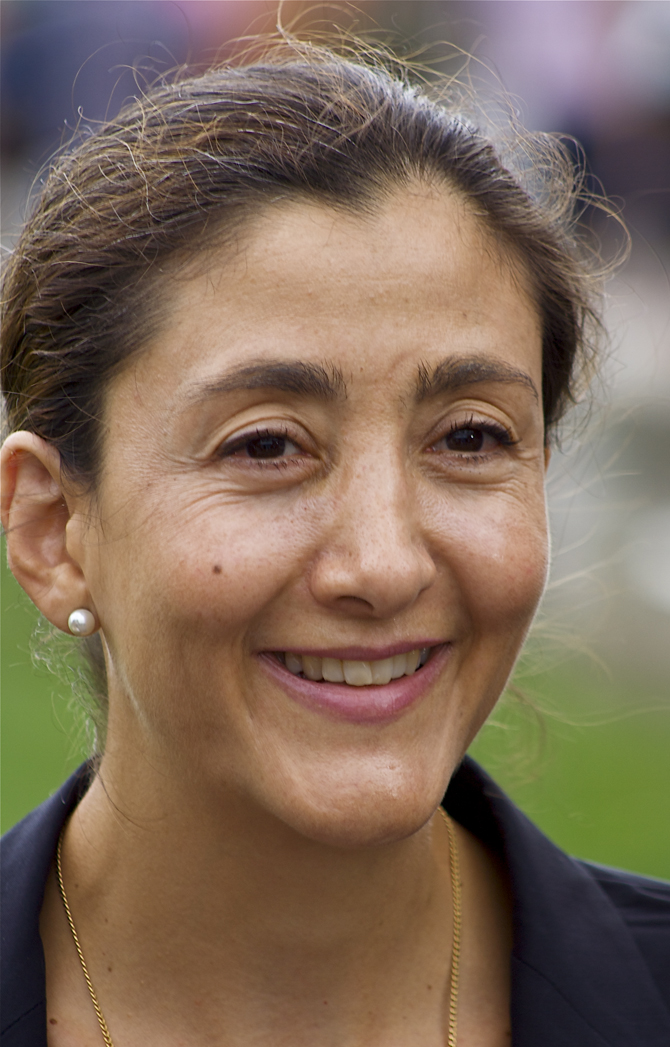
Íngrid Betancourt Pulecio (Spanish pronunciation: [ˈiŋɡɾið βetaŋˈkuɾ]; born 25 December 1961) is a Colombian-French politician, former senator, and anti-corruption activist. She gained international prominence after being kidnapped by the Revolutionary Armed Forces of Colombia (FARC) in 2002 while campaigning for the Colombian presidency as a Green candidate. She was rescued in 2008 during Operation Jaque, a military operation conducted by Colombian security forces. Born in Bogotá, Betancourt is the daughter of Gabriel Betancourt, a former Colombian Minister of Education and UNESCO official, and Yolanda Pulecio, a former beauty queen and congresswoman. She was educated in France and England, attending Sciences Po in Paris, and later earned a Doctor of Philosophy in Theology from Harris Manchester College, Oxford, in 2023. Betancourt began her political career in the 1990s, serving in the Colombian Chamber of Representatives from 1994 to 1998 and in the Senate from 1998 to 2001. She founded the Oxygen Green Party and was known for her strong stance against political corruption. On 23 February 2002, Betancourt and her campaign manager, Clara Rojas, were kidnapped by FARC guerrillas near San Vicente del Caguán. They were held captive in the Colombian jungle for over six years. During her captivity, Betancourt became an international symbol of resistance against political violence, particularly in France, where she also holds citizenship through her first marriage to French diplomat Fabrice Delloye. Betancourt was rescued on 2 July 2008 during Operation Jaque, along with 14 other hostages, including three American contractors and 11 Colombian military personnel. The operation was widely celebrated and brought significant political capital to the Colombian government. Following her release, Betancourt received several international honors, including France's Légion d'honneur and Spain's Prince of Asturias Award for Concord. Accounts of her behavior during captivity varied; some fellow hostages described her as controlling, while others praised her courage and compassion. In January 2022, Betancourt announced her candidacy for the Colombian presidential election but withdrew from the race in May 2022.
Betancourt was born in Bogotá, Colombia. Her mother, Yolanda Pulecio, a former beauty queen famous for sheltering abandoned children, served in Congress, representing poor southern neighborhoods of Bogotá. Betancourt's father, Gabriel Betancourt, was a minister of Education in both liberal and conservative governments (those of President Rojas Pinilla and President Lleras Restrepo), the assistant director of the United Nations Educational, Scientific, and Cultural Organization (UNESCO), then ambassador of Colombia to UNESCO in Paris, and head of the education commission of the Alliance for Progress in Washington, D.C. under John F. Kennedy. Betancourt's mother Yolanda is of Italian descent. After attending private school in France, a boarding school in England, and the Liceo Francés in Bogotá, Betancourt attended the Institut d'Études Politiques de Paris (commonly known as Sciences Po). In 2023, she was awarded a DPhil in Theology by the University of Oxford for her thesis entitled The Concept of the Non-person in Gustavo Gutiérrez Writings. She is current a research fellow at Harris Manchester College, Oxford. Betancourt married French citizen Fabrice Delloye in 1983, and they had two children, Mélanie (born 1985) and Lorenzo (born 1988). Through her marriage she became a French citizen. Her husband served in the French diplomatic corps, and the couple lived in multiple countries, including Ecuador, the Seychelles, and the United States of America. In the mid-1990s, Betancourt and Delloye divorced. Betancourt returned to Colombia and became advisor to the Minister of Finance and later to the Minister of Foreign Trade. In 1994, she was elected to the House of Representatives on an anticorruption ticket, and in 1998 she entered the Colombian Senate. Her children, Melanie and Lorenzo, moved to New Zealand to live with their father due to death threats stemming from Betancourt's political activities. Betancourt married Colombian advertising executive Juan Carlos Lecompte in 1997. Their marriage ended soon after her 2008 rescue.
In 1989, Luis Carlos Galán, a candidate for the Colombian presidency running on an anti-drug-trafficking platform, was assassinated. Betancourt's mother was a supporter of Galán, and she was standing immediately behind him when he was shot dead. This event motivated Betancourt to return to Colombia in 1989. From 1990 onward, Betancourt worked at the Ministry of Finance and later at the Ministry of Foreign Trade, from which she later resigned to enter politics. Her first campaign distributed condoms, with the motto that people should protect themselves against corruption as they do against HIV.
Betancourt was elected to the Chamber of Representatives in 1994, against all odds. During her term, she criticized the administration of President Ernesto Samper, who was accused of corruption in the 8000 Process scandal after accepting money from the Cali drug cartel for his electoral campaign. In 1997, Betancourt launched a political party, the Partido Verde Oxigeno (Green Oxygen Party), as an alternative to the traditional conservative and liberal parties.
Betancourt ran for senator in the 1998 election, and the total number of votes she received was the largest of any candidate in a senate election. During her time in elected office, death threats caused her to send her children to New Zealand, where they would live with their father. That same year, the presidential election was ultimately won by Andrés Pastrana. Pastrana persuaded Betancourt to endorse him, and she campaigned for him under the agreement of an anticorruption electoral reform to be adopted during his presidential term. The electoral reform was aborted due to strong pressures from the traditional parties and lack of commitment from the government. Betancourt withdrew her support of the government and joined the opposition forces.
Betancourt launched her presidential campaign on 20 May 2001, while standing next to a statue of Simón Bolívar in Bogotá. She then began a campaign bus trip around the country to attend local community meetings. As part of her campaign for the presidency in 2002, Betancourt decided to visit the town of San Vicente del Caguán, in the demilitarized zone (DMZ), to support its mayor, a member of the Green Oxygen party. The peace process with the FARC had collapsed, the DMZ had been put to an end, and Pastrana had launched "Operacion Tanatos" to reclaim the area. At the time Betancourt decided to go, the Colombian Army had been deployed in the area in an attempt to evict the FARC guerillas. President Pastrana had given them 48 hours to leave the territory, and the deadline had expired. That same day President Pastrana attended a press conference in San Vicente del Caguan, in order to prove with his presence that the FARC had fled and that the military operation was a success. At the same time, the government ordered Betancourt's bodyguards to abandon the mission of escorting her to San Vicente del Caguan. Nonetheless, Betancourt was determined to go. Despite the army's refusal to airlift her into San Vicente, she decided to drive and was given a government vehicle. The government later claimed that Betancourt had signed a document to release the government from any responsibility for what could happen to her. Clara Rojas, Adair Lamprea, and Betancourt have denied the existence of such a document. The document has never been produced by any Colombian official. The peace talks reached an impasse after more than three years of negotiations. From the beginning, the FARC would not agree to a truce for the duration of the negotiations, nor would they agree that the peace talks be overseen by different representatives of the international community. Though the DMZ was purported to be a "laboratory for peace", in practice the FARC continued its kidnapping activities, military attacks, purchasing of weapons, and even building of roads and airstrips for trafficking narcotics. Critics considered the DMZ to have been turned into a safe haven in which the FARC imposed its will as law, launching military attacks and acts of terrorism outside the DMZ before withdrawing back to it, in order to avoid direct confrontation with government armed forces. Also during this time, hundreds of civilians were kidnapped throughout different cities and rural areas of the country. They were then transported back to the DMZ, where they were kept in cages, many of them having been kidnapped for economic extortion, others for "political reasons". By the end of 2001, the Colombian government and public opinion (according to different polls) were growing impatient and discouraged regarding the situation. In February 2002, a turboprop plane flying from Florencia to Bogotá—a distance of some 1,000 km (620 mi)—was hijacked in midair by FARC members and forced to land on a highway strip near the city of Neiva, and then a member of the Colombian Congress was kidnapped. As a consequence, President Andrés Pastrana canceled the talks with the FARC and revoked the DMZ, arguing that the FARC had betrayed the terms of the negotiation and had used the DMZ to grow stronger in military and logistical capabilities. In a televised statement, the president expressed the government's intention of retaking the DMZ, advising that the military operation would begin at midnight. He also urged the FARC to respect the lives and the livelihood of those civilians still present in the DMZ.
Sources
Net-worth figure: Celebrity Net Worth (October 2026), in USD. Biography and career facts: the person's Wikipedia article and linked reporting. Snapshot date for all StarWorth figures: 28 October 2026.


