Background and career
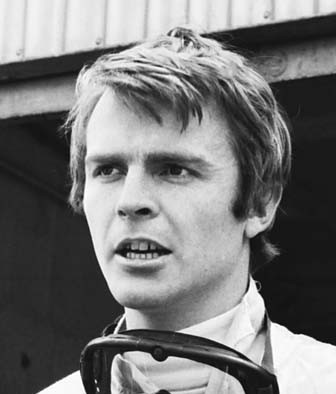
Max Rufus Mosley (13 April 1940 – 23 May 2021) was a British businessman, lawyer and racing driver. He served as president of the Fédération Internationale de l'Automobile (FIA), the governing body for Formula One. A barrister and amateur racing driver, Mosley was a founder and co-owner of March Engineering, a racing car constructor and Formula One racing team. He dealt with legal and commercial matters for the company between 1969 and 1977 and became its representative at the Formula One Constructors' Association (FOCA), the body that represents Formula One constructors. Together with Bernie Ecclestone, Mosley represented FOCA at the FIA and in its dealings with race organisers. In 1978, he became the official legal adviser to FOCA. In this role, Mosley and Marco Piccinini negotiated the first version of the Concorde Agreement, which settled a long-standing dispute between FOCA and the Fédération Internationale du Sport Automobile (FISA), a commission of the FIA and the then governing body of Formula One. Mosley was elected president of FISA in 1991 and became president of the FIA, FISA's parent body, in 1993. Mosley identified his major achievement as FIA President as the promotion of the European New Car Assessment Programme (Euro NCAP or Encap). He also promoted increased safety and the use of green technologies in motor racing. In 2008, a story about his sex life appeared in a British newspaper, along with false allegations regarding Nazi connotations. Mosley successfully sued the newspaper that published the allegations and maintained his position as FIA president. He stood down at the end of his term in 2009 and was replaced by his preferred successor, Jean Todt. Mosley was the youngest son of Sir Oswald Mosley, former leader of the British Union of Fascists, and Diana Mitford, member of the Mitford family. He was educated in France, Germany, and Britain before attending university at Christ Church, Oxford, where he graduated with a degree in physics. He then changed to law and was called to the bar in 1964. In his teens and early twenties, Mosley was involved with his father's post-war political party, the Union Movement (UM). He commented that the association of his surname with fascism stopped him from developing his interest in politics further, although he briefly worked for the Conservative Party in the early 1980s, and was a donor to the Labour Party from the New Labour era until 2018. Mosley was the subject of Michael Shevloff's 2020 biographical documentary Mosley. He died at the age of 81 on 23 May 2021. An inquest confirmed his death as suicide following a diagnosis of terminal cancer.
Max Mosley was born on 13 April 1940 in London, in the early years of the Second World War. His father was Sir Oswald Mosley, leader of the British Union of Fascists (BUF), and his mother was Diana Mitford, one of the Mitford sisters. In addition to his older full-brother Alexander, Mosley had five older half-siblings. On his father's side, they included the future novelist Nicholas Mosley, 3rd Baron Ravensdale (1923–2017). On his mother's side they were the merchant banker Jonathan Guinness, 3rd Baron Moyne (born 1930), and the Irish preservationist Desmond Guinness (1931–2020). He was a nephew of Deborah Cavendish, Duchess of Devonshire, and first cousin of Peregrine Cavendish, 12th Duke of Devonshire. He was also third cousin of Winston Churchill MP, the grandson of the British prime minister, and fifth cousin of Queen Elizabeth The Queen Mother. A month after Max Mosley's birth, his father, who had campaigned for a negotiated peace between the British Empire and Nazi Germany, was interned by the incoming Churchill government under Defence Regulation 18B, along with other active fascists in Britain. His mother was imprisoned a month later. Max and his brother Alexander were not included in their parents' internment and, as a result, were separated from them for the first few years of their lives. In December 1940, Winston Churchill asked the Home Secretary Herbert Morrison to ensure Lady Mosley was able to see Max regularly. Sir Oswald and Lady Mosley were released from detention at HMP Holloway on 16 November 1943, provoking widespread public protests. Their children were refused entry to several schools, due to a combination of their wildness and their parents' reputation, and were initially tutored at home instead. The family moved to a succession of country houses in England. Mosley's older half-brother Nicholas described the family, including Sir Oswald's children from his first marriage, spending the summer of 1945 getting the harvest in and shooting at Crowood Farm, near Ramsbury, Wiltshire. At the age of 13, Mosley was sent to Stein an der Traun in Germany for two years, where he learned to speak fluent German. On his return to England, he spent a year at Millfield, an independent boarding school in Somerset, after which he continued his education in London for two years. He attended Christ Church, Oxford, graduating with a degree in physics in 1961. During his time there, he was secretary of the Oxford Union where his father spoke on two occasions, once with Jeremy Thorpe on the other side. In 1960, Mosley introduced his father to Robert Skidelsky, one of Mosley's contemporaries at the university, later a biographer of his father. Rejecting an early ambition to work as a physicist after "establishing that there was no money in it", Mosley studied law at Gray's Inn in London and qualified as a barrister in 1964. After a pupillage with Maurice Drake, he specialised in patent and trademark law. From 1961 to 1964, Mosley was a member of the Territorial Army, Parachute Regiment (44th Independent Parachute Brigade Group). In 1950, the Mosleys bought houses in Ireland, and in Orsay, near Paris. They spent the year moving around Europe, spending the spring in France and the autumn and winter in Ireland, where Mosley was keen on riding and hunting. His aunt Nancy Mitford, in letters to Evelyn Waugh, recalled Sir Oswald and his family cruising the Mediterranean Sea on the family yacht. On one such trip they visited Spain and were entertained by Sir Oswald's friend General Franco. Mosley, like many Formula One drivers, lived in Monaco. On 9 June 1960, he was married at the Chelsea Register Office to Jean Taylor, the daughter of James Taylor, a policeman from Streatham. In 1970, their first son, Alexander, was born, and in 1972 their second son, Patrick. On 5 May 2009, Alexander, a restaurateur, was found dead at his Notting Hill home by his cleaner. He had died of drug abuse at the age of 39. An inquest was held on 10 June 2009, the Westminster coroner declaring that his death was due to non-dependent drug abuse.
From their teens to early twenties, Mosley and his brother were involved with their father's post-war party, the far-right Union Movement (UM), which advocated European nationalism. Trevor Grundy, a central figure in the UM's Youth Movement, writes of the 16-year-old Mosley painting the flash and circle symbol on walls in London on the night of the Soviet Union's invasion of Hungary (4 November 1956). The flash and circle was used by both the UM and the pre-war British Union of Fascists (BUF). He also says Mosley organised a couple of large parties as a way "to get in with lively, ordinary, normal young people, girls as well as boys, and attract them to the Movement by showing that we were like them and didn't go on about Hitler and Mussolini, Franco and British Fascism all the time". Mosley met his future wife Jean at such a party. Mosley and Alexander were photographed posing as Teddy Boys in Notting Hill during the 1958 race riots between Afro-Caribbeans and local white gangs. The following year, they canvassed for their father when he ran as a Union Movement candidate for the nearby Kensington North seat in the 1959 general election. Mosley rarely discussed his early political involvement with his father. When his father Oswald died, the London Daily Mail described him as a "much maligned and much misunderstood political giant of his era". Certainly, his father's political presence affected his early years, but Mosley reflected on this time, "I was born into this rather strange family and then at a certain point you get away from that." While he distanced himself from this period of his life, the "misunderstanding has remained and today ... he carries that weight on his shoulders." In a 1961 by-election, Mosley was an election agent for the Union Movement, supporting Walter Hesketh, the UM's parliamentary candidate for Manchester Moss Side. The motor racing journalist Alan Henry described him as one of his father's "right-hand men" at the time of a violent incident in 1962, in which Sir Oswald was knocked down by a mob in London and saved from serious injury by his son's intervention. As a result of his involvement in this fracas, Mosley was arrested and charged with threatening behaviour. He was later cleared at Old Street Magistrates' Court on the grounds that he was trying to protect his father. By 1964, when he began work as a barrister, Mosley was no longer involved in politics. In the early 1980s, Mosley attempted a political career, working for the Conservative Party and hoping to become a parliamentary candidate. Bernie Ecclestone's biographer, Terry Lovell, wrote that he gave up this aspiration after being unimpressed by "the calibre of senior party officials". He also believed his name would be a handicap and later said, "If I had a completely open choice in my life, I would have chosen party politics, but because of my name, that's impossible". By the late 1990s, he had become a donor to the Labour Party and a supporter of the government of Tony Blair. In 2018, Labour decided not to accept further donations from Mosley following accusations that he published a leaflet in the 1960s linking immigrants with disease. Mosley had already donated £500,000 to the office of deputy leader Tom Watson.
While Mosley was at university, his wife was given tickets to a motor race at the Silverstone Circuit. The circuit is not far from Oxford, and the couple went out of curiosity. Mosley was attracted by the sport, and once qualified as a barrister, began teaching law in the evenings to earn enough money to start racing cars himself. The sport's indifference to his background appealed to Mosley:
There was always a certain amount of trouble [being the son of Sir Oswald] until I came into motor racing. And in one of the first races I ever took part in there was a list of people when they put the practice times [...] and I heard somebody say, 'Mosley, Max Mosley, he must be some relation of Alf Mos[e]ley, the coachbuilder.' And I thought to myself, 'I've found a world where they don't know about Oswald Mosley.' And it has always been a bit like that in motor racing: nobody gives a damn. At national level in the UK, Mosley competed in over 40 races in 1966 and 1967; he won 12 and set several class lap records. In 1968, he formed the London Racing Team in partnership with driver Chris Lambert to compete in European Formula Two, which at that time was the level of racing just below Formula One. Their cars were prepared by Frank Williams, later a Formula One team owner. It was a dangerous time to race: Mosley's first Formula Two race was the 1968 Deutschland Trophäe at Hockenheim in which double world champion Jim Clark was killed, and within two years both of Mosley's 1968 teammates, Piers Courage and Chris Lambert, were dead in racing accidents. Mosley's best result that year was an eighth place at a non-championship race at Monza. Engine builder Brian Hart says that as a driver, Mosley "might not have been particularly quick, but he was a thinking driver. He kept out of trouble and generally used his head."
In 1969, after two large accidents due to breakages on his Lotus car, Mosley decided that "it was evident that I wasn't going to be World Champion" and retired from driving. He was already working with Robin Herd, Alan Rees, and Graham Coaker to establish the racing car manufacturer March Engineering where he handled legal and commercial matters. The name March is an acronym based on the initials of the founders; the 'M' stands for Mosley. Like the other founders, Mosley put in £2,500 of capital. His father told him that the company "would certainly go bankrupt, but it would be good training for something serious later on." Mosley played a key role in publicising the new outfit. Although March had few resources and limited experience, the firm announced ambitious plans to enter Formula One, the pinnacle of single-seater racing, in 1970. The team had initially intended to enter a single car, but by the beginning of the season (partly due to deals made by Mosley), the number of March cars entered for their first Formula One race had risen to five. Two of these were run by March's own in-house works team and the rest by customer teams. Mosley also negotiated sponsorship from tyre maker Firestone and oil additive manufacturer STP. The new operation was initially successful. In Formula One, March cars won three of their first four races. One of these was a world championship race, the 1970 Spanish Grand Prix, won by reigning world champion Jackie Stewart in a customer car run by Tyrrell Racing. As a result, March finished third in the 1970 Constructors' Championship. The factory also sold 40 cars to customers in various lower formulae. Despite these successes, the organisation got into financial difficulty almost immediately. The Formula One operation was costing more than the customer car business was making. The March works team's contract with its lead driver, Chris Amon, was expensive, and Mosley, in his own words, "tried at every opportunity to get rid of him". He reasoned that Stewart's highly competitive customer car was enough to show March in a good light. Amon stayed to the end of the year, but Mosley succeeded in "restructuring" his contract, saving the company some much-needed money. At the end of the season, Mosley successfully demanded full control of the finances, including the factory run by Coaker, who left shortly afterwards. Mosley and Herd borrowed £20,000 from relatives and friends to support the company into its second year. According to Lovell, the money came from Mosley's half-brother, Jonathan Guinness. Tyrrell started making its own cars towards the end of 1970, and March's 1971 programme in Formula One was much reduced, with no recognised front-running driver. The Firestone and STP sponsorship was insufficient and Mosley failed to attract a large backer for 1971. Motorsport author Mike Lawrence has suggested that the shortfall forced him into short-term deals, which maintained cashflow, but were not in the best long-term interests of the company. Mosley negotiated a deal for the team to use Alfa Romeo engines in a third car, bringing much needed funding. The engines proved uncompetitive, and his hopes of an ongoing partnership with the Italian automobile manufacturer were not met. Nonetheless, March again finished third in the constructors championship, and works driver Ronnie Peterson, in a Cosworth DFV-powered car, was second in the Drivers' Championship. March's financial woes continued: the company had lost £71,000 at the end of 1971. Mosley and Rees disagreed over how to rectify the situation and Rees left March early in 1972.
Sources
Net-worth figure: Celebrity Net Worth (October 2026), in USD. Biography and career facts: the person's Wikipedia article and linked reporting. Snapshot date for all StarWorth figures: 28 October 2026.