Background and career
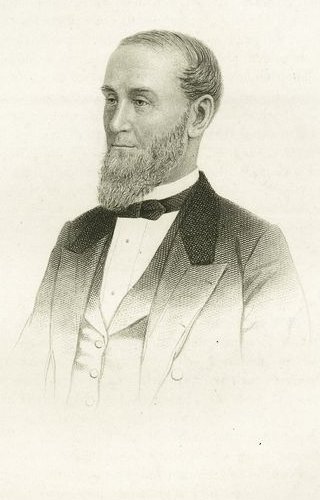
Michael Graves (July 9, 1934 – March 12, 2015) was an American architect, designer, and educator, and principal of Michael Graves and Associates and Michael Graves Design Group. He was a member of The New York Five and the Memphis Group and a professor of architecture at Princeton University for nearly forty years. Following his own partial paralysis in 2003, Graves became an internationally recognized advocate of health care design. Graves' global portfolio of architectural work ranged from the Ministry of Culture in The Hague, a post office for Celebration, Florida, a prominent expansion of the Denver Public Library to numerous commissions for Disney and the scaffolding design for the 2000 Washington Monument restoration. He was recognized for his influence on architectural movements, including New Urbanism, New Classicism, and postmodernism. His postmodern buildings include the Portland Building in Portland, Oregon and the Humana Building in Louisville, Kentucky. For his architectural work, Graves received a fellowship of the American Institute of Architects as well as its highest award, the AIA Gold Medal (2001). He was trustee of the American Academy in Rome and was the president of its Society of Fellows from 1980 to 1984. He received the American Prize for Architecture, the National Medal of Arts (1999) and the Driehaus Architecture Prize (2012). Graves produced both high end and mass consumer product designs for several companies, including Alessi in Italy and Target and J. C. Penney in the United States. The New York Times described Graves as "one of the most prominent and prolific American architects of the latter 20th century, who designed more than 350 buildings around the world but was perhaps best known for [a] teakettle and pepper mill."
Graves was born on July 9, 1934, in Indianapolis, Indiana, to Erma (née Lowe) and Thomas B. Graves. He grew up in the city's suburbs and later credited his mother for suggesting that he become an engineer or an architect. Graves graduated from Indianapolis's Broad Ripple High School in 1952 and earned a bachelor's degree in architecture in 1958 from the University of Cincinnati. During college he also became a member of the Sigma Chi fraternity. Graves earned a master's degree in architecture from Harvard University in 1959. After graduation from college, Graves spent a year working in George Nelson's office. Nelson, a furniture designer and the creative director for Herman Miller, exposed Graves to the work of fellow designers Charles and Ray Eames and Alexander Girard. In 1960 Graves won the American Academy in Rome's Prix de Rome (Rome Prize) and spent the next two years at the academy in Italy. Graves describes himself as "transformed" by his experience in Rome: "I discovered new ways of seeing and analyzing both architecture and landscape."
Graves began his career in 1962 as a professor of architecture at Princeton University, where he taught for nearly four decades and later helped to establish the Michael Graves College at Kean University in Union Township, New Jersey, and established his own architectural firm in 1964 at Princeton, New Jersey. Graves worked as an architect in public practice designing a variety of buildings that included private residences, university buildings, hotel resorts, hospitals, retail and commercial office buildings, museums, civic buildings, and monuments. During a career that spanned nearly fifty years, Graves and his firm designed more than 350 buildings around the world, and an estimated 2,000 household products.
In 1962, after two years of studies in Rome, Graves returned to the United States and moved to Princeton, New Jersey, where he accepted a professorship at the Princeton University School of Architecture. Graves taught at Princeton for thirty-nine years while simultaneously practicing architecture. He retired as the Robert Schirmer Professor of Architecture, Emeritus, in 2001. Although Graves was a longtime faculty member at Princeton and trained many of its architecture students, the university did not allow its faculty to practice their profession on its campus. As a result, Graves was never commissioned to design a building for the university. Later in his life he contributed to the founding of a new college, which bears his name at Kean University.
In his early years as an architect, Graves did designs for home renovation projects in Princeton. In 1964 he founded the architectural firm of Michael Graves & Associate in Princeton and remained in public practice there until the end of his life. His firm maintained offices in Princeton, New Jersey, and in New York City, but his residence in Princeton served as his design studio, home office and library, and a place to display the many objects he collected during his world travels. Nicknamed "The Warehouse", it also displayed many of the household items he designed. After Graves's death, Kean University acquired his former home and studio in Princeton, along with two adjacent buildings.
Graves spent much of the late 1960s and early 1970s designing modernist residences. His first commission was the Hanselman House in Fort Wayne, Indiana, a design completed in 1971. The modernist structure built for $55,000 received an American Institute of Architects Honor Award in 1975. The New York Times described the home as "another of Graves's experiments in cubist‐influenced spatial manipulations" and cited the obvious influence of Le Corbusier on Graves' work. Built for friends he met in high school, the home went up for sale in 2017 for $264,888. The four-bedroom residence features a Graves-painted mural in the living room signed by the architect during a visit to the home in 2000. He also designed the Snyderman House in Fort Wayne (1972, destroyed by fire in 2002) . Graves also became one of the New York Five, along with Peter Eisenman, Charles Gwathmey, John Hejduk and Richard Meier. This informal group of Princeton and New York City architects, also known as the Whites due to the predominant color of their architectural work, espoused a pure form of modernism characterized by clean lines and minimal ornamentation. The New York Five became the "standard-bearers of a movement to elevate modernist architectural form into a serious theoretical pursuit." The book, Five Architects (1973) describes some of their early work.
Sources
Net-worth figure: Celebrity Net Worth (October 2026), in USD. Biography and career facts: the person's Wikipedia article and linked reporting. Snapshot date for all StarWorth figures: 28 October 2026.