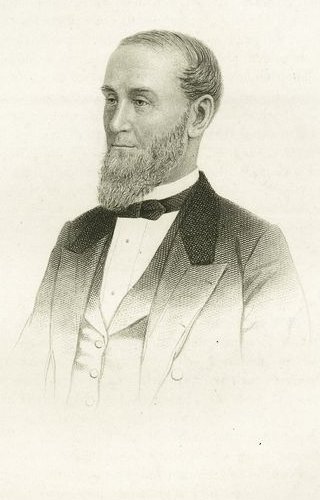
Background and career
Michael Iver Peterson (born October 23, 1943) is an American novelist who was convicted in 2003 of murdering his second wife, Kathleen Peterson, on December 9, 2001. In 2011, after eight years in prison, Peterson was released from prison after being granted a new trial. In a review of an appeal, the judge had ruled that a critical prosecution witness in the first trial gave misleading testimony. Peterson was out on bail and under house arrest while awaiting a new trial. In 2017, Peterson submitted an Alford plea to the reduced charge of voluntary manslaughter. He was sentenced to time already served and freed. Peterson's case attracted the attention of a French documentary team interested in American justice. Soon after his arrest, Peterson gave them access, including interviews with him and his family, the defense attorney, and others. The team had originally planned a film but, given the complexity of the material, expanded their work into a documentary miniseries The Staircase (2004), which aired on French TV. The team started filming soon after Peterson's arrest in 2001, and followed the case through the trial and imprisonment. They continued filming through his appeal and Peterson's eventual Alford plea in 2017. After that they released a sequel to their first work that explored the following years. In 2019, Peterson wrote an account of his life since his wife's death. His independently published memoir is titled Behind the Staircase. An American dramatic miniseries was made, also titled The Staircase (2022). Starring Colin Firth and Toni Collette, it covers the case and its aftermath, including the presence of the documentary team. Additional documentaries have been produced about Kathleen's death, and podcasts, radio shows, and other media also have been created.
Michael Iver Peterson was born near Nashville, Tennessee, the son of Eugene Iver Peterson and Eleanor Peterson (née Bartolino). He graduated from Duke University with a bachelor's degree in political science. While there, Peterson joined Sigma Nu fraternity and served as president. He also was editor of The Chronicle, the daily student newspaper, from 1964 to 1965. He attended classes at the law school of the University of North Carolina at Chapel Hill. After graduating, Peterson took a civilian job with the United States Department of Defense. Assigned to a base in Germany, he researched arguments supporting increased military involvement in Vietnam. There he met and married Patricia Sue (Patty), a young American who taught at an elementary school on the Rhein-Main Air Base in Gräfenhausen, West Germany. They had two sons, Clayton and Todd. In 1968, Peterson was commissioned in the United States Marine Corps and served in the Vietnam War. In 1971, he received an honorable discharge with the rank of captain after a car crash in Japan, where he was serving as an MPO, left him with a permanent disability. Years later, during his candidacy for the 1999 Durham mayoral election, Peterson claimed he had been awarded a Silver Star, a Bronze Star with Valor, and two Purple Hearts. He had all the medals but said he did not have the documentation for them. Peterson claimed he had received one Purple Heart after being hit by shrapnel when another soldier stepped on a land mine and the other when he was shot. He later admitted his war injury was not the result of the shrapnel wound in Vietnam but was the result of a car accident in Japan, where he was stationed after the war as a military police officer. The News & Observer said records did not contain any mention of the two Purple Hearts that Peterson said he had received. Peterson and Patricia lived in Germany for some time. There they befriended neighbors Elizabeth and George Ratliff and their two young daughters, Margaret and Martha. George died young, and the Peterson and Ratliff families became very close. When the widowed Elizabeth Ratliff died in 1985, Michael became the guardian of her two children. Michael and Patricia divorced in 1987. Clayton and Todd lived with their mother Patricia, and they stayed in Germany. Michael took the girls with him back to the United States, where he settled in Durham, North Carolina. Clayton and Todd later also joined their father in the US. In 1989, Michael moved with his four children to live with Kathleen Atwater, a successful Nortel business executive. She had a daughter Caitlin from her first marriage. During her years with Peterson, Kathleen was the chief financial support of the family. When the couple married in 1997, Kathleen's daughter Caitlin became the fifth sibling in the blended family. (She had been living with her father part time before that.) Peterson wrote three novels based "around his experiences during the Vietnamese conflict": The Immortal Dragon, A Time of War, and A Bitter Peace. He co-wrote the biographical Charlie Two Shoes and the Marines of Love Company with journalist David Perlmutt and co-wrote Operation Broken Reed with Arthur L. Boyd. Peterson also worked as a newspaper columnist for The Herald-Sun, where his columns became known for their criticism of police and of Durham County district attorney James Hardin Jr. Still serving as DA in 2001, Hardin led the prosecution of Peterson for the murder of his second wife, Kathleen.
On December 9, 2001, Peterson called emergency services on 911, to report that he had just found Kathleen Peterson unconscious in their Forest Hills neighborhood home in Durham, North Carolina, and suspected she had fallen down "fifteen to twenty, I don't know" steps. He later claimed that he had been outside by the pool and had come in at 2:40 am to find Kathleen severely injured and lying at the foot of the stairs. Peterson said she must have fallen down the stairs after consuming alcohol and Valium. Toxicology results showed that Kathleen's blood alcohol content was 0.07 percent (70 mg/100mL), her alcohol in urine was 0.11, and she had taken between 5 and 15 mg of Valium. The autopsy report concluded that the 48-year-old woman sustained a matrix of severe injuries, including a fracture of the superior cornu of the left thyroid cartilage and seven lacerations to the top and back of her head, consistent with blows from a blunt object. She had died from blood loss ninety minutes to two hours after sustaining the injuries. Kathleen's daughter, Caitlin, and Kathleen's sister, Candace Zamperini, both initially proclaimed Michael's innocence and publicly supported him alongside his sons and adopted daughters. Zamperini reconsidered after learning of Michael's bisexuality, as she did not believe Kathleen would have tolerated it. Caitlin read her mother's autopsy report and saw the photos before the trial; horrified, she became estranged from Peterson. Both subsequently broke off from the rest of the family. Although forensic expert Henry Lee, hired by Peterson's defense, testified that the blood-spatter evidence was consistent with an accidental fall down the stairs, police investigators concluded that the injuries were inconsistent with such an accident. As Peterson was the only person at the residence at the time of Kathleen's death, he was the prime suspect and was soon charged with her murder. He pleaded not guilty. The medical examiner, Deborah Radisch, concluded that Kathleen had died from lacerations of the scalp caused by a homicidal assault. According to Radisch, the total of seven lacerations to the top and back of Kathleen's head were the result of repeated blows with a light, yet rigid, weapon. The defense disputed this theory. According to their analysis, the lacerations were not consistent with blows of any sort, because there was a lack of underlying injury, such as skull fractures or bruising, swelling, and hemorrhaging of the brain. The trial drew increasing media attention as details of Peterson's private life emerged. Hardin and his prosecution team (among them Mike Nifong) attacked Peterson's credibility, focusing on his misleading statements during his political campaign about his military awards, which were not supported by records. They also described his years as a closeted gay man who had numerous brief liaisons with men and kept them secret from family and friends. The prosecution contended that the Petersons' marriage was far from happy, suggesting that Kathleen had discovered Michael's allegedly secret gay life and was so infuriated that she wanted to end their marriage. It was the main motive that the prosecution offered at trial for Kathleen's alleged murder (the other being a $1.5 million life insurance policy). According to Assistant District Attorney Freda Black, Kathleen:
"would have been infuriated by learning that her husband, who she truly loved, was bi-sexual and having an extramarital relationship—not with another woman—but a man, which would have been humiliating and embarrassing to her. We believe that once she learned this information that an argument ensued and a homicide occurred." The defense argued that Kathleen accepted Michael's bisexuality and that the marriage was very happy, a position supported by Michael and Kathleen's children and other friends and associates. The prosecution said that Kathleen's murder was most likely committed with a custom-made fireplace poker called a blow poke. It had been a gift to the Petersons from Kathleen's sister Candace but was missing from the house at the time of the investigation. Later in the trial, the defense team produced the missing blow poke, which they said had been found in the garage. A juror contacted after the trial noted that the jury had dismissed the idea of the blow poke as the murder weapon.
Elizabeth Ratliff, a friend of the Petersons and mother of Margie and Martha, had died in Germany in 1985. In what appeared to have been an accident and Peterson said was caused by a brain aneurysm, she had been found dead at the foot of her staircase with injuries to the head. Her death had been investigated by both the German police and U.S. military police. An autopsy at the time of her death concluded Ratliff died from an intra-cerebral hemorrhage secondary to the blood coagulation disorder Von Willebrand's disease. This was based on blood in her cerebrospinal fluid and reports that she had been suffering severe, persistent headaches in the weeks leading up to her death. The coroner determined that the hemorrhage resulted in immediate death, followed by Ratliff falling down the stairs after collapsing. Patty and Michael Peterson had had dinner with Ratliff and her young daughters that night. Peterson had stayed and helped Ratliff put the girls to bed before going home. The children's nanny, Barbara, discovered Ratliff's body when she arrived the next morning. Peterson was the last known person to see Elizabeth alive. When the prosecution investigation found similarities between the deaths of the two women (head injuries after a fall down a staircase), they wanted further information. The Durham court ordered the exhumation of Ratliff's embalmed body in order to reexamine the cause of death. Arrangements were made for the Durham medical examiner, who had initially performed Kathleen's autopsy, to perform this reevaluation, over the objections of defense counsel who argued that the autopsy should be performed by Texas medical examiners. The body was transported from Texas to Durham. The Durham M.E. found sufficient evidence drawn from the results of the second autopsy, along with new witness statements describing the scene, to overturn the earlier findings and list Ratliff's cause of death as "homicide". The prosecution declined to accuse Peterson of Ratliff's death but introduced the death into the trial as an incident from which Peterson got the idea of how to "fake" Kathleen's accident. Despite police reports that there was very little blood at the scene of Ratliff's death, the nanny, who was the first to discover Ratliff's body in 1985, took the stand at Peterson's trial and testified that there was a large amount of blood at the scene. Another witness testified to spending much of the day cleaning blood stains off the wall. Doubt as to the admissibility of the Ratliff evidence in court was one of the grounds for the subsequent appeal of the conviction filed by Peterson's lawyers in 2005. In October 2002, acting as administrator of Kathleen's estate, Caitlin filed a wrongful death claim against Peterson. In June 2006, Peterson filed for bankruptcy. Two weeks later, Caitlin filed an objection to the bankruptcy. On February 1, 2007, Caitlin and Peterson settled the wrongful death claim for $25 million, pending acceptance by the courts involved; finalization of the settlement by the court was announced on February 1, 2008.
On October 10, 2003, after one of the longest trials in North Carolina history, a Durham County jury found Peterson guilty of the murder of Kathleen. He was sentenced to life in prison without the possibility of parole (LWOP). Denial of parole requires premeditation. Despite the jury accepting the murder as a "spur-of-the-moment" crime, they also found it was premeditated. As one juror explained it, premeditated meant not only planning hours or days ahead but could also mean planning in the seconds before committing a spur-of-the-moment crime. Peterson was housed at the Nash Correctional Institution near Rocky Mount until he was released on December 16, 2011. While awaiting a new trial, he was ordered to be under electronic house arrest.
Sources
Net-worth figure: Celebrity Net Worth (October 2026), in USD. Biography and career facts: the person's Wikipedia article and linked reporting. Snapshot date for all StarWorth figures: 28 October 2026.