Background and career
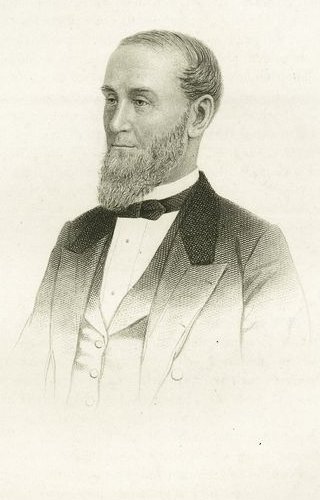
Mikhail Anatolyevich Abyzov (Russian: Михаил Анатольевич Абызов; born 3 June 1972) is a manager in the Russian energy and engineering industry, He was the chairman of the board of directors of Russia's biggest engineering company, E4 Group.
Abyzov studied at the Department of Mechanics and Mathematics of Moscow State University, but never graduated. Abyzov received his diploma of higher education in 2000 from the Sholokhov Moscow State Open Pedagogical University (now Sholokhov Moscow State University for Humanities) in 2000.
In 1990, Abyzov set up his first company, Intershops, which sold Turkish consumer goods and then office equipment. In 1992, together with a fellow student of Bulgaria, Milen Mitsik, he set up a joint venture, MMB-Group, to sell Bulgarian products. At the same time, the company set to work with the Defense Ministry and the Ministry of Internal Affairs (MIA) thanks to the fact that Abyzov met a high-ranking executive of one of the law-enforcement agencies at a shooting range. MMB-group supplied AvtoVAZ-made spare parts for the Main Internal Affairs Directorate of the city of Moscow. The MIA helped Abyzov's company solve shipments problems — when a regular shipment was detained at the factory by the groupings that controlled it, a joint detachment of the Special Police Task Force (OMON) came flying in Togliatti to deal with the problem. Most transactions in the 1990s were paid for with goods or debts through barter schemes because of a shortage of cash in Russia. As a result of one of these transactions, Abyzov's company became the holder of a debt of the Novosibirsk Chemical Concentrates Factory. Through that transaction, Abyzov met a deputy of the State Duma in 1993, Ivan Starikov, representing Novosibirsk Region, who appointed Abyzov as his assistant. Starikov introduced Abyzov to the then Governor of Novosibirsk Region, Vitaliy Mukha. Through that new acquaintance, Abyzov's company, United Russian Fuel and Energy Company (ORTEK), managed to become the largest fuel supplier to Novosibirsk Region. In 1995, Novosibirsk Region faced a shortage of fuel for the sowing season. Abyzov suggested that fuel be supplied from Mozyr Oil Refinery (Belarus) upon the security of 19.5% of Novosibirskenergo shares. In 1997, Novosibirsk Region failed to pay for the fuel supplied, and the shares of Novosibirskenergo passed to Abyzov. In 1998, Abyzov was appointed as deputy chairman of the board of directors of Novosibirskenergo. The chairman of the board of directors was Dmitriy Zhurba, a co-owner of Alemar, a Novosibirsk-based investment company, and the second deputy chairman was Leonid Melamed, the founder of Alemar. In 1995, Alemar which serviced the accounts of Novosibirsk-based businesses suggested that the administration of Novosibirsk Region draw investors to Novosibirskenergo. Novosibirsk Region transferred 35% of new shares of Novosibirskenergo to the company on the security of Alemar's promissory note. But Alemar placed only 13% of the shares, with 22% remaining on its balance sheet. Once he had become a co-owner of Novosibirskenergo, Abyzov “joined forces” with Alemar to control the energy company. By 1999, Abyzov had increased his interest in Novosibirskenergo to 24.59% by purchasing minority shares (through Tantyema, a firm owned by Abyzov). Melamed and Zhurba lent a hand to Abyzov. In 2000, the Russian General Prosecutor's Office charged the ex-governor of Novosibirsk Region Vitaliy Mukha with misfeasance under Article 286 of the Russian Criminal Code, and Leonid Nikonov, former head of the State Property Committee of Novosibirsk Region, with abuse of office (Article 285 of the Russian Criminal Code), considering that the Novosibirskenergo shares had been disposed of improperly. The block of Novosibirskenergo share, the market value of which was up to $40 million, was valued at $570,000 for the transaction. “As a result of those transactions, the state forfeited the right to participate in the management of a business entity operating in a strategic industry, the energy sector,” as it was set out in a statement signed by Valentin Simuchenkov, Deputy Prosecutor-General of the Russian Federation. In 2001, the criminal case was closed because the statute of limitation had expired. In 2002, the equity stake in Novosibirskenergo reflected on the balance sheet of Alemar was sold to a subsidiary of Novosibirskenergo, ZAO Sibirenergoinvest. Thus, Abyzov became the sole controlling shareholder of Novosibirskenergo. In 2003, the Federal Security Service made seizures at Novosibirskenergo. The law-enforcement agencies accused the company's management of understating the volume of electricity transmitted through the grids of GUP (State Unitary Enterprise) Novosibirskoblenergo in 2002, which resulted in the company incurring a loss of 72 million rubles. In 2004, the case was closed for the absence of the event of a crime. In 2011, Novosibirskenergo was renamed to OJSC Sibeko. In 2018, Abyzov sold the shares he owned in Sibeko to Siberian Generating Company owned by Andrey Melnichenko with whom he studied together at Physics and Mathematics Boarding School No. 18 at Moscow State University, for 32 billion rubles. Abyzov was personally involved in negotiating the sale of the shares notwithstanding a ban on entrepreneurial activity that he was required to observe due to his position as Minister for Open Government Affairs of the Russian Federation.
In 1998, Abyzov was appointed as the head of the Department of Investment Policy and Business Projects of RAO UES (Russian Joint-Stock Company “Unified Energy Systems”). In 1999, he became a deputy chairman of the management board of RAO UES. Abyzov was introduced to Chubais, chairman of the management board of RAO UES, by Starikov. As deputy chairman of the management board, Abyzov was responsible for changing the structure of payments for electricity from barter schemes to cash settlements, and, in addition, for fuel supply to the energy companies that were part of RAO UES. Abyzov personally negotiated with suppliers, with fuel companies set up under his leadership checking the purchase volumes. He established a corporate management system for coal purchases at RAO UES. In 2004, Abyzov became managing director of Business Unit No. 1, which was charged with supervising the establishment of three thermal wholesale generation companies, 10 territorial generation companies, self-contained power systems in the Far East, and guaranteed supply companies. German Gref, the then Minister for Economic Development of the Russian Federation, was adamantly opposed to the appointment of Abyzov to the management board of RAO UES. Viktor Kudryavyi, a member of the RAO UES board of directors and former Deputy Minister of Energy, believed that Abyzov was pursuing his own commercial interests. In 2005, Abyzov tendered his resignation. In 2006, RAO appointed an investment commission headed by Abyzov. Under his leadership, the commission met once, in December 2006. In February 2007, Gref successfully insisted that the commission be re-elected and headed by Andrei Zadernyuk, technical director of Mezhregionenergo. Speaking at a meeting of the RAO UES board of directors, Gref spoke about the possibility of instituting criminal proceedings against Abyzov and emphasized that the chairman of the RAO UES Investment Commission, which deals with approving investment programs for the holding's subsidiaries, may not have his own interest in the energy sector. At that time, Abyzov owned E4, an engineering company which was engaged in the construction of power facilities. During his work at RAO UES, despite a conflict of interests, Abyzov and Melamed purchased shares in energy companies: shares in Samaraenergo, Saratovenergo, and Ulyanovskenergo were purchased through a brokerage account with Troika Dialog. Abyzov also participated in paper trading for Gazprom in the gray market purchasing shares on a Russian platform and selling them in the form of ADRs on a foreign one. The market of Gazprom shares was not liberalized until 2005.
In 2005, Abyzov was appointed as general director of OJSC Kuzbassrazrezugol MC (Management Company Open Joint-Stock Company) owned by Iskander Makhmudov and Andrey Bokarev, chairman of the board of directors. Both also owned 24.5% of Kalashnikov Concern, Russia's largest manufacturer of small arms, until November 2017. Kuzbassrazrezugol was one of the largest suppliers of coal to Novosibirskenergo. Abyzov talked about having plans to merge Kuzbassrazrezugol and Novosibirskenergo. The chairman of the board of directors of Kuzbassrazrezugol MC, Bokarev, told the press that Kuzbassrazrezugol might buy out the controlling stake in Novosibirskenergo from Abyzov. In 2006, Kuzbassrazrezugol acquired 51% of Powerfuel, a British coal company. Abyzov became the chairman of its board of directors. In 2007, Abyzov and Bokarev's alliance with Makhmudov broke up, and Abyzov stepped down as the general director of Kuzbassrazrezugol, retaining his stake in Powerfuel which went bankrupt shortly after receiving 180 million Euros in subsidies from the EU for a CO2 emissionsreduction project. In 2003, as a member of the RAO UES management board, Abyzov supervised judo and Greco-Roman wrestling support. That is how Abyzov met Arkadiy and Boris Rotenbergs. Since that time, Abyzov and the Rotenbergs had “regular partnerships — we worked with SMP Bank and with insurance companies that were associated with them”. In 2006, Bokarev introduced Abyzov to Konstantin Nikolayev who invited him to become a partner in one of his projects, the Mostotrest construction company. At that time, Arkadiy Rotenberg was one of the co-owners of that company, indirectly owning 9.3% of Mostotrest. In 2010, just before the Mostotrest IPO at the Moscow Stock Exchange, Abyzov announced that he had sold to Arkadiy Rotenberg his 50% stake in Marc O’Polo Investments which owned 50.3% of Mostotrest. In 2010, Nikolayev invited Abyzov to participate in his new project, the establishment of Promtekhnologhii, a company to manufacture the T-5000 rifles, which are sold under the ORSIS brand. In 2012, as Minister for Open Government Affairs, Abyzov headed a government commission on public-private partnerships in the sphere of the military industrial complex. The Ministry of Internal Affairs, the Federal Security Service, the Federal Protection Service, and the Federal National Guard Troops Service (Rosgvardiya) took into service the T-5000 rifles. In 2015, Maria Butina, an activist for the right to carry weapons accused in the U.S. of espionage in favor of the Russian Federation, presented ORSIS to a delegation from the National Rifle Association of America visiting the Promtekhnologhii plant.
In 2006, Abyzov began discussing with Viktor Vekselberg, the founder of the Renova group, the possibility of obtaining an equity stake in the energy company KES Holding, which Renova was in the process of establishing at that time. Abyzov preferred not to formalize his participation in the company, because when leaving RAO UES, as he acknowledged himself, he undertook not to participate in the capital of any energy companies. To conceal his intention to participate in KES (Integrated Energy Systems) Holding, Abyzov arranged for his contributions to the authorized capital to be made in the form of loans. Abyzov-controlled companies transferred to Integrated Energy Systems and Renova Industries about $380 million from 2006 to 2008. Abyzov himself said that he had paid $50 million to extend the opportunity to become a shareholder of KES Holding. Abyzov and Renova did not disclose that they could become partners. It was not until 2009 that Abyzov confirmed that he had been given the opportunity to participate in the capital of KES Holding at any time he saw fit. In 2011, as part of arrangements for the sale of KES Holding to Gazprom Energoholding, Renova and Abyzov began formalizing Abyzov's participation in the company's capital. One of the conditions for selling KES Holding to Gazprom Energoholding was granting Abyzov a put option for his shareholding at a price of $451 million exercisable till 1 July 2013. The deal with Gazprom Energoholding never took place. While Abyzov was appointed Minister for Open Government Affairs in 2012; therefore, he again preferred not to make his participation in the energy company public and not to take possession of a stake in the company. Nevertheless, Abyzov demanded in 2013 that Vekselberg pay him $451 million for the stake in the company, insisting that he was entitled to that through the put option. Renova petitioned the British Virgin Islands court for declaring the put option invalid because the deal with Gazprom Energoholding had come off. Besides, Abyzov failed to fulfill the terms of the joint investment agreement signed by the parties in 2011 — namely, he did not take possession of KES Holding shares. Six months later, Abyzov, despite his status as a federal minister, filed a personal lawsuit against Vekselberg demanding $488 million in damages for his failure to fulfill the 2006 verbal arrangement regarding his participation in the capital of KES Holding. Vekselberg denies that any verbal arrangements were made, insisting that Abyzov should first fulfill the terms of the 2011 agreement and take possession of an equity stake in the company. In 2019, Vekselberg filed a personal lawsuit against Abyzov with the Gagarinsky District Court of Moscow demanding that the 2006 verbal agreement be declared unconcluded, since a dispute between Russian citizens over Russian assets should be heard by a Russian court. The court dismissed the lawsuit on the grounds that the matter was already pending in the British Virgin Islands court.
Sources
Net-worth figure: Celebrity Net Worth (October 2026), in USD. Biography and career facts: the person's Wikipedia article and linked reporting. Snapshot date for all StarWorth figures: 28 October 2026.