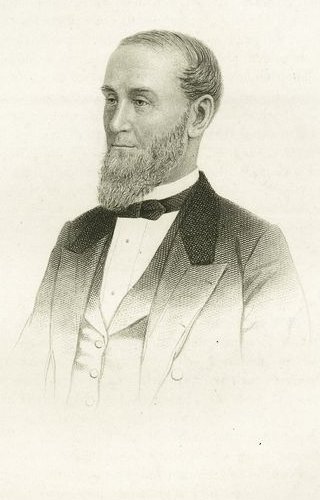
Background and career
Néstor Carlos Kirchner Ostoić (25 February 1950 – 27 October 2010) was an Argentine lawyer and politician who served as the president of Argentina from 2003 to 2007. A member of the Justicialist Party, he previously served as Governor of Santa Cruz Province from 1991 to 2003, and mayor of Río Gallegos from 1987 to 1991. He later served as first gentleman of Argentina during the early tenure of his wife, Cristina Fernández de Kirchner, the first person to serve in this role. Ideologically, he identified himself as a Peronist and a progressive, with his political approach called Kirchnerism. Born in Río Gallegos, Santa Cruz, Kirchner studied law at the National University of La Plata. He met and married Cristina Fernández at this time, returned with her to Río Gallegos at graduation, and opened a law firm. Commentators have criticized him for a lack of legal activism during the Dirty War, an issue he would involve himself in as president. Kirchner ran for mayor of Río Gallegos in 1987 and for governor of Santa Cruz in 1991. He was reelected governor in 1995 and 1999 due to an amendment of the provincial constitution. Kirchner sided with Buenos Aires provincial governor Eduardo Duhalde against President Carlos Menem. Although Duhalde lost the 1999 presidential election, he was appointed president by the Congress when previous presidents Fernando de la Rúa and Adolfo Rodríguez Saá resigned during the December 2001 riots. Duhalde suggested that Kirchner run for president in 2003 in a bid to prevent Menem's return to the presidency. Menem won a plurality in the first round of the presidential election but, fearing that he would lose in the required runoff election, he resigned; Kirchner became president as a result. Kirchner took office on 25 May 2003. Roberto Lavagna, credited with the economic recovery during Duhalde's presidency, was retained as minister of economy and continued his economic policies. Argentina negotiated a swap of defaulted debt and repaid the International Monetary Fund. The National Institute of Statistics and Census intervened to underestimate growing inflation. Several Supreme Court judges resigned while fearing impeachment, and new judges were appointed. The amnesty for crimes committed during the Dirty War in enforcing the full-stop and due-obedience laws and the presidential pardons were repealed and declared unconstitutional. This led to new trials for the military who served during the 1970s. Argentina increased its integration with other Latin American countries, discontinuing its automatic alignment with the United States dating to the 1990s. The 2005 midterm elections were a victory for Kirchner, and signaled the end of Duhalde's supremacy in Buenos Aires Province. Instead of seeking reelection, Kirchner stepped aside in 2007 in support of his wife, who was elected president. He participated in Operation Emmanuel to release FARC hostages, and was narrowly defeated in the 2009 midterm election for deputy of Buenos Aires Province. Kirchner was appointed Secretary General of UNASUR in 2010. He and his wife were involved (either directly or through their close aides) in the 2013 political scandal known as the Route of the K-Money, even though no judicial investigation ever found any proof of wrongdoing by Néstor or Cristina Kirchner. Kirchner died of cardiac arrest on 27 October 2010 at age 60 and received a state funeral.
Kirchner was born on 25 February 1950, in Río Gallegos, Santa Cruz, a federal territory at the time. His father, Néstor Carlos Kirchner, of German-Swiss descent, met the Chilean María Juana Ostoić, of Croatian descent, by telegraphy. They had three children: Néstor, Alicia, and María Cristina. Néstor was part of the third generation of Kirchners living in the city. As a result of pertussis, he developed strabismus at an early age; however, he refused medical treatment because he considered his eye part of his self-image. When Kirchner was in high school he briefly considered becoming a teacher, but poor diction hampered him; he was also unsuccessful at basketball. Kirchner moved to La Plata in 1969 to study law at the National University. During this period, the decline of the Argentine Revolution, the return of former president Juan Perón from exile, the election of Héctor Cámpora as president, his resignation and the election of Perón, and the beginning of the Dirty War had led to severe political turmoil. Kirchner joined the University Federation for the National Revolution (FURN), a political student group whose relationship with the Montoneros guerrillas is a matter of debate. Kirchner was not a leader of the group. He was present at the Ezeiza massacre, in which right-wing Peronist snipers opened fire on a celebration of Juan Perón's return at the Ezeiza International Airport. He was also present at the expulsion of Montoneros from Plaza de Mayo. Although Kirchner met many members of the Montoneros, he was not a member of the group. By the time the Montoneros were outlawed by Perón, he had left FURN. In 1974, Kirchner met Cristina Fernández, three years his junior, and they quickly fell in love. They were married after a courtship limited to six months by the political turmoil in the country. At the civil ceremony, Kirchner's friends sang the Peronist song "Los Muchachos Peronistas". He graduated a year later, returned to Patagonia with Cristina, and established a law firm with fellow attorney Domingo Ortiz de Zarate. Cristina joined the firm in 1979. By the time of Kirchner's graduation and move to Patagonia, Juan Perón had died, his vice president and wife, Isabel Perón, had become president. Isabel Perón was unseated by a coup d'état which installed a military government. The Kirchners worked for banks and financial groups which filed foreclosures, since the Central Bank's 1050 ruling had raised mortgage loan interest rates, and also acquired 21 real-estate lots for a low price when they were about to be auctioned. Their law firm defended military personnel accused of committing crimes during said war. Forced disappearances were common during the Dirty War, but unlike other lawyers of the time the Kirchners never signed a habeas corpus. Julio César Strassera, prosecutor in the 1985 Trial of the Juntas case against the military, criticized the Kirchners' lack of legal actions against the military, and considered their later interest in the issue a form of hypocrisy. The Dirty War eventually ended, and the National Reorganization Process allowed political activity in preparation for a return to democracy. Kirchner led one of the three internal factions of the local Justicialist Party (PJ), but Peronist Arturo Puricelli prevailed in the primary elections. Kirchner founded the Ateneo Juan Domingo Perón organization, which supported deposed president Isabel Perón and promoted political dialogue with the military. Cristina Fernández became an attorney of the PJ in Santa Cruz, with the help of Rafael Flores, a former friend from the FURN. Raúl Alfonsín, who was running for president for the Radical Civic Union (UCR), denounced an agreement between the military and the Peronist unions which sought an amnesty for the military. Kirchner organized a rally on behalf of Rodolfo Ponce, a union leader mentioned by Alfonsín in his denouncement. Alfonsín won the 1983 presidential election, and Puricelli was elected governor of Santa Cruz. Puricelli sought to unify the local Peronist movement by adding members of the other factions into his government, and appointed Kirchner president of the provincial social-welfare fund. Kirchner quickly expanded the activities and scope of his office, building a parallel state. This soon started a conflict with Puricelli. Instead of being fired, Kirchner resigned and accused the governor of reducing the funds for social welfare. He ran for mayor of Río Gallegos in 1987 and won by the slim margin of 110 votes. Kirchner's friend, Rudy Ulloa Igor, helped him to victory by registering some groups of Chilean immigrants to vote (immigrants were allowed to vote in mayoral elections), and persuading them to vote for Kirchner. Julio de Vido and Carlos Zannini began working with Kirchner at this time. Kirchner used the state-owned media to promote his activities. The Peronist Ricardo del Val was elected governor that year, and the province was impacted by inflation in 1989. Kirchner became the main opponent of del Val, who was impeached and removed from office in 1990 due to the inflation crisis.
Kirchner ran for governor of Santa Cruz in 1991. Although he received only 30 percent of the vote, below the 36 percent of the UCR, he was elected due to the Ley de Lemas that added the votes for the Peronist faction of Puricelli to his own. When Kirchner took office, Santa Cruz was experiencing an economic crisis, with high unemployment and a budget deficit equal to 1.2 billion pesos, which amounted to an equal number of U.S. dollars because of the Convertibility plan. He expanded the number of provincial Supreme Court justices from three members to five and appointed three judges loyal to him; this gave him control of the provincial judiciary. Kirchner was criticized for preventing the investigation of corruption cases. Santa Cruz received 535 million pesos in oil royalties in 1993, which Kirchner deposited in a foreign bank. He was elected to the Constituent Assembly which drafted the 1994 amendment of the Argentine Constitution proposed by the Peronist president Carlos Menem. Kirchner voted against the amendment that would allow the reelection of the president, which was approved. Locally, he proposed an amendment to the provincial constitution authorizing indefinite reelection of the governor. Menem and Kirchner were reelected to their respective offices in 1995. Kirchner established a faction in the PJ opposing Menem's neoliberal economic policies, but Eduardo Duhalde, governor of the populous Buenos Aires province, ignored him and rallied a stronger opposition to Menem within the PJ. The number of state workers grew from 12,000 to 70,000 during Kirchner's administration. The creation of private-sector jobs in the province was minimal, and private companies were driven away. A local journalist interviewed by journalist Jorge Lanata said that this placed de facto restrictions on economic freedom and allowed Kirchner to control the population. Most available jobs were in public works. With Menem constitutionally restricted from running for a third presidential term, Duhalde ran for president in 1999. Kirchner sided with Duhalde in his dispute with Menem and sought reelection as governor of Santa Cruz. The PJ was defeated on the national level by the radical Fernando de la Rúa, who became president. Kirchner was reelected, despite the growth of the UCR in the province. Following an economic crisis, De la Rúa resigned two years later during the December 2001 riots. The Congress appointed Adolfo Rodríguez Saá, governor of San Luis, as interim president. When Rodríguez Saá also resigned, Duhalde was appointed president. He was the politician with the highest legitimacy to be appointed president, as he had placed second in the 1999 elections and won the 2001 legislative elections in the Buenos Aires province, the district of Argentina with the largest population. He slowly restored the economy and hastened the presidential election when two piqueteros were killed during a demonstration. However, the provincial elections were held on their original dates.
Carlos Menem ran for a new term as president in 2003, and Eduardo Duhalde tried to prevent it. Instead of holding primary elections within the PJ, the 2003 elections used a variant of the Ley de Lemas. All the Peronist candidates were allowed to run in the general election, using their own tickets. Although Kirchner ran for president with Duhalde's support, he was not the president's first choice. Trying to prevent a third term for Menem, Duhalde approached Santa Fe governor Carlos Reutemann and Córdoba governor José Manuel de la Sota; Reutemann declined, and De la Sota did not run because he was insufficiently popular. Duhalde also unsuccessfully approached Mauricio Macri, Adolfo Rodríguez Saá, Felipe Solá, and Roberto Lavagna, all of whom refused to run. Duhalde initially resisted supporting Kirchner, fearing that Kirchner would ignore him if elected. Kirchner run on the Front for Victory ticket, one of the several fronts put up by the PJ. Since Kirchner was identified with the centre-left, Duhalde appointed the centre-right Daniel Scioli as his vice-presidential candidate. Only a handful of Peronist governors supported either candidate; most remained neutral, awaiting the election to forge a relationship with the victor. The general election was held on 27 April. Menem won the first round with 24.5 percent of the vote, followed by Kirchner with 22.2 percent. The conservative Ricardo López Murphy finished third, substantially behind the two main candidates. Since Menem was well short of the threshold required to win, a runoff election was scheduled for 18 May. By this time, however, Menem's public image had deteriorated, and polls showed Kirchner receiving 60 to 70 percent of the vote. To avoid a humiliating defeat, Menem pulled out of the runoff in a move criticized by the other candidates. The judiciary declined requests for a new election and refused to sanction a runoff election between Kirchner and López Murphy, although López Murphy said he would not have participated in any event. The election was validated by the Congress, and Kirchner became president on 25 May 2003. Kirchner's 22.2 percent is the lowest vote percentage ever recorded for an Argentine president in a free election. Local elections were held in October. The mayor of Buenos Aires, Aníbal Ibarra, was reelected in a runoff against Mauricio Macri. Neither were Peronists, but Ibarra supported Kirchner and Macri was supported by Duhalde. Duhalde remained an influential figure in the Buenos Aires province; his ally Felipe Solá was elected governor by a landslide, and the PJ received its highest number of deputies since 1983 and won mayoral elections in several cities lost to the UCR in 1999. The three leading candidates in the Buenos Aires province were all Peronists. Victories in the other provinces gave the PJ control of the Congress, and three-quarters of Argentina's governors were Peronists. According to journalist Mariano Grondona, Argentine politics had become a dominant-party system.
Kirchner took office as president of Argentina on 25 May 2003. Contrary to tradition, the ceremony was held at the Palace of the Argentine National Congress rather than Casa Rosada. He announced that he would spearhead change on many issues, from politics to culture. The ceremony was attended by the provincial governors, Supreme Court president Julio Nazareno, the heads of the armed forces, and Cuban leader Fidel Castro. Raúl Alfonsín was the only former president in attendance. Kirchner walked to the Casa Rosada along Avenida de Mayo, breaking with protocol to get close to the people, and was accidentally hit in the head with a camera. As he was elected with a small percentage of the vote, Kirchner sought to increase his political clout and public image. He sought political allies in all political parties, not just the PJ. The Radicales K supported him from within the UCR. This practice of reaching out to multiple parties became known as "Transversalism". Striking an "anti-establishment image", Kirchner set about creating "a sense of political renewal" in Argentina. He retained four members of Duhalde's cabinet. Economy Minister Roberto Lavagna, credited with the economic recovery, was kept to ensure that Kirchner maintained the economic policies laid down during the previous administration. Ginés González García stayed as Minister of Health. Anibal Fernandez was moved to the Ministry of the Interior and José Pampuro to the Defense Ministry. Kirchner brought in four members of his cabinet from his days as governor of Santa Cruz. Alberto Fernández, who organized his political campaign, was appointed chief of the cabinet of ministers. Sergio Acevedo was placed in charge of intelligence. Julio de Vido was appointed Minister of Federal Planning, an office similar to his provincial one. Since the appointment of relatives was not unusual in Argentina, Kirchner's appointment of his sister Alicia as Minister of Social Development was uncontroversial. Chancellor Rafael Bielsa was from another political party, FREPASO.
The Argentine judiciary had been unpopular since the presidency of Carlos Menem, most of whose judicial appointments were based on loyalty; his judiciary was known as the "automatic majority". Kirchner sought to remove the most controversial judges and organized the impeachment of Supreme Court president Julio Nazareno, who chose to resign. Judge Adolfo Vázquez also resigned before impeachment, citing personal reasons. Judges Eduardo Moline O'Connor and Guillermo López also resigned under similar circumstances. The vacancies were well received by the public, boosting Kirchner's popularity. Kirchner arranged a new system to appoint judges. Instead of simply proposing a new judge candidate to the Congress, the presidency first released names of a number of potential candidates, who were then evaluated by several non-governmental organizations, who assessed if the candidate was suitable as a judge. The Ministry of Justice and Human Rights compiled all the support and criticism, and the president then decided which candidate would be proposed to the Congress, which made the final decision, as under the previous system. Raúl Zaffaroni, a former FREPASO politician, was the first judicial appointment under the new system. He was followed by Elena Highton de Nolasco, the first woman appointed to the Supreme Court. The appointment of Carmen Argibay (another female judge) was controversial, since Argibay was an atheist and a supporter of legal abortion. The judges held liberal views on criminal justice, countering social demands for harsher, pro-victim policies after the murder of Axel Blumberg. However, the new Supreme Court had little political power, as the national government ignored all rulings that were not favorable. Following the murder of 18-year-old Alfredo Marcenac in Belgrano, Buenos Aires, at the hands of serial shooter Martín Ríos, Kirchner sent a bill to Congress to approve a plan of national disarmament, which was eventually passed upon pressure from civil society in the aftermath of the Belgrano serial shootings and, previously, of the Carmen de Patagones school shooting.
Sources
Net-worth figure: Celebrity Net Worth (October 2026), in USD. Biography and career facts: the person's Wikipedia article and linked reporting. Snapshot date for all StarWorth figures: 28 October 2026.