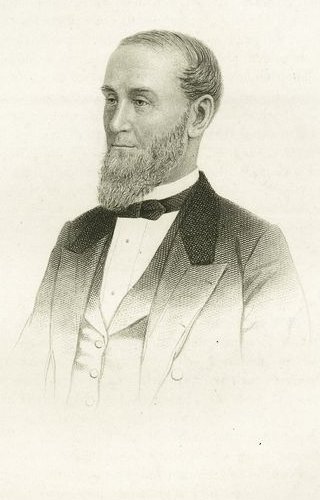
Background and career
Philip Kindred Dick (December 16, 1928 – March 2, 1982) was an American science fiction short story writer and novelist. He wrote 45 novels and about 121 short stories, most of which appeared in science fiction magazines. His fiction explored varied philosophical and social questions such as the nature of reality, perception, human nature, and identity, and commonly featured characters struggling against alternate realities, illusory environments, monopolistic corporations, drug abuse, authoritarian governments, and altered states of consciousness. He is considered one of the most important figures in 20th-century science fiction. Born in Chicago, Dick moved to the San Francisco Bay Area with his family at a young age. He began publishing science fiction stories in 1952, at age 23. He found little commercial success until his alternative history novel The Man in the High Castle (1962) earned him acclaim, including a Hugo Award for Best Novel, when he was 33. He followed with science fiction novels such as Do Androids Dream of Electric Sheep? (1968) and Ubik (1969). His 1974 novel Flow My Tears, the Policeman Said won the John W. Campbell Memorial Award for Best Science Fiction Novel. Following years of drug use and a series of mystical experiences in 1974, Dick's work engaged more explicitly with issues of theology, metaphysics, and the nature of reality, as in the novels A Scanner Darkly (1977), VALIS (1981), and The Transmigration of Timothy Archer (1982). A collection of his speculative nonfiction writing on these themes was published posthumously as The Exegesis of Philip K. Dick (2011). He died in 1982 at the age of 53 due to complications of a stroke. Following his death, he became "widely regarded as a master of imaginative, paranoid fiction in the vein of Franz Kafka and Thomas Pynchon". Dick's posthumous influence has been widespread, extending beyond literary circles into Hollywood filmmaking. Popular films based on his works include Blade Runner (1982) and Blade Runner 2049 (2017), Total Recall (adapted twice: in 1990 and in 2012), Screamers (1995), Minority Report (2002), A Scanner Darkly (2006), The Adjustment Bureau (2011), and Radio Free Albemuth (2010). Beginning in 2015, Amazon Prime Video produced the multi-season television adaptation The Man in the High Castle, based on Dick's 1962 novel; and in 2017 Channel 4 produced the anthology series Electric Dreams, based on various Dick stories. In 2005, Time magazine named Ubik (1969) one of the hundred greatest English-language novels published since 1923. In 2007, Dick became the first science fiction writer included in The Library of America series.
Philip Kindred Dick and his twin sister, Jane Charlotte Dick, were born six weeks prematurely on December 16, 1928, in Chicago, Illinois, to Dorothy (née Kindred; 1900–1978) and Joseph Edgar Dick (1899–1985), who worked for the United States Department of Agriculture. His paternal grandparents were Irish. Jane's death on January 26, six weeks after his birth, profoundly affected Philip's life, leading to the recurrent motif of the "phantom twin" in his books. Dick's family later moved to the San Francisco Bay Area. When he was five, his father was transferred to Reno, Nevada, and when Dorothy refused to move, she and Joseph divorced. Both fought for custody of Philip, which was awarded to Dorothy. Determined to raise Philip alone, she took a job in Washington, D.C., and moved there with her son. Philip was enrolled at John Eaton Elementary School (1936–1938), completing the second through fourth grades. His lowest grade was a "C" in Written Composition, although a teacher said he "shows interest and ability in story telling". He was educated in Quaker schools. In June 1938, Dorothy and Philip returned to California, and it was around this time that he became interested in science fiction. Dick stated that he read his first science fiction magazine, Stirring Science Stories, in 1940. Dick attended Berkeley High School in Berkeley, California. He and fellow science fiction author Ursula K. Le Guin were members of the class of 1947 but did not know each other at the time. He claimed to have hosted a classical music program on KSMO Radio in 1947. From 1948 to 1952, he worked at Art Music Company, a record store on Telegraph Avenue. He attended the University of California, Berkeley, from September 1949 to November 11, 1949, ultimately receiving an honorable dismissal dated January 1, 1950. He did not declare a major and took classes in history, psychology, philosophy, and zoology. Dick dropped out because of ongoing anxiety problems, according to his third wife Anne's memoir. She also says he disliked the mandatory ROTC training. At Berkeley, he befriended poet Robert Duncan and poet and linguist Jack Spicer, who gave Dick ideas for a Martian language. Through his studies in philosophy, he came to believe that existence is based on internal human perception, which does not necessarily correspond to external reality. He described himself as "an acosmic panentheist", which he explained as meaning that "I don't believe that the universe exists. I believe that the only thing that exists is God and he is more than the universe. The universe is an extension of God into space and time. That's the premise I start from in my work, that so-called 'reality' is a mass delusion that we've all been required to believe for reasons totally obscure". After reading the works of Plato and pondering the possibilities of metaphysical realms, he came to the conclusion that, in a certain sense, the world is not entirely real and there is no way to confirm whether it is truly there. That question was a theme in many of his novels.
Dick sold his first story, "Roog"—about "a dog who imagined that the garbagemen who came every Friday morning were stealing valuable food which the family had carefully stored away in a safe metal container"—in 1951, when he was 22. From then on he wrote full-time. During 1952, his first speculative fiction publications appeared in July and September numbers of Planet Stories, edited by Jack O'Sullivan, and in If and The Magazine of Fantasy and Science Fiction (F&SF) that year. By 1953, F&SF described Dick as "one of the most prolific new professionals in the field", joking that "the editors of Whizzing Star Patrol and of the Quaint Quality Publication are in complete agreement upon Mr. Dick as a singularly satisfactory contributor". His debut novel, Solar Lottery, was published in 1955 as half of Ace Double #D-103 alongside The Big Jump by Leigh Brackett. The 1950s were a difficult and impoverished time for Dick, who once lamented, "We couldn't even pay the late fees on a library book." He published almost exclusively within the science fiction genre but dreamed of a career in mainstream fiction. During the 1950s, he produced a series of non-genre, relatively conventional novels. In 1960, Dick wrote that he was willing to "take twenty to thirty years to succeed as a literary writer". The dream of mainstream success formally died in January 1963 when the Scott Meredith Literary Agency returned all of his unsold mainstream novels. Only one of them, Confessions of a Crap Artist, was published during Dick's lifetime, in 1975 by Paul Williams' Entwhistle Books. In 1963, Dick won the Hugo Award for The Man in the High Castle. Although he was hailed as a genius in the science fiction world, the mainstream literary world was unappreciative, and he could publish books only through low-paying science fiction publishers such as Ace. He said in a 1977 interview that were it not for the interest of a French publishing company in the mid-1960s, which decided to publish all of his catalog to date, he would not have been able to continue as a writer. But even in his later years, he continued to have financial troubles. In the introduction to the 1980 short story collection, The Golden Man, he wrote:
"Several years ago, when I was ill, Heinlein offered his help, anything he could do, and we had never met; he would phone me to cheer me up and see how I was doing. He wanted to buy me an electric typewriter, God bless him—one of the few true gentlemen in this world. I don't agree with any ideas he puts forth in his writing, but that is neither here nor there. One time when I owed the IRS a lot of money and couldn't raise it, Heinlein loaned the money to me. I think a great deal of him and his wife; I dedicated a book to them in appreciation. Robert Heinlein is a fine-looking man, very impressive and very military in stance; you can tell he has a military background, even to the haircut. He knows I'm a flipped-out freak and still he helped me and my wife when we were in trouble. That is the best in humanity, there; that is who and what I love."
In 1971, Dick's marriage to Nancy Hackett broke down, and she moved out of their house in Santa Venetia, California. He had abused amphetamine for much of the previous decade, stemming in part from his need to maintain a prolific writing regimen due to the financial exigencies of the science fiction field. He allowed other drug users to move into the house. Following the release of 21 novels between 1960 and 1970, these developments were exacerbated by unprecedented periods of writer's block, with Dick ultimately failing to publish new fiction until 1974. One day, in November 1971, Dick returned to his home to discover it had been burgled, with his safe blown open and personal papers missing. The police could not determine the culprit, and even suspected Dick of having done it himself. Shortly thereafter, he was invited to be the guest of honor at the Vancouver Science Fiction Convention in February 1972. Within a day of arriving at the conference and giving his speech, The Android and the Human, he informed people that he had fallen in love with a woman named Janis whom he had met there and announced that he would be remaining in Vancouver. A conference attendee, Michael Walsh, movie critic for the local newspaper The Province, invited Dick to stay in his home, but asked him to leave two weeks later due to his erratic behavior. Janis then ended their relationship and moved away. On March 23, 1972, Dick attempted suicide by taking an overdose of the sedative potassium bromide. Subsequently, after deciding to seek help, Dick became a participant in X-Kalay (a Canadian Synanon-type recovery program), and was well enough by April to return to California. In October 1972, Dick wrote a letter to the FBI about science fiction writer Thomas Disch. Dick said he had been approached by a covert Anti-American organization which attempted to recruit him. Dick said he recognized their ideology in a book Disch wrote. On relocating to Orange County, California at the behest of California State University, Fullerton professor Willis McNelly (who initiated a correspondence with Dick during his X-Kalay stint), he donated manuscripts, papers and other materials to the university's Special Collections Library, where they are in the Philip K. Dick Science Fiction Collection in the Pollak Library. During this period, Dick befriended a circle of Fullerton State students that included several aspiring science fiction writers, including K. W. Jeter, James Blaylock and Tim Powers. Jeter would later publish three novel sequels to Blade Runner. Dick returned to the events of these months while writing his novel A Scanner Darkly (1977), which contains fictionalized depictions of the burglary of his home, his time using amphetamines and living with addicts, and his experiences of X-Kalay (portrayed in the novel as "New-Path"). A factual account of his recovery program participation was portrayed in his posthumously released book The Dark Haired Girl, a collection of letters and journals from the period.
On February 20, 1974, while recovering from the effects of sodium pentothal administered for the extraction of an impacted wisdom tooth, Dick received a home delivery of Darvon from a young woman. When he opened the door, he was struck by the dark-haired girl's beauty, and was especially drawn to her golden necklace. He asked her about its curious fish-shaped design. As she was leaving, she replied: "This is a sign used by the early Christians." Dick called the symbol the "vesicle pisces". This name seems to have been based on his conflation of two related symbols, the Christian ichthys symbol (two intersecting arcs delineating a fish in profile), which the woman was wearing, and the vesica piscis. Dick recounted that as the sun glinted off the gold pendant, the reflection caused the generation of a "pink beam" of light that mesmerized him. He came to believe the beam imparted wisdom and clairvoyance, and also believed it to be intelligent. On one occasion, he was startled by a separate recurrence of the pink beam, which imparted the information that his infant son was ill. The Dicks rushed the child to the hospital, where the illness was confirmed by professional diagnosis.
Sources
Net-worth figure: Celebrity Net Worth (October 2026), in USD. Biography and career facts: the person's Wikipedia article and linked reporting. Snapshot date for all StarWorth figures: 28 October 2026.