Background and career
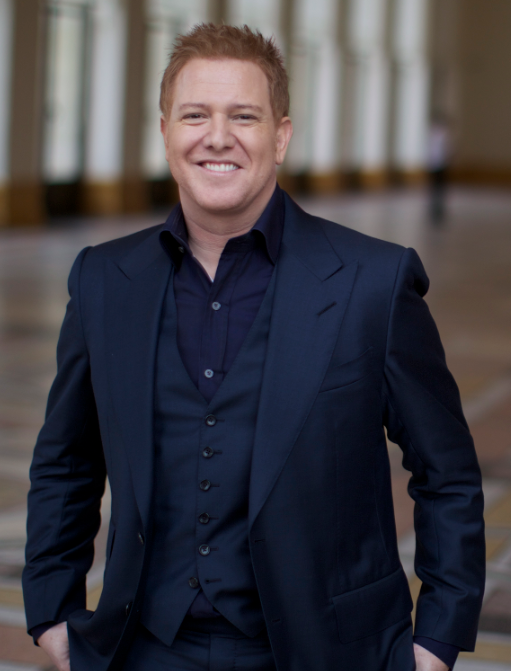
Ryan Kavanaugh (born 1974) is an American film financier. He co-founded Relativity Media and served as its CEO, brokering deals between Wall Street investors and major film studios. He credited his risk-assessment algorithm for Relativity Media's initial success. He stepped down as CEO after Relativity Media's second bankruptcy filing and subsequently founded Proxima Media, which held a controlling stake in Triller from 2019 to 2022.
Kavanaugh was born into a Jewish family in Los Angeles, California, and raised in the Brentwood neighborhood, where he attended Brentwood High School. His mother is a real estate broker, and his father, a dentist turned businessman, was born in Germany. His father changed his surname to Kavanaugh before his son's birth. Kavanaugh began purchasing company shares at the age of six. Kavanaugh attended UC Santa Barbara and UCLA but dropped out in 1996. In 2012, Kavanaugh threatened The New Yorker with legal action for its reporting on him, including its report that he dropped out of university. Kavanaugh said he was "an official graduate of UCLA and currently enrolled in a PhD program at USC". The New Yorker stood by its reporting. While subsequent sources reported that Kavanaugh finished a degree in 2012, The Wall Street Journal reported that there was no record of him taking classes at USC.
After leaving UCLA in the late 1990s, Kavanaugh started a short-lived venture capital firm. Several investors, including Jon Peters, sued Kavanaugh, alleging fraud, and the suits were settled out of court. In a separate suit, Michael Sitrick, an executive and Kavanaugh family friend, alleged that Kavanaugh violated terms of their agreement and placed most of Sitrick's $6 million investment into a type of Ponzi scheme at a company where Kavanaugh was a board member. An arbitrator found that Kavanaugh was "clearly negligent", and Sitrick won a $7.7 million arbitration judgment against Kavanaugh that was never paid because Kavanaugh successfully argued that he was virtually penniless and his business on the verge of bankruptcy at the time of the judgment.
Kavanaugh co-founded Relativity Media with entertainment executive Lynwood Spinks in 2003, claiming to have created a Monte Carlo-based risk-assessment model to reliably predict a film's potential earnings. Banks and hedge funds, looking for investments outside of the stock market, invested heavily in Kavanaugh's selected films. He utilized slate financing, which bundled together groups of films to spread the investment risk. Kavanaugh also worked out a formula in which every time a movie was produced through Relativity’s financing, the studio would pay his company and investors in the slate $1 million. Kavanaugh himself would receive executive producer credit to capitalize on the association with the films.
Hailing Albert Einstein as his role model, Kavanaugh was known for writing equations on white boards at investor meetings with hedge-fund bankers and producers. Kavanaugh advertised heavily in the trade press, where he was known for bringing Wall Street money to the studios. However, many investors lost money or received poor returns in several of his deals. By 2009, three quarters of films produced by Sony and Universal Pictures had used Kavanaugh's financing. In 2010, Kavanaugh raised investor funds for Relativity Media to launch its own studio, producing movies vetted by Kavanaugh's algorithm. Although Relativity Media executives privately disagreed with Kavanaugh's estimations, he publicized increasingly grandiose claims about Relativity Media's valuation, combining third-party investment deals and optimistic projections into reported revenue. Kavanaugh had claimed his model had an 85% accuracy rate, though by 2010, the algorithm had proved unprofitable, with box-office bombs outnumbering commercial successes. In 2011, Kavanaugh was named "Showman of the Year" by Variety and placed 22nd on the Fortune 40 Under 40 list. In May 2011, Elliott Associates attempted to rein in Kavanaugh's management. Kavanaugh publicly claimed that he would buy out the hedge fund's stake to re-take charge of his company, but Elliott Associates denied that they would sell to him. Their primary investment in Relativity Media funded a Universal Pictures deal, but Kavanaugh's studio chose to date several of its own films in competition with Universal's. Elliott Associates moved to take direct control of their film deal, eliminating Kavanaugh's executive producer fees, and significantly dropping their stake in Relativity Media. In November 2011, investor Ron Burkle arranged a series of loans to Kavanaugh's company in exchange for interest, ultimately buying out Elliott's stake in 2012. Industry speculation surfaced that Burkle would oust Kavanaugh from Relativity Media in favor of his friend Harvey Weinstein, but Burkle and Weinstein both disclaimed the scenario. Relativity Media executives became increasingly doubtful as the company's financial health declined yet Kavanaugh's valuations kept increasing. Kavanaugh presented implausible valuations and "adjusted" EBITDA numbers to investors, which included projections based on films the company had already relinquished to Elliott Management. In June 2015, lenders began requiring Kavanaugh to receive approval before making any transactions. In July, Relativity Media filed for bankruptcy. As a result, Netflix sought to end a distribution deal with Relativity Media, and Kavanaugh responded by sending threatening emails to Ted Sarandos, co-CEO of Netflix.
Shortly after the bankruptcy filing, RKA Film Financing, then one of its lenders, sued the company for misappropriating marketing funds, called Kavanaugh a "con man", and alleged that he was operating a "scheme to defraud investors". They also alleged that Kavanaugh used their invested funds for personal expenses. Relativity Media denied that the money was diverted, saying that RKA Film Financing understood that the money would go into a general corporate account. Relativity Media countersued for $200 million. Kavanaugh and other defendants filed a motion to dismiss, arguing RKA Film Financing failed to state a claim, and the suit was dismissed with prejudice. Relativity Media's operations and reorganization remained under the supervision of a bankruptcy court until March 2016. Kavanaugh eventually stepped down as CEO at the end of 2016 but held onto a majority equity of Relativity Media. Leading up to his resignation, Kavanaugh was absent from the company's offices for weeks and did not take part in executive decisions. In May 2018, Relativity Media filed for bankruptcy again and arranged to sell all of its assets. The United States Trustee's office argued that the bankruptcy seemed to benefit Kavanaugh and the new buyer UltraV Holdings at the expense of Relativity Media's creditors. The trustee learned that Kavanaugh paid himself $2.6 million between April and November 2016 while his company failed to pay bankruptcy fees or file tax returns. They also questioned the legitimacy of Relativity Media's sale to UltraV Holdings since Kavanaugh continued to have extensive access at the company after the bankruptcy filing stated that he had already left; UltraV Holdings had quickly rehired Kavanaugh as a consultant for Relativity Media, paying him $10,000 per month. In June 2018, an arbitration case found that Relativity Media executives fabricated a memo accusing Relativity Media's former co-president Adam Fields of sexual harassment. A forensic audit of Relativity Media found the memo had been generated by a user named "kav kav". Relativity Media submitted the falsified memo to court two weeks before Fields's wrongful termination suit against Kavanaugh was set to be tried. Fields's lawsuit alleged that Kavanaugh misrepresented Relativity Media's financial prospects, wrongfully fired Fields four months into his four-year contract, and used Relativity Media office space to produce pornography without the co-president's knowledge or authorization. A Los Angeles arbitration judge awarded Fields $8.4 million in damages and found that Kavanaugh "must be" one of the people who forged the sexual harassment memo.
Sources
Net-worth figure: Celebrity Net Worth (October 2026), in USD. Biography and career facts: the person's Wikipedia article and linked reporting. Snapshot date for all StarWorth figures: 28 October 2026.